The Scratch Interview #9: Kristen Millares Young on Insisting on Your Own Writing
"People look at me, at my journalism career, and they're like, ‘Oh, it looks great.’ Brand names. Laws passed. And I'm like, ‘But where's the pay?’"
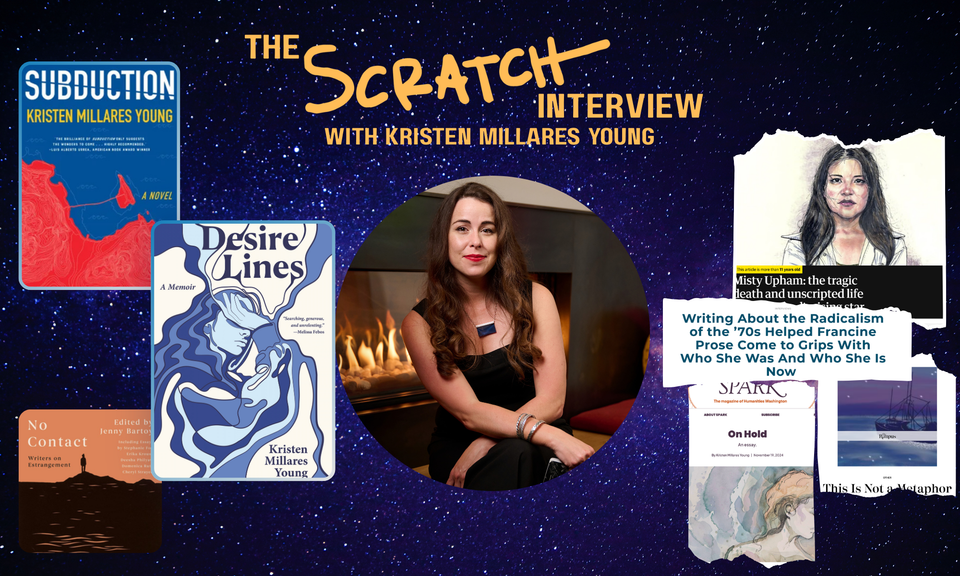
The Scratch interview with Kristen Millares Young. (Photo collage by Maggie Mertens. Photo of the author by Chona Kasinger.)
Kristen Millares Young is kind of a Seattle writing icon. She swoops in wearing a huge hat, red lipstick, dark flowing curls, and instantly has the attention of a room. And more often than not, she's using that power for good, often to point out the wonder of what we are all doing: Gathering in community. Offering art and stories to one another. Keeping those stories with care and gratitude. She helps to keep the magic – of storytelling, art, and literature – alive.
And yet, when we began this interview, and I laid out that I’d like to ask about how she’s built such a multifaceted career in these turbulent times, she laughed her loud, room-filling laugh, “Is that what we call this? A career?”
To set the scene: Millares Young’s first job out of college was as a reporter at The Seattle Post-Intelligencer. She worked there for five years before the newspaper was closed in 2009 in the middle of The Great Recession — one of many huge contractions of the journalism industry in recent years. Shortly after, she and a group of former co-workers opened the non-profit investigative newsroomInvestigate West. She also started freelancing for national magazines and newspapers, and worked as the researcher on “Snowfall” the 2012 Pulitzer-Prize winning story in The New York Times. Millares Young got her MFA in creative writing from the University of Washington in 2012. She kept writing. She began teaching. She built a life from the rubble of it all.
Millares Young’s reporting chops were integral to her 2020 award-winning novel, Subduction, published by Red Hen Press. This week, her memoir-in-essays Desire Linespublished — again with Red Hen Press. In it, she weaves the story of her search for an ancient pagan mother goddess, Cybele, with her discoveries about her own matrilineal history, the Virgin Mary, and what has happened to the divine feminine in today’s world of patriarchal rule.
We spoke by Zoom at the beginning of September about her book release, and, yes, her career.
The following interview has been lightly edited for length and clarity.
*Note: This post contains Bookshop.org affiliate links. Purchases made through them directly support independent bookshops and help keep Scratch running.
Maggie Mertens: It really seems like you have made this world your own, even while being thrown many career curveballs. How has the decline of media impacted the writer you have become?
Kristen Millares Young: I was a business reporter at The Seattle Post-Intelligencer after graduating from college. I wrote more than 700 stories when I was at The P-I, but when I was not working — I was still in my 20s — I would go out and have fun times, and I could be like, ‘That's at work now.’ And when The P-I closed, it was like I was never not at work because I was applying for so many fellowships — which I didn't get. I was co-founding Investigate West as a nonprofit newsroom — which worked. And I remember so clearly when we got our first $100,000 grant from the Ethics and Excellence in Journalism Foundation, and being like, Okay, this is going to work. Like, listen to the name, the Ethics and Excellence in Journalism Foundation. Because it just really felt like up until that point there had just been this mass devaluation of all of our skills and our knowledge. The thing that made me so sad about The P-I closing was the institutional knowledge held by its reporters and columnists…who were incredible repositories of wisdom and knowledge and industry. It hurt.
Hearst had an incredibly short-sighted approach and made a series of bad business decisions, which led them to that insolvency that they claimed was due to the paper, and that is the same thing that [Jeff] Bezos is doing to The Washington Post right now. I mean, you spike an endorsement that costs you hundreds of thousands of subscribers. Then you rebrand one of the most storied personal opinion verticals in the entire world and say it's only to be about personal liberties and free markets and watch another 75,000 people go. You shutter Book World because you don't value literary culture, despite the fact that you made your bones selling books! And then you lay off one-third of the staff, claiming cash inflow troubles that you yourself caused.
So the ways that reporters and editors, writers and knowledge keepers have been made to pay for the poor business decisions of corporate executives lodged firmly in my mind when the P-I was closing and was reiterated in February when the catastrophic streamlining of the Post newsroom led me to lose [Book World]the venue for which my reviews have been globally syndicated for the prior seven years.
*Laughter* I mean. In a word!
Enjoying Scratch? The best way to support our work is with a paid subscription!
I mean, yeah! You’ve kind of seen this all happening! So back in college, or in adolescence, thinking about your life. Did you want to be a writer? Did you want to be a journalist? What was the goal and dream for you?
Not to be a journalist. Maybe to be a writer. I used to write poetry in my journal. Scholar? Scholar-Poet-Philosopher? I wrote one article for The Crimson, [the newspaper] at Harvard, and then I wrote one or two articles for The Current, [the school’s magazine]. I was quite lucky actually to get an internship at Time magazine because I didn't have a lot of clips, but I kind of rustled together what I had and put it all into a package.
But as a child, I didn't read newspapers. I read books. Books are what saved me. Books are what reached me as a girl. I did grow up with people who followed the news, but I can't really remember actually having newspapers in the house. But I did have dozens and dozens of library books. We would go to the library once a week and bring our Publix grocery bags and load them up. And to this day, I still do that. Like I will always have at least 10 library books in my home. And sometimes I hit my max.
But I thought of journalism as a way in. I thought, I like to conduct scholarship, which can be re-termed reportage. I like to travel (now that didn't happen with respect to newsroom funding for me), and I care about the world. And the thing about journalists is that we are incredibly optimistic that more knowledge will lead to better actions. *Laughter*
We just keep going back to it!
And to the extent that it's possible, I have remained a working journalist. But then I just really love books, and book criticism is journalism. But [since Book World was shuttered] I don’t yet have another venue for this passion that I have of creating a more inclusive, interesting canon, and so we'll see. I don't want to write them for free. I believe that I should be paid. Because they take a long time. When I review a book, I read everything that person's ever written. And then I read the book several times. It takes a while to write a good book review.
I really am so grateful to the many writers who review for literary reviews and other outlets that are not able to offer compensation. But it's been hard for me to decide to do that, after being a syndicated critic.
So The P-I closed. You started up Investigate West, which is its own amazing thing. Was that another part-time gig that you had on top of freelancing and doing research for your novel? Was it a real job? Or have you ever had just one job since The P-I?
No. And it's funny because at one point my husband, a couple years into it, said, ‘Did you become a novelist so you can work yourself to death?’ Because I was teaching for so many institutions and libraries. And at first, [my] kids were young, and I was like, ‘Oh, cool! [My husband] Brian will come back from work, and then I'll go teach at a library, or teach online. I can teach on the weekends and in the evenings. And then a couple years pass and I'm like, ‘Wait a minute, I am teaching in the evenings and on the weekends, and during the daytime and just all the time!’ And it's not just the hours that you're in the classroom or on the Zoom. It's all the prep and the responses and the nurturing and all that.
So no, I haven't had a proper job since The Seattle PI, but I've had this quiver of jobs. And just even tracking all of them — the invoices, the payments. Ugh. Tax time always puts me in a mood. I actually never drew a salary from Investigate West because I helped start it. We were all on unemployment when we were starting it, and then I left in order to attend my MFA program at the University of Washington in 2010 and I returned in 2014 to join the board, and then I chaired the board from 2016 to 2019. They asked me to chair the board when my youngest child was a newborn. And I was like, ‘Sure!’
It’s always those decisions when the kids are babies that just do not make any sense!
And that’s how you end up typing emails on the toilet! But yeah I’m very proud of [Investigate West]. And also even though it was a lot of work I cannot even properly call it a job since I didn’t get paid. But now other people are getting paid by them, which is great.
That is absolutely great. So did teaching come about after the MFA?
Yes, teaching began at the Port Townsend Writer’s Conference in 2017. Up until that point, all of my income was freelance. The yearlong story I did for The Guardian[about the life and death of Misty Upham],was published in 2015. Prior to that, I’d been doing a lot of dailies for them. I actually wrote my last daily for The Guardian while one week overdue with my first child. I was literally a full week overdue and it was the Oso Mudslide [in 2014].
Oh my god. That was such a horrible event – it was the deadliest landslide in U.S. history.
Yeah. So I had written a story the day before and then they asked for one more. And so I tell the editor, ‘I might have to hand off my notes, because I might go into labor.’ And he’s just like, ‘Are you sure?’ So of course, I went out of my way and I filed a bang-up story. I deliver. Do I ever get another daily assignment from them? No.
I’ve been there. It’s a mistake to ever tell them. Even though you have to because, yes, you might be in the hospital when they need you, but I’ve had the same thing happen where I say something about being pregnant to an editor and you never hear from him again.
Never. I think part of the reason I didn't get a job at Time is because I ended my internship in the hospital getting a tumor removed. I literally was making [reporting] calls from the hospital. I was working, working, working, working, working. And did I get a job? No.
I wish I hadn't had to tell them [I was in the hospital]. But I literally would go to the ER until dawn, check out, then put on some fucking makeup and go into the newsroom in heels, and in pain. Do they care? No. Sent a Get Well card, but no job offer.
People look at me, at my journalism career, and they're like, ‘Oh, it looks great.’ Brand names. Prizes. Laws passed. Impact. All the prestige. All the things. And I'm like, ‘But where's the pay?’
Where are the benefits?
Where are the benefits?! I am so grateful that I have been surfing my husband's health insurance my entire career.
Me too.
Now it'd be so expensive. I wouldn't be able to afford it. I'd have to go into — I don't even know what, because there's no copywriting jobs now that AI is taking it all over!
I know. I just told my husband the other day — I’ve always said, if I need to get a job, I’ll do it. When it’s my turn to get the salary job just say so — I don't even think I could get a job! Who would hire a writer right now?
I mean, I believe it too. And by the grace of god my husband has a job, but who knows? I don’t know what we would do. We’re both writers!
They don’t know either. And they don’t fucking care. They’re deploying a technology that they know is going to upend the economy and they’re just like, Well, that’s OK because we’re standing on your bets.
And they stole it all from us! It’s all because of the writing we have put on the Internet that they have these huge language models.
I’m part of that class-action against Anthropic. Because they took Subduction without asking and without payment. And they had money. That’s the thing. They could have offered to pay and they did not. And what the class action is settling out to now is peanuts! I spent years on that book!
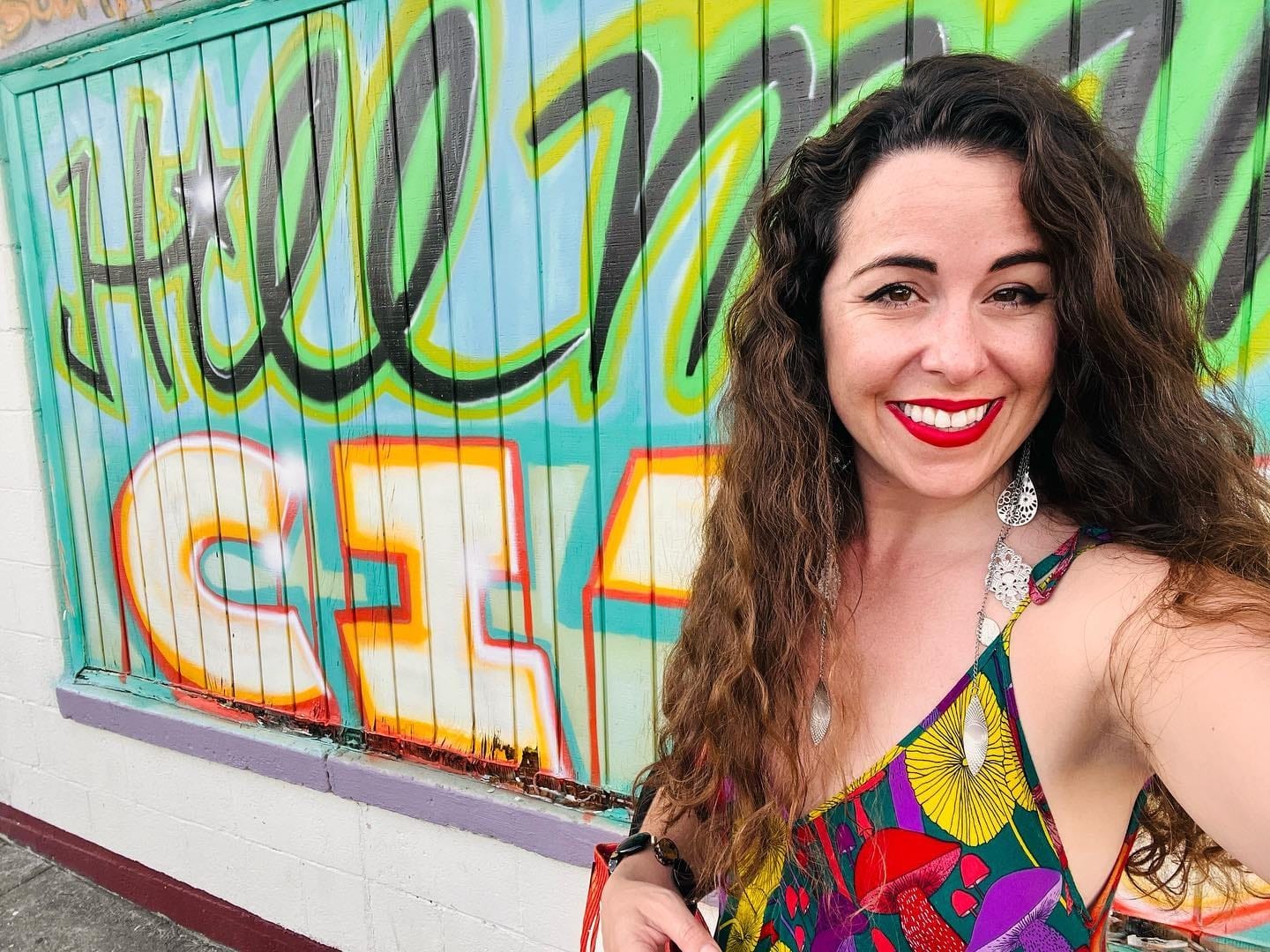
Kristen Millares Young out and about in Seattle. (Courtesy of Kristen Millares Young).
Let’s talk about that novel. I believe the first time I ever saw you was at an AWP and you were talking about the research you were doing for what would become Subduction. So much research! So I have to ask, was it always going to be a fiction project?
Yes. At the time I wanted to be a novelist. Novels were my life’s blood. I began researching that book in 2007, if you can believe it. I researched for years before I wrote anything, which I tell people not to do now, because there comes a point when you feel like you will never be able to capture everything that you've understood or learned, and that can induce paralysis, which is not helpful to a writer. But then of course, I lost my job, so I was scrambling to try to get other work, and then going to my MFA program. I didn't finish my first draft until right before the birth of my first child [in 2014]. But then I took the book through so many more drafts. I went through a lengthy process to get an agent for that book. But I got an agent in 2016. I got the book sold in 2018, and was published in 2020.
That’s a long time to live with that book.
Yes. And of course it came out one month into lockdown. Ten years of work and now this! I’d had 35 events planned. Then it became like 100 events. I had to ‘pivot to virtual’ as we called it in those days. Many more people came to those events virtually than would have if I’d been in the bookstores.
Did you reframe your thoughts about yourself as a writer or your career as a writer when Subduction came out?
I know how this sounds, but I’m just gonna go ahead and say it: when it was named a Staff Pick by the Paris Review, and I was like, ‘See! See!’ Because so many editors over the years had been like, If you would just make it this way or that way, then we would publish you. I could have been with a big house. But they wanted me to make Claudia [the protagonist] into some kind of white savior. And they wanted her and Peter to end up together. And I'm like, ‘You're gonna ruin my book!’ That's why I really respect Red Hen Press because they just let me leave it.
This one agent told me the book would really work as a psychological suspense thriller. She's like, "Can you consider rewriting this book in this way?’ So I went and I got the books from the library, and I got in front of this AC window unit, because I was pregnant and it was summertime, and I sat with me and my big belly, reading the books, and just wept at the idea of turning my vision into this formula.I said, ‘I can't do it. I won't do it.’ And I've been very insistent upon that. I will do almost anything. I'll do all the promotion. I'll do all the things that take me away from the writing itself. But I want the things that I write to be exactly how I want them to be. And that's what I insist on.
Did you start to think of yourself as a novelist at that time?
Yeah. I’m 65,000 words into another novel right now, but I have been [that far] for several years. But you know I gotta rewrite it! This is my process. A novelist is someone who writes more than one novel in my mind. So I'm an author. I'm a writer. But it's funny. I have really been writing and publishing mostly in creative nonfiction form since I started publishing personal essays in 2017. I wish I could stop. God.
I know that you've done all of this teaching and I find you to be a very natural and magnetic teacher. But I'm wondering if teaching feeds your work? Does it detract from your work? Does it help you feel like more of a stable person, career-wise? What does it bring for you?
I get squirrely when I spend too much time in my own head. So teaching is nice because it's a bunch of people in a room who care about the same thing, and I happen to be leading the discussion. But I really try to decenter myself when possible by centering the actual writing of the folks who are attending. It can make you feel validated for the expertise that you carry.
I really liked teaching for the Humanities Washington Speakers Bureau because the classes were free, and it's hard to teach sometimes for institutions that charge because I'm like, They know they're not getting that money back, right? But it's an investment in their dream, which is worth doing. I remember in one of my classes, this guy had been hit by a train and lived, and his literal response to this miracle was to take my class. And I thought, Okay, I will do this. Because it matters. It matters to people, and mattering is, I think, what we all need.
When you are telling people what you do, do you say I'm an author, I'm a writer, or do you also say I'm a teacher? Do you say I'm all of these things?
No, I just usually tell them I'm a writer. I've taught at this point at least 1,000 students, if not more, over the last 10 years, but the metric that I hold over myself — to be frank about the verbiage — is what I've produced as a writer. The teaching is something that I do and does take a lot of time and effort and care, and yet, it's not what I would consider my public identity to be. Now [with the publication of this memoir] I'm really standing with my identity. I’m giving myself from now until the end of the year to really do this [book promotion]. I have so many companion pieces that I've written that are out on submission. I've planned all these events. And then I'm going to take stock and see.
And I want to be open to serendipity, although I don't feel that serendipity has visited me that often in my career, but it has as a thinker. With Desire Lines, the true yield already is the conversations that I'm having with women who have read it and who feel touched by it or seen by it — and I think that's important. And that's something that Subduction also taught me. The people that that book brought into my life, many of whom are Makah tribal members, who host my family to this day. That was the true yield.
Someone told me this, and I tell my students, and it’s a lot, but: Getting to do the work is the reward. That is it. And it’s great because then it’s like, the only thing that you can control is your effort. And everything else has to be accepted.
I really like what you're saying about a lack of serendipity in your career because I do feel like for pretty much a whole generation, it feels like there has been no serendipity for us. If anything it's kind of the opposite. You get into something like journalism and no, the floor is out from under us. Is it books? No. Oh, it's personal essays. Okay, no, not anymore. Oh, it's book reviews. Nope. So how do you keep going? Like how did the memoir come about, and what kept you going through that work?
This book was dragged out of me one essay at a time by my workshop with Kirsten Sunberg Lundstrom and Jean Ferruzoa. We started getting together in 2018. The kids were quite young. I was chairing the board [of Investigate West]. I was teaching all over town. I was a prose writer-in-residence at Hugo House, which is an honor, but at the time you're mentoring fellows, and you're also giving one-hour long consultations to a minimum of 45 people per year as part of that residency. And planning the launch for Subduction.
But I had these deadlines, and I had these workshops, and I had these women who were waiting for something from me, and I felt safe in that space to share that with them. So many of the essays in this book are incredibly personal. And if I had known that I was going to write them, and then write the whole memoir, I probably would not have become a memoirist at all — or even a writer. I would have chosen something else to avoid the fate of standing with my own story.
So, in some ways, I kind of backed my way into it. I began researching this pagan mother goddess cult in 2016. I came across this ancient pagan temple [in Galicia], and the guide there told me that bulls had been sacrificed there, and that people used to baptize themselves in bull's blood to worship this mother goddess. Now, that is true. People did do that. Whether or not it happened where he said it was happening, even though he was the official guide of the site, is another matter. And that's one of the things that my book explores: sometimes false stories can lead to greater truths.
I thought I was going to write a novel set in that pagan mother goddess cult, and that I was going to write historical fiction based in [Ancient Roman times]. And then it became really hard for me to want to be in a woman's body in that era because of what I knew is the life of servitude that women were lashed to by our bodies and relative positioning within society and the belief systems that surround us. I had some really lyrical scenes written, but it was inducing like literal paralysis, and so I stopped. And then it was going to be a work of hybrid creative nonfiction and fiction.
And then I realized that these similar sections of this pagan mother goddess were actually the same exploration in my personal essays, which is: what are the mechanisms by which women's power is siphoned from our bodies and our stories? And I'm a great believer in fractals — they operate in nature, but they also operate in our minds and in the art that we make, and creating that self-repeating, self-imitating pattern that happens naturally just through the juxtaposition of of our bodies in time and space and the landscape and society. So the book consists of the twinned inquiry into how it was that this great mother goddess was erased from the public consciousness and replaced with a virgin mother of god and pairing that with narratives of my Cuban matriarchy and diaspora, and how women in my family over the years have been made to serve structures which may not have served them, and certainly did not serve me.
Was it this idea of meeting readers with these messages that kept you going on writing the memoir even when you know you didn’t want to do it? Or was it more of self-introspection that you wanted to explore?
Wild things happen in life and I don't know where to put them. I was estranged from my father, and I ran into him in a crowd of like 800,000 people at the French Quarter Festival in New Orleans, where neither of us live. Like, where do you put that? What are the chances?
That is crazy.
So that’s in the middle of my book. And it is also in part in the No Contact anthology that Jenny Bartoy edited for Catapult.
I remember you mentioning that you'd been out with this memoir proposal, and that publishers wanted you to change it, and it sounds like that happened with Subduction, too. What was it that agents and editors wanted from the memoir, Desire Lines?
I have had a series of adverse childhood experiences, which they wanted described in detail, and I said, No. I'll tell you that I went through some stuff, but I'm not going to put you there in the scene because I don't think it's necessary. And I think that people look for it for shock value. I think they look for it because they want to look past the woman and her discernment, and then be able to figure out who deserves to be blamed for this.
One editor [at a magazine] had these very detailed comments. So instead of providing him with what he wanted, I just quoted his comments, and then in the essay, said, here's why I'm going to refuse all of these suggestions, and I reserve my right to opacity, which is a term I learned by Édouard Glissant. (But I learned it because I interviewed Sofia Samatar about her book Opacitiesfor The Rumpus, and again, being put into conversation with these women, and then they introduce an idea that then gives you the language you didn't know you needed — that's the serendipity.) And at the time, this would have been a very prestigious placement for that essay that I declined. And it also ruined my relationship with that editor because he did not appreciate having me quote himself back to him. He was like, ‘I think we've reached the end of our correspondence on this.’ And I was like, ‘I think the essay was really strengthened by the inclusion of your comments.’ So, yeah, probably not going to get published while he's out there in that position!
But again, these are the things I insist on. I insist on self-sovereignty. I remember I went to an event that Amber Flame organized at Hugo House called Black on Craft, and at that event, Nikkita Oliver was speaking, and she said, ‘They want your pain, but they don't want the healing, and the market's going to teach you that.’ And I remember it so clearly, sitting in the audience, thinking, ‘Is that true?’ And I found it to be true. Because in the end, Desire Lines is also very profoundly about a turning towards healing, which is nonlinear, is cyclical, and that is something, but it's not the redemption arc.
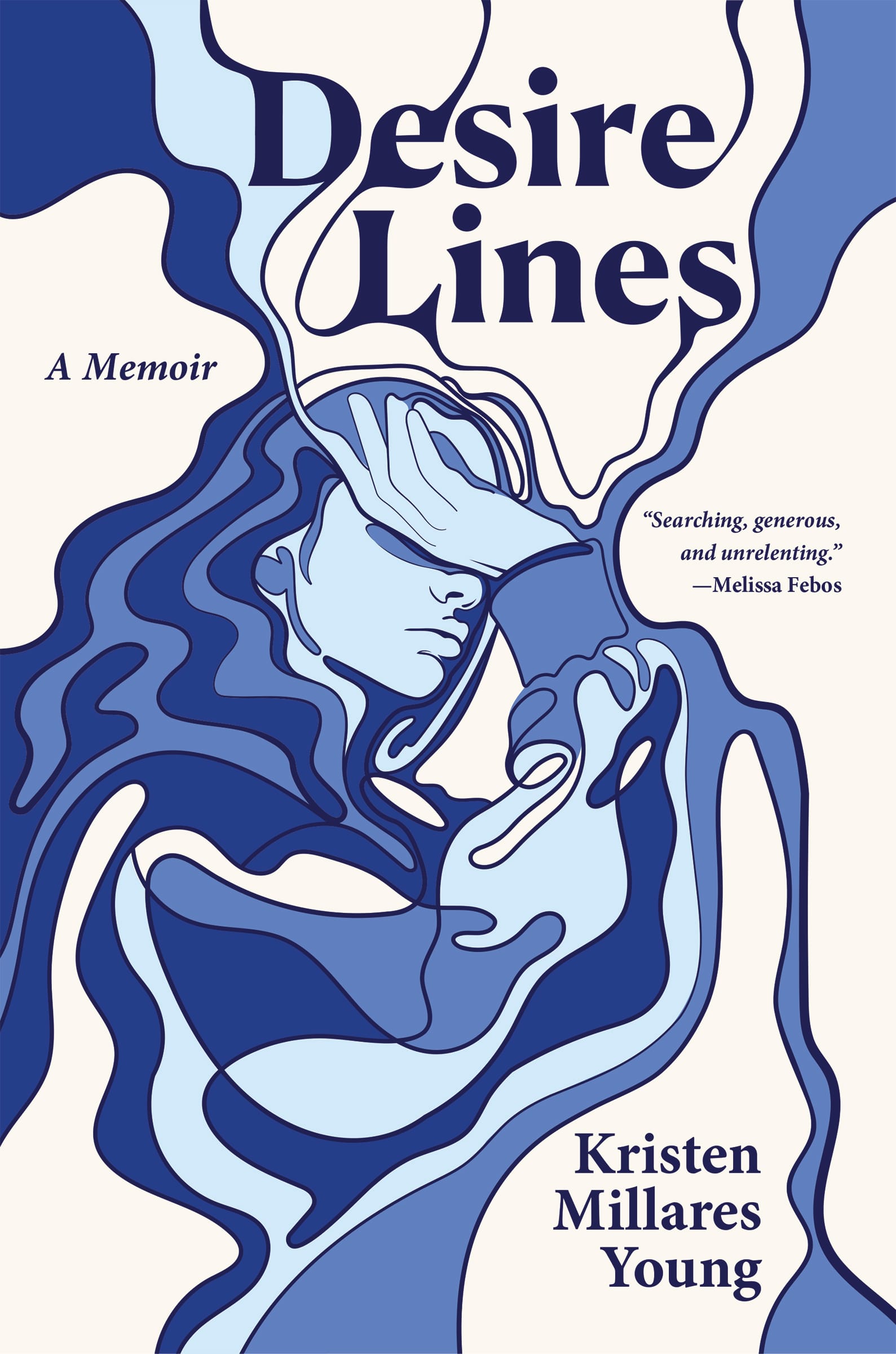
The cover of Desire Lines: A Memoir. By Kristen Millares Young.
You have this platform, you have this history of publishing well, and could certainly make more money signing with another publisher. What have been the pros of publishing with Red Hen Press, an indie publisher, again?
We have a lot of trust between us as a team. I was very integrated into the cover design [conversation], for example. Now that cover [for Desire Lines] is beautiful. And it came to me in a draft that was quite cool, but there was a lot of back and forth. And that cover is what got the placement in People magazine as a cover reveal. [People] is getting pitched by commercial houses at probably an astounding clip. So that was made possible by the trust and working relationship that I had established with Red Hen Press during the years of publishing Subduction, and then afterwards.
They have several times flown me down to L.A. to present at their annual fundraisers. I spoke at one of them, and then my band played another. It's a relationship that has kept going over the years. And I know a lot of people who are published by big houses where they never hear from that person ever again in their lives. Even though the idea was, you're going to get the ‘machine’ behind you, but many of those large houses, they spitball their books. They're not really backing them. It used to be, in the 80s and the 90s and whatnot where they would give you a several book deal, and they would invest in your career over those years, and they would help build you as a person because they were invested in you and your production over the output of life.
And now, if it fails because they didn’t put anything behind it, that is also carried by the author. And of course, I’m doing everything I can to make damn sure that this book succeeds. And I have really great support in that [from them]. But the fact is, I know that Red Hen Press is invested in me as a thinker and a person, and not just a sales number.
Do you ever get stuck in that spiral of ‘What if my career was 20 years ago? How would this be different?’
No. You know how some people are always tracking what time zone they just left? Yeah, I don't do that. Wherever I am, I gotta operate from right there. I can't live like that because it would make me want to die. I've got to be where I am, and that's my life's task, to remain there because if you spend too much time and lamentation for what could have been, it displaces the necessary foundational infrastructure investment that you have to be making every fucking day of your life as a writer to keep going. Like announcing my book tour on social media today at dawn before my kids get up for their first day of school, so that I would have time to do other things today.
Logistically how are you making the tour work?
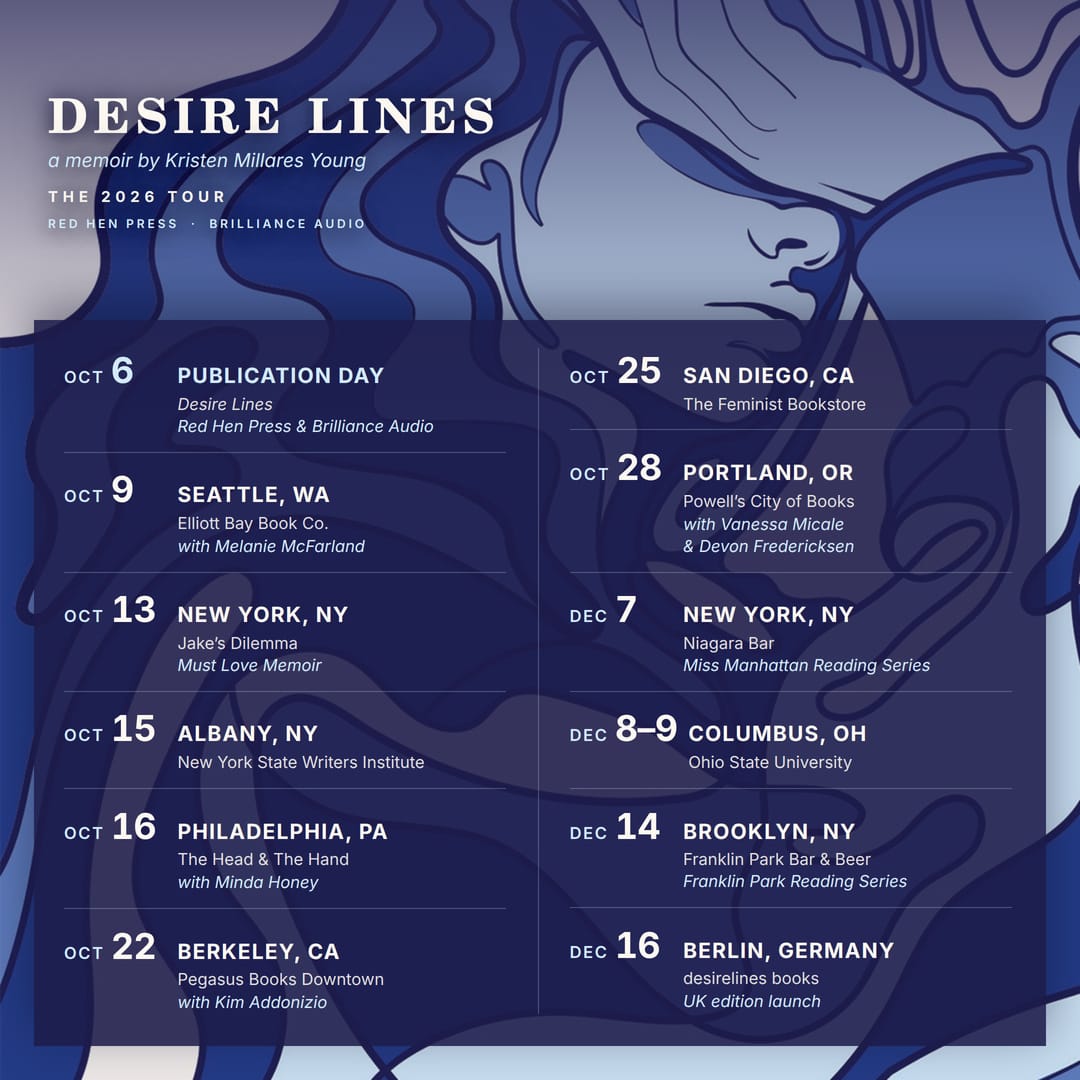
Well, it came together early enough that I was able to use a lot of points for my flights, which is cool. And I have friends in various places who are going to put me up. The New York State Writers Institute has invited me, and they're providing passage and honorarium. So there are also paid gigs among them, but as you know, indie bookstores don't do that, so you have to provide all that infrastructure yourself. But luckily, I booked stops in places where I had people and so that has proven very helpful.
The Book Tour for Desire Lines.
If the writing of the memoir was dragged out of you, do you think the book tour is going to be something that feeds you or drains you? Are you going to be building in moments to recover?
I am an extrovert in that I do derive energy from being in conversation with people. Of course, being on the road is tiring. And doing your best to harmonize your intellect and emotional self through conversations on stage is something that requires a heightened attention that is difficult to carry forever. But there are these glimmering moments. And then I'll be hanging out and having sips and bites with the people who attended, and who are my friends, and new people.
Right after you perform a delicate personal essay, or you've had an incredibly kaleidoscopic and intimate conversation, you're in a concussed state essentially — or at least I get that way. But that's right at the moment when people most want to connect with you because you said something that resonated with them, and you become this portal for other people's stories to pour through. And I have done that work. I've held that space as a performer and a workshop leader and a community builder for many years. But I know that that is also part of the energetic investment of a tour, is that your book becomes the entry point for people to join the conversation, and you're helping them carry that conversation, and that is hard. Because the things that my book discusses are difficult.
To make it worth it for someone else to co-experience your emotions requires an investment from both you as a writer, but also them as the reader. Honoring that investment by being present for their reactions to it, has a repercussive exchange.
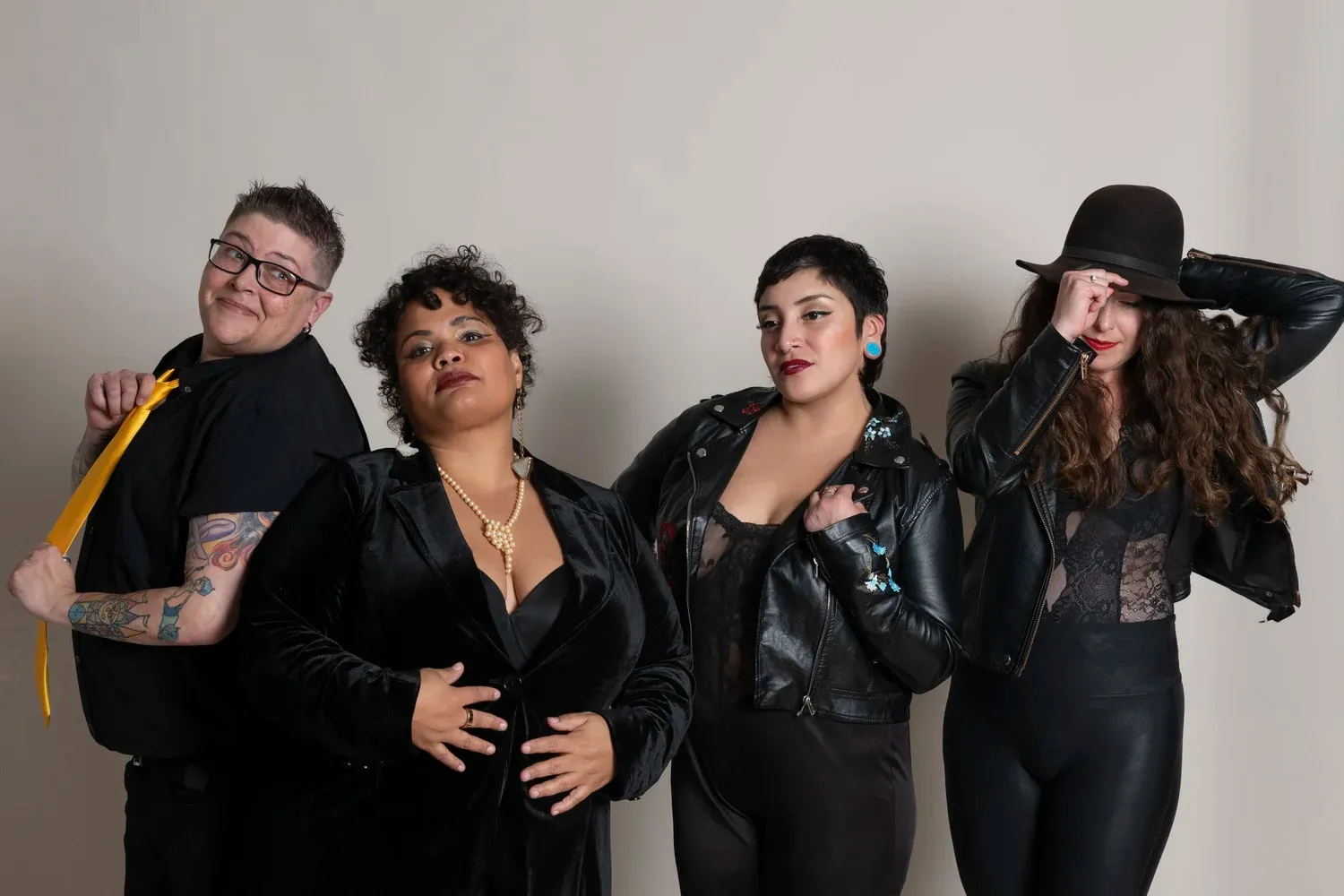
Last of the RedHot Mamas is a blues band built around the jazz-inspired, country-sauced songs of Amber Flame (second from left). Also featuring, Roma Raye Everly on bass, guitar, ukulele and cabasa, (far left) Gabby Rivera on cajón (center right) and Kristen Millares Young (right) on vocals and tambourine. (Photo by Zorn B. Taylor Photography)
Lastly, I wanted to ask about The Last of the Red Hot Mamas, the band you perform with, and the role music plays for you. Does it feel like another job? Does it feel fun? Is it an outlet that is creative or expressive for you?
I have a lot of emotion in my body, and singing helps me let it out. And so it's been really wonderful over the years. We do a lot of the band practices on my back deck, and they come over, and the kids know to stay away. We're out there making music. The best practices are the ones where we end up with more energy than we came in with, and it's because of what we created together. That is part of the joy and wonder of music, that it does create the capacity for co-feeling. And the songs are fun! Amber [Flame] writes great songs. I'm sitting there banging my thigh with a tambourine, singing, "Let me check my schedule!” It's fun. I've liked the situations it's put me in. Being at community festivals, or doing our launch at the Royal Room. It's a good reminder for me to get out of my house, away from my laptop, and into the world.
This interview was edited by Latria Graham.
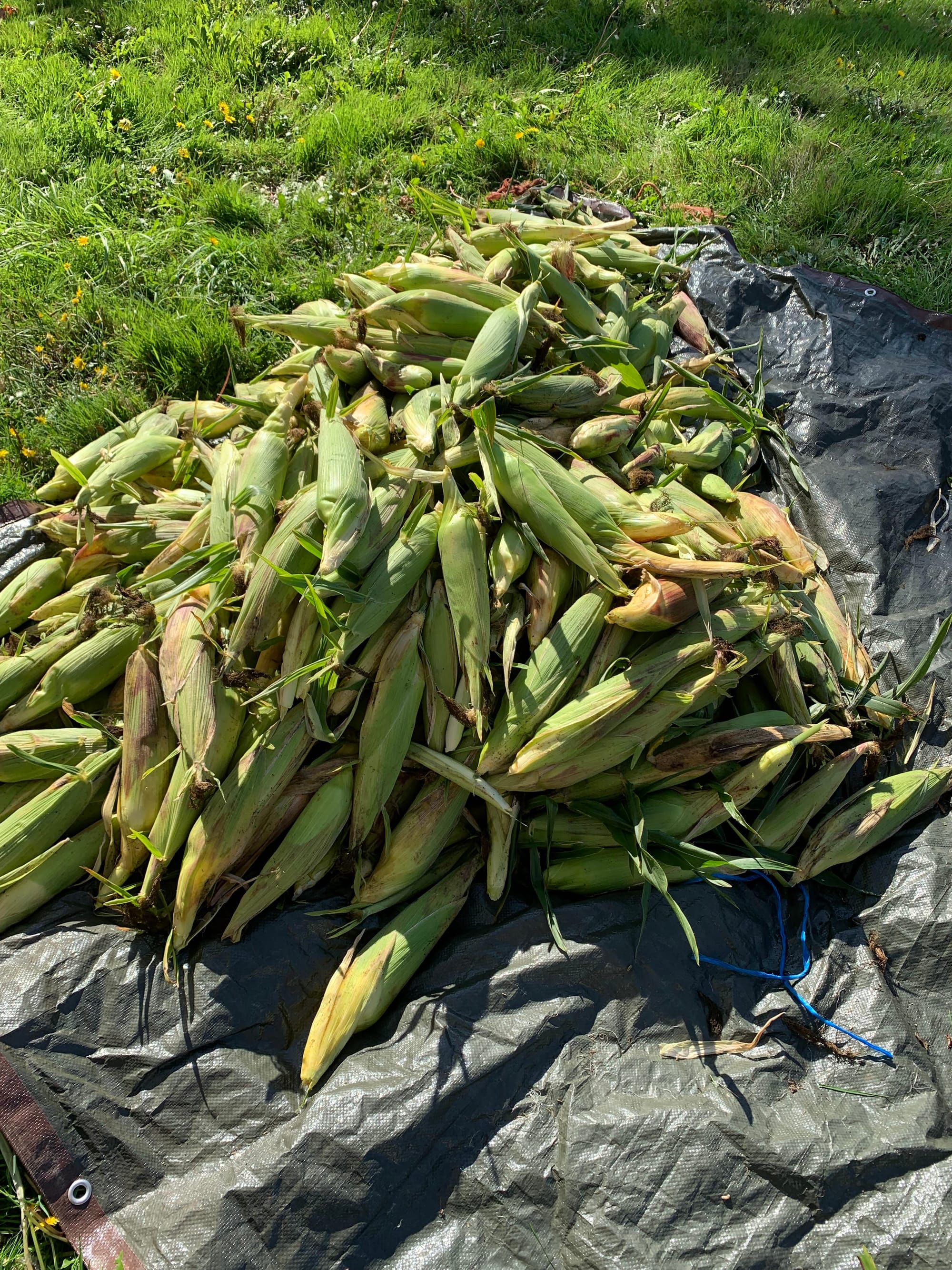
Post-Credits Scene From the Garden
This is what 365 ears of corn looks like. (Maggie Mertens)Latria going to a dahlia farm to put Maggie's garden to SHAME. (Latria Graham)
Scratch is a weekly newsletter about how your favorite writers are surviving (or not). We are a four-person collective publishing essays, interviews with other writers, and topical inquiries into the publishing and media industries today. If you like what we’re doing here and want to support us, a paid subscriptionis the best way to do so.
Join Scratch 📝
Become a free subscriber to receive our weekly newsletter.
You might also like
Sep 17
The Scratch Interview #8: Deesha Philyaw on Literary Community, Part II
“The last thing we need when we're trying to make art is to feel ashamed by what we don't have, and yet here we are.”
13 min read
Sep 16
The Scratch Interview #8: Deesha Philyaw on Committing the Cardinal Sins of Publishing, Part I
“So despite short stories ‘not selling,’ I just found other things so that I could keep writing my short stories.”
18 min read
Aug 05
The Scratch Interview #7: Kim Cross on Caregiving and Freelancing
“Freelance rates, by the way, haven't gone up since 1985. That's when magazines started paying $2 a word.”
18 min read
Jun 17
The Scratch Interview #6: Lydia Kiesling on Fiction and Finances
"I've found I'm not making big progress on fiction unless I go away from my house and say, ‘I am now going into isolation.'"
19 min read
Jun 03
The Scratch Interview #5: Colette Shade on Y2K and the Limits of a Millennial Writing Career
“In order to have a society — frankly, a democracy — we have to have these areas that are protected from the market.”
Member discussion