The Scratch Interview #10: Kashana Cauley on Leaving Hollywood
“The fact of the matter is that you can’t, as a writer, wait for everybody who holds the purse strings to tell you yes.”
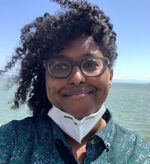
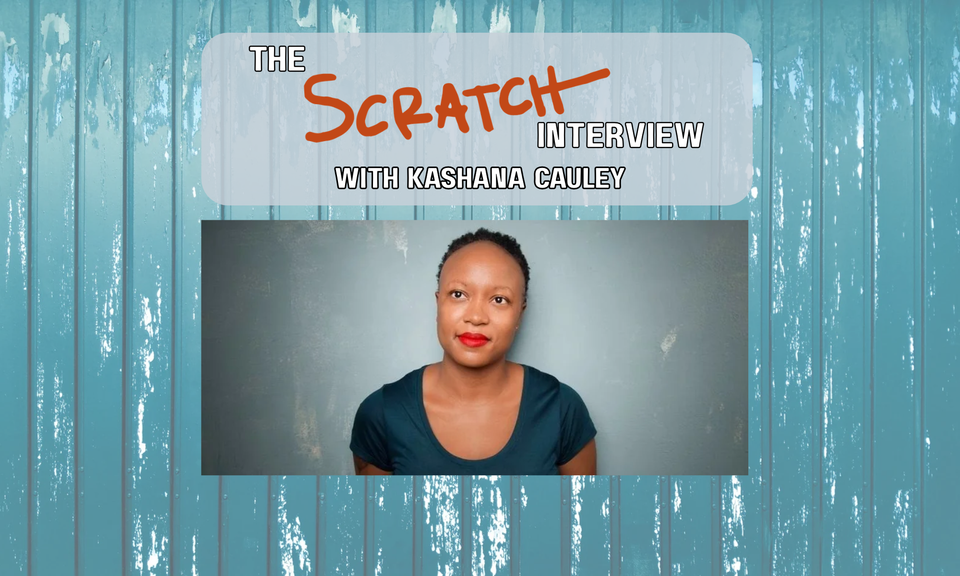
It isn’t hyperbole to call Kashana Cauley one of the funniest and quick-witted writers alive. She is the author of the novels The Survivalists (2023) and The Payback (2025), and her TV writing credentials include The Daily Show with Trevor Noah and the delightful animated sitcom The Great North. If you were alive a decade ago — which, if you’re reading this, seems very likely — chances are you saw her incisive and hilarious Twitter posts floating around the internet, and with good reason.
I recently had the chance to speak with Cauley about writing across formats, the gutting of the entertainment media landscape, and the challenges facing writers of color on and off the page in 2026.
The following interview has been lightly edited for length and clarity.
Note: This post contains Bookshop.org affiliate links. Purchases made through them directly support independent bookshops and help keep Scratch running.
Rahawa Haile: How long have you been working as a writer in LA?
Kashana Cauley: About seven years.
So right before the COVID pandemic started then?
Yep. I got lucky. This never happens to anybody, but someone was like, “Do you want to write for my TV show? Can you be out here in like a week?” And so my husband threw out 75% of my wardrobe in Brooklyn, and I moved out here alone and found us an apartment. That was fun and lasted about three seasons. I joke that I’m like the last person who got to work on a 22-episode season show; I know that’s not technically true but it feels like it!
I think it’s spiritually true. If someone gets to work on a 22-episode season show in the future, it won’t remotely be the same kind of television we used to know and love.
No, it will be a procedural [like 9-1-1 or Law & Order]. Nothing against procedurals, but that seems to be what gets that sort of season order these days.
What was the show again, and what was it like working for it?
The Great North. I love a big writers’ room, and we had something like 15 writers altogether. Everybody was just coming from a different angle. I'd do a certain set of jokes, and the remaining 14 writers or so would do different areas of a certain set of jokes, and so we were just sitting there pitching wildly different stuff. I loved it.
I love a meeting of the minds where everybody has a different sense of humor. We got to produce our own episodes, and so I had a great time meeting with our post-production crew, our audio guys, the people who would send you new drawings. I have a ton more television experience than people are liable to get now or in the future as a result.
Who knows, though — I hope people get lucky! I genuinely hope there are people out there who get the opportunity to produce their own episodes of television. Let’s put it that way.
It’s looked so rough down in LA for years.
Right now, Hollywood has the fewest available number of jobs that it has had in 30 years. I often joke also about how people of color got one foot in the door and then had it slammed on that foot, because it did seem like the minute a handful of us came up, all of a sudden the industry was like… Well, do we have to have this many shows? Do we have to pay people this much? Is there any way we can figure out a way to pay less?
TV has gotten very white in the last, say, five to six years. We are not the main characters of the shows we appear on anymore, either. I know there are a couple of Black shows around, but they just aren’t enjoying the visibility that Black and POC TV enjoyed during what I’m going to call Peak TV [in the 2010s]. And that makes me sad. I like it when we get a chance to be the main character; I like it when we get a chance to be our own showrunners.
It does feel like that door was closed, and I’m not exactly sure why other than people just stopped caring.
I know people who pitch shows, and there are awful, awful things, unfortunately, that are being said to them. A friend noted that his friend, who is Latino, was told that they are not necessarily looking for shows for victims of the Trump administration’s policies. Which. I can’t even count how many of us that would encompass.
There was another study the other day that said there were fewer female-led shows, I think, than there have been in a while. One of my friends was pitching comedy stuff and was told by someone that their dramas are really funny and they weren’t taking comedies right now.
I am so sad as a comedy writer. I like jokes! I miss jokes! I miss things with punchlines!
Enjoying Scratch? The best way to support our work is with a paid subscription!
I can’t remember the last comedy I watched that didn’t make me cry as well.
I would argue that scripted dramas aren’t doing as well as they once did either. A lot of it is reality TV, and a lot of it is procedurals. I don’t know what the execs are thinking, and I don’t know how they make these decisions.
I know that a lot of what you hear in Hollywood is individual people’s anecdotes, so it’s hard to generalize across an entire industry, but the data on some level speaks for itself: There are fewer people of color on TV, or helming their own shows, than there have been in a long time. There are fewer women-led shows. It’s just dark out there. People are going to have to take a different perspective on buying shows in order for that to change.
What are comedy room writers expected to do? Given this reality, I mean.
My job is to wake up every day and find a way to tell jokes. I’ve been sneaking them in books lately. I do have my own TV projects that I’m going to do all by myself. You know, zero budget type things. I have written a couple of movie scripts.
The fact of the matter is that you can’t, as a writer, wait for everybody who holds the purse strings to tell you yes. If you are dedicated to writing for TV and film, if you’re dedicated to writing novels, then you kind of have to keep putting your stuff into the world. What’s funny is everyone I know in Hollywood is like How do you sell a book?
Oh no.
I have given so much professional advice on how to sell a book in the last year; you would absolutely die.
Publishing is doing objectively better than Hollywood right now. Fiction sales in particular. Television has become a smaller market for writers.
I talk to people who are just so envious of the time when books were getting optioned left and right.
I don’t know a single person who’s had a book optioned in the last five years — that has made it to screens — who is not some sort of major superstar. Option money is often incredibly low. It can be lower than most book advances at its lowest, and the stuff is just not getting made.
Speaking of publishing, what’s prompting your move back to Brooklyn from LA?
I mean I’ve really enjoyed my time out here. I don’t know what my Hollywood future looks like, but I know what my own types of TV and film projects look like, and I am satisfied with that. If they want to call me, I’m right here.
I saw a few months back that you adapted your TV pilot into a play? Is that right?
Yes! It was performed at Dynasty Typewriter [in Los Angeles]. They had a little series where they were adapting folks’ pilots into plays, and I had a great time. We got Yvonne Orji, who played Molly on Insecure, and we had a fantastic full cast. It was a great opportunity to see my work performed by actual actors live. I am actually adapting my book The Survivalists into a full-length play, because I love that so much.
I want to see how many other things I have in my back pocket that would be good plays. Many TV people are getting into playwriting. It’s a great way to see actors perform your stuff, and they are still commissioning new plays left and right.
Many writers think of Hollywood as their goal, but I can see how writing a book or play feels far more accessible than getting studios to open their wallets even a little.
They’ve got to pay millions to make your TV show or your movie. Not you specifically, necessarily, but a cast and crew and a whole production. Books and plays just don’t require that kind of outlay. I would 100% encourage the play experience. I think more people should be adapting their work in that space. Theater is fun.
How do you tend to see yourself? As a comedy writer first? Or a TV writer? Or a novelist? All of the above at the same time?
My work history in writing is so long at this point, and so varied, that I just see myself as a writer, first and foremost. And whatever medium is appealing to me this year is what I do.
I mostly feel like a novelist these days? My two books came out and did well enough that I meet tons of people all the time. I got to tour on The Payback for like a year. People just kept inviting me to really cool stuff. Though, I feel like once you write for TV, you’ll always write for TV if you keep that muscle up and keep writing scripts. I did not see myself as a playwright, and then I realized I’d gotten live stage work performed.
I miss being a media person sometimes, but I don’t really do that. Every once in a while somebody will reach out for a book review, but there are far fewer places to write nonfiction and essays than there were 10 years ago.
True, but most people don’t have your versatility. Even before you got into writing, you used to be an antitrust lawyer.
That’s how everybody gets into comedy. [laughing]
I still think about the essay you wrote on the history of the word woke for The Believer back in 2019. Like you, I am very down on media right now, because you’re right — there are fewer places to write for without compromising something. Do you still find a way to freelance much?
Not really. To be honest, I remember when you and I were coming up, there were tons of places to hone your craft and get used to different styles and reporting requirements and such. I miss caring about new younger writers in the media. You just don’t hear about some 25 year old that’s coming up through the ranks through something voicey and fun anymore. I miss getting to know folks through essays and through creative nonfiction that was a little more artistically done than straight news. I miss the young reporters and all the stuff they were uncovering. I feel like they just reduced the budget so much for investigative reporting at most outlets. A lot of these places just died. There are many publications that don’t exist anymore.
I mostly feel a sense of sadness toward the media. And if I’m being honest, I think it would be really miserable to work in media as a Black woman at this point. I know a handful of folks that are still employed, and I think that they are often brave people. But I think for the most part the media covers our communities like shit.
I can’t imagine applying for a legacy media job today. I am too on the record about too many things, like genocide and fascism and the worthiness of Black life. But I’m glad to hear you’re in a fiction-writing mood. What’s changed for you between the publication of your two novels? Career-wise in particular.
I think they’ve both opened so many doors for me. I’ve met so many people. Both books enjoyed pretty good media coverage, which I feel incredibly thankful for in an era of shrinking book coverage. It was a pleasure to talk to that many folks who wanted to talk about survivalism and a heist against the student loan industry. I know everybody feels proud of their book babies, but I never thought I would end up in so many places because of my novels.
I’ve been writing fiction since I was 10 years old. That was actually the original plan: I was going to be a novelist.
I had no idea.
It took me absolutely forever to get there, but it turns out you’re never too old to suddenly be holding a copy of your book and being invited to things. I know people who were much older than me when they first got published, and I just like… I tear up for how happy I am for them still achieving their dreams, still going ahead with their work, still finding fulfillment.
I’m not the world’s most successful person. I haven’t had a bestseller or anything like that. I’m still amazed at how many people have read the books and enjoyed them. I feel very happy and confident as a fiction writer. I’m just dying to sell the next one.
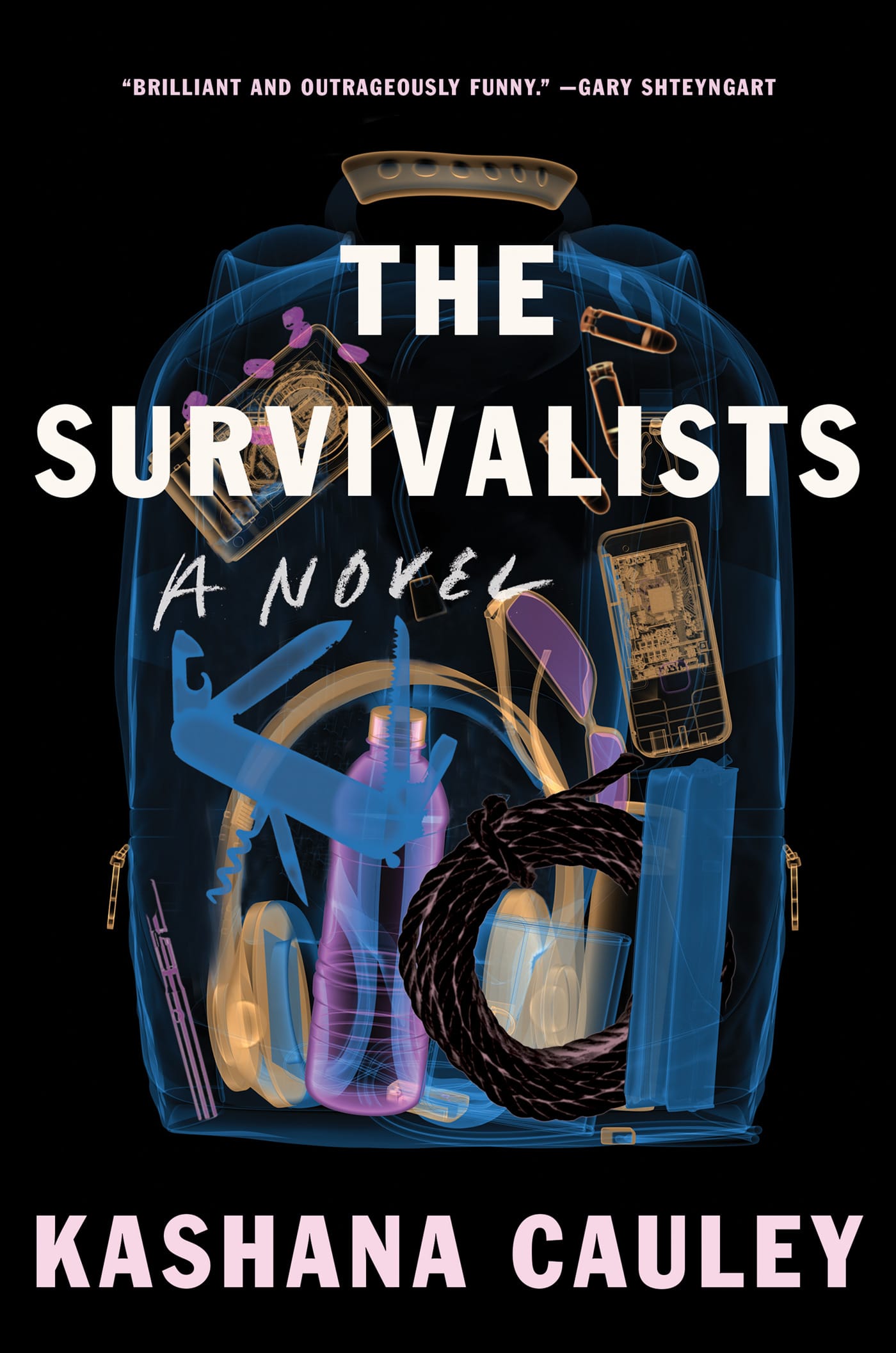
I really appreciate how much the characters in your novels care about being physical entities in the world.
I agree with them. I like thinking of life as big and messy, and I wanted to write big, messy characters. I wanted people who cared about what they wore, and what the air smelled like outside, and what sort of friends they had, and what sort of things they’d like to talk to their friends about — in addition to things like career and where they see themselves in five years.
I love imperfect people. I am an imperfect person. I love reading about other authors and imperfect people. It’s been a joy to write Black women who are a little bit messier than we have sometimes gotten to be in fiction. And to, for the most part, give them happy endings because they deserve to be happy, complicated people. Just like everybody else.
I want to zoom in a little and ask you about your approach to crafting fiction. Are you someone who writes a million drafts, or are there any guiding principles you like to follow?
I have to write into the character first. I need to know everything about them. What music would she listen to? Where does she live? How much money does she make? What sort of choices does this force her to make, and what sort of choices is she trying to make despite her annual income?
I want to feel like I’m directly in their skin, and I could just write a book through séance. Like they’re just talking through me like the dead, and I’m just a happy transcriber. So I write tons and tons of introductory character work before I start shaping anything that looks like a plot or an arc.
I wrote, I think, 400 pages of character sketches for The Payback.
No way.
An entire backstory for everybody! I was like “Where were you when you were eight?!” All sorts of educational stuff that didn’t make it into the book about where they picked up their loans and what exactly getting an education meant for them that appears in bits and pieces, or a sentence here and there, but where I felt was too slow-moving for the actual plot of the book.
I worked on dialogue an absolute ton, too. I wanted everyone to sound different. I practiced writing dialogue for everybody to make sure they were different people. I am in character sketchland for a new book, and I hate it. [laughs] I’m just sitting here like “What does this person sound like? What do they want? When do I get to the point where I just hear them in my head and keep going?” I do multiple drafts for everything because I often end up honing the voice of a character through the course of the drafts.
I’m a pantser [i.e,. a writer who “flies by the seat of their pants”], and I think that ultimately results in more work, and I admire the plotters. I wish I could become them someday and it just never pans out.
I have a close friend who’s an extreme plotter, and their outlines always look like the most beautiful, complicated programming language of branching storylines and intersecting characters, and I am just profoundly jealous because, like you, I am a lifelong member of the pantser club. Is the new book you’re working on a novel?
Yeah.
Amazing. Well, good luck with your 600 pages of character development. Truly, how do you even explain this to your agent? You’re like “Yeah, no, I’m working on the first 600 pages of not-the-book-itself, but it’s coming.”
My agents and I have worked out a deal where I just submit whole books and they go, “Oh! Whole books! Amazing!” I never end up talking to them before that, because to me, everything feels too unformed and gross. So they get completed drafts where I think that character and plot are holding together.
We’ve chatted about this, and they’re happy with being surprised, and they don’t seem to care that they don’t get outlines from me or hints or anything. We have occasionally chatted about future books in informal ways. Mostly, they’re 100% like “Great! Thanks for sending this manuscript out of the blue!”
Well, of course they are. You've made their job wildly easy. Are your two agents US/UK, or book and film/TV, or…?
Oh no no. I have a third TV/film agent. They are just a pair that work as a team.
Are you with a union or guild?
I am a member of the Writers Guild of America West, but when I move back to Brooklyn I’ll rejoin the Writers Guild of America East because they are fun. It’s nice to be sent events that correspond to the place in which you live. I was super proud when they were organizing journalists in addition to TV and film writers. They’re a great organization, and I hope to be invited to happy hour.
What are you reading right now? The last few people I asked that question responded with, “I’m not. I’m too busy doing other things,” but I get the sense you won’t.
Oh no that’s not me. I picked up Cool Machine by Colson Whitehead when I was in New York this summer, and I was just blown away. I’m really jealous. I wish I could write New York with that level of detail and also characters with that level of detail and backstory and pathos. It feels like a good yarn with good jokes, and an incredible amount of NYC infrastructure, and just a deep, deep love of blackness. [Whitehead’s Harlem Trilogy] is one of the most loving book series towards us that I've ever read. The culture that people don't necessarily pick up on or is not necessarily depicted in fiction. And I just am proud to be alive and to be able to read those three books. You guys also interviewed Deesha Philyaw, and I was just like “Oh right! A satire on the megachurch! I grew up in the megachurch! Let’s do this!”
I’ll also give a shout-out to The Great Wherever by Shannon Sanders, which I’ve been yelling about for months. I feel like the minute you open that book you know you’re in good hands with that narrator. It’s like six generations of a Black farming family, and Tennessee, and all the stuff that happens to it. More than the story, it’s just the voice of the book. I think the cliché is the best books are when you would follow that narrator anywhere? I just felt really sad that I wasn’t related to those people, 400 pages later. Can’t we be family?
These are maybe the best blurbs I’ve heard for these titles? I am absolutely here for “Kashana’s Three-Sentence Book Review.”
I get to review a book like once a year! I often think about just starting a blog that summarizes books in three sentences. I read 70–100 books a year, and I just want to talk about all the good ones all day long.
I wish there were more places to do that. I miss the water cooler that was Literary Twitter a decade ago. I miss having a bunch of literary websites people were reading regularly and whose articles were then talked about online.
The siloing of publishing and media on Substack has been very depressing to me. I just have no idea what’s going on over there.
Me neither. Everybody split into seven websites. I subscribe to a few Substacks — Alexander Chee’s comes to mind, but I mean he’s just been a really great blogger for like 15 years or something well before Substack.
But it’s hard to keep up with everybody’s newsletters, and oftentimes it’s like, well, how do you say something that’s truly different than all the other things people already subscribe to? I miss the water cooler of Twitter, also. But 2026 is where we are now, and it is still rewarding to pick through what is there and find cool people who are writing cool shit.
Do you have go-to websites for that kind of thing?
A handful of Substacks. I have my misgivings about Bluesky, but it is the site that has filled my needs the best. And I do try to glom on to whatever literary conversation that’s there and read that. But websites? I know the answer is probably go to Substack. I think that’s where a lot of that stuff’s happening, but I don’t love the Substacking either, and it’s just kind of a lot of work. If only there was a publication that employed a bunch of writers in one place, you know?
This is partially why we’re speaking now, because I’m like… where the hell are we supposed to go? Most Black writers I know are miserable on social media. They’re miserable on Instagram and on Threads. Bluesky is also the site that fits my needs best, but we both know it’s not fun to be a Black person on Bluesky most days. I don’t even know how to begin describing what it feels like to be Black on social media right now. I’m just so tired of it.
I think some of it is that when we were all on Twitter, in one place, I felt like there was a lot more community, and so if I wanted, a lot of my day would be filled with Black people telling irreverent jokes about whatever. We were all talking to people. We were all hooking each other up with work. It was more intimate than what we have now.
A lot of the Black writers I know have also, in the last year or two, pulled back from posting a lot on social media, or aren’t as open when they post. And so you see your friends, and they are just kind of watered down. And I’m like, I understand why you’re not bringing your whole selves here. It’s like a minefield. But I miss you. Even though you’re here.
That’s the thing — I miss us! I know Instagram isn’t a real version of a person’s life, but I haven’t posted on Instagram since like 2024, and I have no idea what’s happening in my friends’ worlds, and they have no idea what is happening in mine.
Yeah, it would be a lot easier if we just talked to each other all the time, and we could just promote each other’s stuff. I don’t know what’s going on with anybody else, and I feel awful about that, because I would love to be shouting about everyone’s work too. I miss a lot of that mutual support, and I run into people who I knew fairly well on Twitter, and they’re just like, “You have another book out?” And I’m like, “Uhh, I hang out on a website with seven other people. Sorry!”
I get it, and I don’t blame them. How would they know! How would anyone know about anything? And yet the pressure is still on us to do that marketing for our work, to do that publicity, to make those sales. It’s like a GoFundMe for your profession, where you hope there are enough people who like you who pay attention to what’s happening somehow.
And it’s so much harder to do that when everyone’s fractured. I’m very sad that the publishing industry doesn’t seem to understand that social media is simply not what it was. The algorithms on Instagram and Threads hide a lot. I just don’t see enough responses on Threads to make it clear it’s a good use of my time. I see people who have won book prizes getting 35 likes on a post about their new work, people who have like 10,000 followers or more, and I’m just like… no one is actually there? It’s like a dead mall.
Bluesky isn’t dominated by an algorithm, which is cool in the sense that you don’t have to beat it, but bad in the sense that if you posted something 10 minutes ago, it might disappear from everybody’s feeds forever. You can at least get more organic engagement there, but people have to want to talk about your stuff. It’s just tough.
The other thing is that Meta doesn’t seem to want political material, and I don’t know how many people’s books are not considered political. If you are a woman writing about womanhood, or a minority of any type writing about minorities, you get absolutely dinged. And so social media isn’t even a useful field for a lot of us. Not the Meta products, at least. You’re always being encouraged to filter out political stuff, or they remind you it’s a setting, and it’s like… I’m Black? I wake up every day and it’s considered political. If I post about myself, you guys are gonna downrank it. This is a waste of my time. Every year I feel like they show my stuff to fewer and fewer people. I post occasionally, but I feel sad about it. I mostly answer DMs.
What does feel worth your time? For me, despite it being entirely a labor of love right now, it's doing the work to get Scratch off the ground. Because I feel like writers are just completely leaving the industry, or just leading these, you know, little lives where they're constantly worried they'll be forgotten.
Honestly, I love Scratch, and I was really pumped that you reached out to me, because I’ve been reading it for as long as you guys have been a publication. I appreciate the honesty of what it’s like to be a writer in this moment, as well as a lot of the honest discussions about income, and money, and what you can expect of a writing career in the present day. I think that stuff is worth it. I’m really proud of you all for forming your own publication, for publishing regularly, for being brutal at times about reality.
I see more and more groups like your groups. Friends of mine who have splintered into groups of five or 10 and are just running their own things, and I’m just so proud. I think you’ve created a media where there is none. This is definitely what the present looks like, and until we manage to put some limitations on funding media publications by billionaires, it’s probably what the future looks like, too.
That is so kind of you to say. I genuinely hope you end up meeting up in real life with fellow writers in Brooklyn. I increasingly feel like forming these in-person communities is the next life-sustaining step. I don’t know how else we make it through.
This is why I’m moving back to New York, actually. It seems to be really tough to make friends here [in L.A.]. The entertainment industry, what’s left of it, has become very… I think people are scared. They are scared to connect. I always thought networking was personal and professional, in a way. You got to know people and what they were up to, and maybe they’d call you after you’d formed some sort of deeper connection, or been out a few times, and now there’s just a lot of “Can you do something for me today?” And it’s like, “Oh, honey, 95% of us — given the state of the Hollywood job market — cannot do something for you today.” And then people just kind of walk away.
I feel really sad about that. I had a lot of entertainment community, and I feel like a lot of that has splintered as getting a job here has become tougher. And that sucks because it both doesn’t feel good or help people get jobs. What helps people get jobs is forming real connections and then going, “Oh! I have a spot on a show!” And when I’ve been back to New York, people just seem to be making more connections that are not as competitive, which is funny because New York’s reputation is being competitive. But in the New York I remember, everybody always wanted to meet you. And when I’ve gone back there and visited friends, and hung out with family, they still do.
It’s exciting to be moving back to a place where people still want to meet you. I already have three times as many hangouts planned there as I’ve had in the last four or five years here.
I don’t think there’s anything like being Black east of the Mississippi River.
[laughing] No, there is not.
I always ask interviewees if there's anything they’d like to promote before we wrap things up. Would you like to share something?
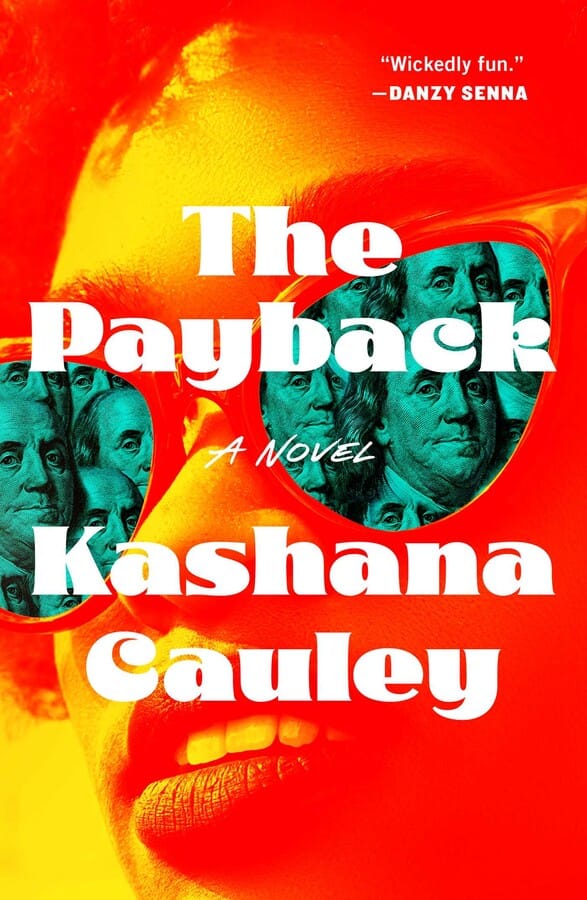
I am so terminally between projects. I hope to announce some stuff very soon (fingers crossed). I mean, read The Survivalists read The Payback. They have great covers.
As soon as I finished reading The Payback I thought “OK — where is the movie?”
I wrote that movie! If anybody wants to make it, I’m right here! To be honest, we could do it ourselves. I just got a tripod for my phone, because I’m sick of being told no. So yeah, talk to me, folks! Let’s figure it out.
This interview was edited by Maggie Mertens.
Scratch is a weekly newsletter about how your favorite writers are surviving (or not). We are a four-person collective publishing essays, interviews with other writers, and topical inquiries into the publishing and media industries today. If you like what we’re doing here and want to support us, a paid subscription is the best way to do so. You can also leave us a tip. Or submit a mailbag question of your own!
Become a free subscriber to receive our weekly newsletter.
Member discussion