
I Want a Literary Wife
But the economy won't support it.
Welcome to Summer Scratch!
We're rapidly approaching the end of summer and hoping to make the most of it. Today, Maggie shares her thoughts on literary wives, writing, and (un)paid labor while reading Robert Caro's 2019 book "Working."
* * *
Note: This post contains Bookshop.org affiliate links. Purchases made through them directly support independent bookshops and help keep Scratch running.
For Ina
Beloved
Thus reads the dedication of Robert Caro’s 2019 “partial memoir” Working: Researching, Interviewing, Writing. Ina is Caro’s wife of nearly 70 years. In fact, all six of Caro’s earth-shattering, award-winning tomes has been dedicated to Ina. And if you read Working, you know why dedicating his books to anyone but her would have been ludicrous.
I’ve long been fascinated by Caro. I was in grad school at The New School when he was a finalist for the National Book Award for his 2012 installment of The Years of Lyndon Johnson series; he lost to the incandescent Behind the Beautiful Forevers by Katherine Boo, which is still one of the best books of reported nonfiction I’ve ever read.
Attending The New School meant one could get tickets to the readings that took place the night before the National Book Awards. I whipped my phone out when Caro took the stage to take his photo, and a classmate laughed at me, I guess for caring about this septuagenarian chronicler of history when I was supposed to care more about seeing Dave Eggers and Junot Díaz (no thank you).
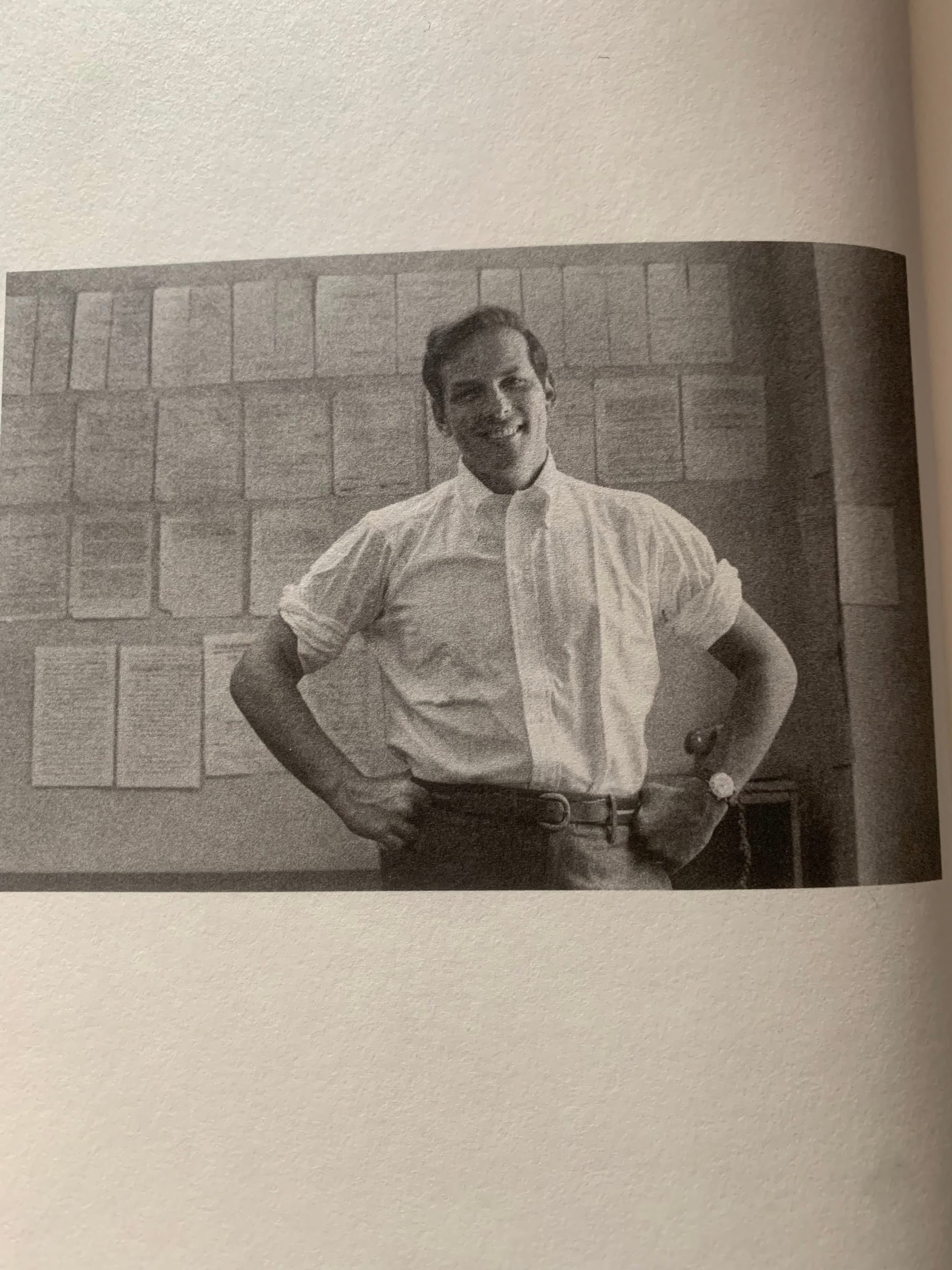
I hadn’t actually cracked one of Caro’s behemoth books at that point, but my partner was obsessed with The Power Broker, and I became obsessed with the career arc of this rare bird of a writer. Here was an old-school journalist who refused to follow a traditional path, who quit his job at Newsday so he could write books. And not just any books: huge, decades-long research project books. He nearly went broke doing it.
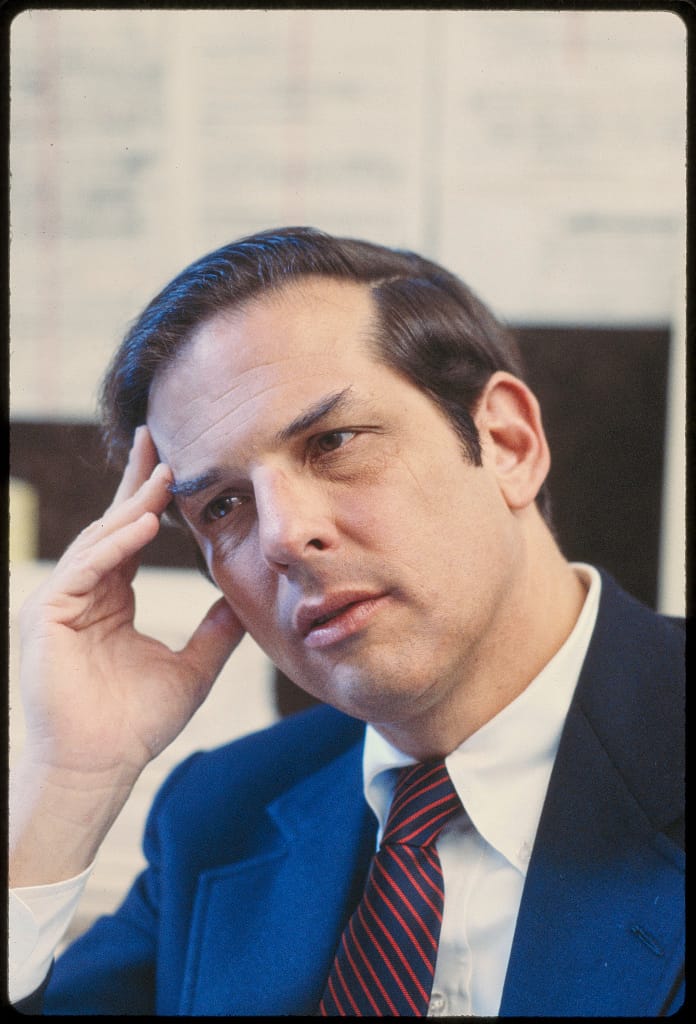
Caro was paid just half of a $5,000 advance in 1966 to begin The Power Broker. Six years later he still hadn’t finished, but he found a new editor that paid him much more. When he finally published it in 1974, he was awarded prestige in the form of literary awards and the time and money it took then to devote his entire life to the next project he wanted to take on: a multi-volume investigation of President Lyndon B. Johnson. At 90, he is still working on the fifth and final volume. And frankly, it’s difficult to imagine anyone ever getting to build a career and life from this kind of intense research again.
But reading Working, I had a realization that what Caro required to have this trajectory — in addition to finding a publisher and editor who had the money and patience to let him write books that took decades and his own obsessive brain — was his wife, Ina.
Caro refers to her throughout Working, as his partner in life, family, and work. In profiles of him, she is widely referred to as “his only research assistant.” Ina does not share bylines with him, of course, nor receive co-author status. But she does get top billing on each book’s dedication page. Even this amount of gratitude expressed to his wife is more than most literary men, who have built careers only due to their wives cleaning up their messes, or feeding them, or typing their notes, or editing their rough drafts, with little to no recognition whatsoever. I learned only while writing this piece that Ina is a published author herself. She’s written two books, both historical travelogues about France.
Enjoying Scratch? The best way to support our work is with a paid subscription!
I’m not mad about the gendered way a woman’s (nearly) invisible labor has resulted in the aggrandization of yet another Great Literary Man (OK, maybe I’m a little mad). What I am is jealous. Because I, like most women writers, will never have an Ina.
I identify so much with Caro’s process. His thrill of seeking answers in archives and interviews. Those stories that matter and help us understand history and politics and power and the way the world works. But when Caro first recognized he could not do the sort of work he wanted as a journalist, with a day job that didn’t pay very well and took too much time, he simply quit.
It was the 1960s, and Ina worked as a teacher to support Caro and their son. When Caro’s first book was still in the research phase and he needed Ina’s help to do that research, she sold their house to pay for another year of living and researching, together. While Caro was writing The Power Broker, Ina quit her job to accompany him for months to a dark storage garage that belonged to the New York City Parks Department, all to dig through 30 years worth of papers from Robert Moses’s time leading the department. Later, when Caro moved on to LBJ, Ina packed them up and moved the family from New York to the Texas Hill Country so he could immerse himself in the former president’s early life for three years. When Caro got nowhere with the people in the Hill Country, Ina made inroads by befriending the women in town. Eventually, they trusted her husband enough to talk.
This isn’t an essay about my marriage. But it’s not not about marriage — the institution. And work. And how I don’t think it was good that Ina, as the wife, was pushed into this role as research assistant to a Great Literary Man, especially when she clearly had her own books she wanted to write.
I believe work like Caro’s, work I’d like to try to do, requires that level of assistance (if not necessarily that specific source). But today, basically every person actually needs TWO incomes to survive. And if you have kids you basically need TWO incomes AND support from someone else. (So really three? Four?)
I might be the Robert Caro in my relationship, spiritually, but because I’m a woman, and my partner is a man, and we have kids who keep wanting to eat, it makes me feel like my dillydallying in archives (alone), and goose-chasing book ideas for years on end without being paid (also alone), means I’m a drain on the family at best and an unpaid housewife paying for childcare at worst.
My husband cannot be my Ina. He cannot quit his job to be my full-time research assistant, nor would I really want him to. Because he enjoys his own work, and those benefits pay for our kids’ health insurance, and for my therapy and the daycare bills, and our future teenagers’ inevitable therapy bills, and our mortgage and food, and I love him.
So, yes, I depend on my partner in a sense, but not at all like Caro depends on Ina, because the twist is that me, being the wife, aka the one without the regular paycheck, signals to society that digging in archives and hoping I can spend decades perfecting prose about the topic of my choice someday is something fundamentally unearned.
It’s strange, isn’t it? Wives have always worked. Often, in roles like Ina’s — unpaid, but necessary. Literary wives, in particular, have famously operated under the shadow of their husbands. Today, we see this kind of setup as outdated, patriarchal. But we’ve formed so much of our society around the idea of a nuclear family that now, when women and men alike need to bring home salaries (regardless of race) — yet the labor of raising a family also demands flexibility — the arts have turned great literature into women’s work: unpaid, but necessary.
I can’t help but think about all of the reporting on gender and labor I’ve done over the years. And how book publishing (editing, writing, even reading!) has become vastly women-dominated. And historically, when fields go from being largely men to largely women, pay (and prestige) goes down drastically. Women in publishing, though the majority in number, are still underpaid when compared to men in the field.
There are so many books I want to write. So many research rabbit holes I want to get lost in. At one point, in Working, Caro says he couldn’t have read every paper from LBJ’s time in The White House, because it would have taken him “six lifetimes,” so he had to choose, because he only had one. Reading that made me feel better because I, too, am often feeling bad that I can’t read every paper in an archive that pertains to a thing I care about, because my time is so limited. But then I thought, well, he actually had two lifetimes, didn’t he? His and Ina’s. And I have less than one, really. One split between all the other things.
Obviously, I don’t actually need a wife to do my work. Neither do you. Neither does Caro. Wives should not be replacements for research assistants. What I need is an industry that takes this work seriously, even when women (even yes, mothers and/or wives) do it, so that writers can hire research assistants and still afford to feed their families. So that one could spend 10 years on a book, like Caro, and make a living wage.
We need publishers who can actually nurture writers, like Caro was, to give them time to create quality work, instead of trying to pump out the next viral sensation only to be frustrated by low sales numbers. And if we want the publishing industry to continue to put out books like Caro’s — now the journalism industry is a shell of itself — we need programs that help young writers and researchers get hired by more established peers so they can learn the ropes and apply that knowledge to their own careers.
When it comes to Great Literary Men, I’m convinced that we love stories about their devoted wives because they help prop up the myth that great works of literature are made by lone wolves. But the truth is these stories are actually proof that the old system never really worked. Books like Caro’s don’t come out of a vacuum: They need women like Ina, and agents like Lynn Nesbit, and editors like Robert Gottlieb, and a publisher with pockets like Knopf. These books require investment or they won’t exist at all.
This essay was edited by Rahawa Haile

Scratch is a weekly newsletter about how your favorite writers are surviving (or not). We are a four-person collective publishing essays, interviews with other writers, and topical inquiries into the publishing and media industries today. If you like what we’re doing here and want to support us, a paid subscription is the best way to do so.
Become a free subscriber to receive our weekly newsletter.


Member discussion