
Dolly Parton Loved Being Dolly Parton
It was one of the most important aspects of her art.

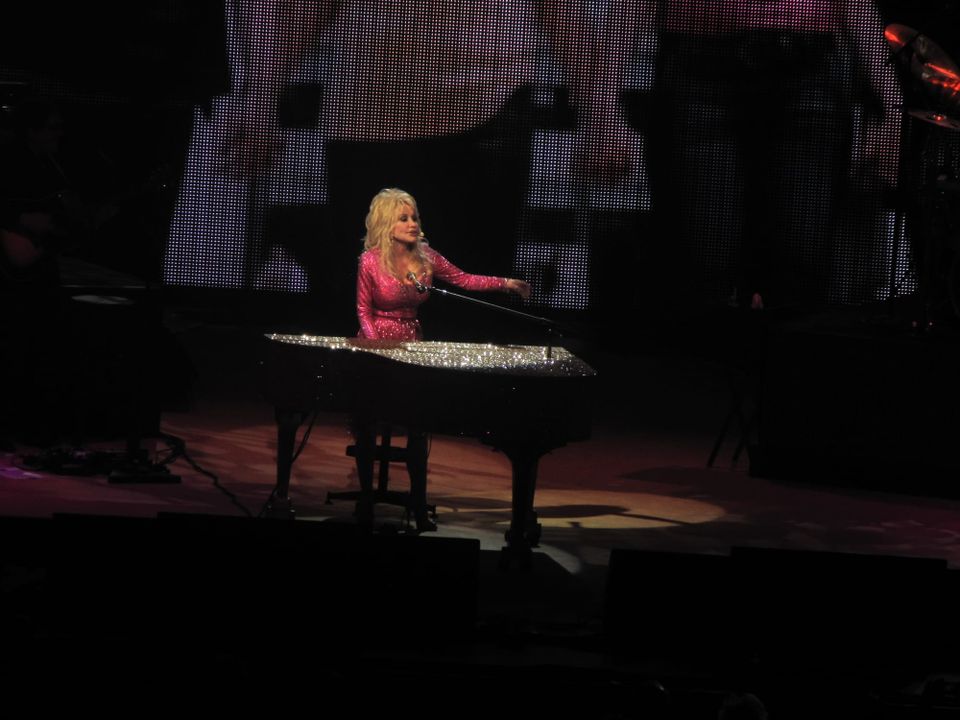
This is the last week of Summer Scratch, and in light of Tuesday's news, we thought it appropriate to let Rahawa share some thoughts on Dolly, books, and surviving as an artist when no one expects you to.
Like many of you, we are preparing for the end of summer and beginning of fall and all that comes with that change. A new school year. New projects. Gardens heading into harvest season. As such, Scratch will be taking the next two weeks off as we prep some exciting new features for this community. Stay tuned.
Oh, and thank you for being here as we figure out how to keep making art in this world.
— Scratch
Country music legend Dolly Parton died at age 80 this week, and the public outpouring of grief has been overwhelming; there are more examples of Dolly’s behind-the-scenes advocacy being shared than one could reasonably keep track of. It has also not gone unnoticed—in certain circles, at least—that she died on the anniversary of the start of the Battle of Blair Mountain, which took place during the Coal Wars of the 1920s, and while some might chalk that up to coincidence, I don’t. I believe she waited to get going, because Dolly Parton was never one to waste an exit.
Upon her passing, her family asked that people donate to Parton’s Imagination Library, which sent over 330 million books to children since 1995 to encourage a love of reading, instead of sending flowers. “If I’m remembered 100 years from now, I hope it will be not for looks but for books,” Parton once said. Which is to say that well before our era of state-wide book bans and AI companies destroying titles to get around copyright technicalities, Parton knew that a book was a revolutionary object. That this was one reason we bonded with them deeply.
Scratch, as you know, is a literary publication, and we could continue in this vein talking about the literary good Parton did in the world. But I worry how quick the internet has been to assign Parton sainthood (I am not alone in this concern). Nothing about her aspired toward saintliness, despite the current fervor to anoint her. As a lover of country music and a writer, I think the only thing that rivaled Parton’s Christian faith was her belief in radical embodiment.
Enjoying Scratch? The best way to support our work is with a paid subscription!
Parton was unapologetically loud and unapologetically country—and here I will make a distinction between that adjective and "Southern," a broad, geographic descriptor, the way Beyoncé made clear what self-identifying as "bama" meant a decade ago, and the way Otis Redding stretched out the words “that’s good!” when Carla Thomas flung the insult “You’re straight from the Georgia woods!” at him in their 1967 cover of Lowell Folsom’s “Tramp.”
Dolly was unapologetically glamorous despite the constant misogyny she endured, both within the music industry and as the butt of national jokes. She was an unapologetic proponent of the working class. And if people were hurting, she helped them hurt less.
And yes, Parton was committed to expanding literacy; like Whitney Houston, she genuinely believed the children are our future. She knew worlds were made possible where words met the page, and if there’s anything one can say about Parton, it’s that she brought her world into the spotlight in a country that despised the poor. She was ridiculed most of her life for daring toward self-autonomy. And if she seemed unrepentant in those moments when affirming others should be free to do the same, it’s because she fucking was.
This isn’t a hagiography. Parton was not perfect, but her compassion for others was bottomless. There are dozens of stories of her quietly putting her money where her values were and loudly proclaiming her values where the most vulnerable were concerned (including through her silences).
I cannot speak to what Dolly meant to Sevier County or what Tina meant to Nutbush. I can tell you Tennessee made both women and never left them; you can hear it in every record they ever made, even when those records had nothing to do with the hurt of home. Where they came from was inseparable from who they were.
If you’re thinking this might be the part where I write about Appalachia, you are correct. And if you’re thinking it might have something to do with me specifying "country" when I could have said "Southern," you would be correct as well. Because it is not enough to say Dolly was dismissed for her poverty, or looks, or raucousness: The image the greater United States had of Appalachia after the publication of Night Comes to the Cumberlands (1963), in which eugenicist historian Harry M. Caudill blamed Appalachians for their impoverishment (ring any Vice Presidential bells?) and alleged genetic inferiority, was devastating. Parton was considered backwards by many during her adult career not simply for her cultural background, or her performance of womanhood, but for her very DNA.
This is, of course, absurd, and it should go without saying that I have spent a long time—too long, even—thinking about how others have weaponized this idea of Appalachia toward the disenfranchisement of Appalachians over the course of these last two centuries. Parton's rejection of her diminishment was only one half of her defiance; her lifelong embrace and centering of the mountains and its peoples was the other. It took a long time for folks to see it, even if her songs, from day one, said it plain.
And here’s the thing: In addition to her many talents, Dolly was a ridiculously skilled songwriter and instrumentalist. Have you ever tried Travis picking with acrylics? Or any other kind of guitar playing? This is a rhetorical question. I know you haven’t. I’m shuddering just thinking about it, knowing how sloppy my own plucking gets when my nails grow a millimeter too long.
But this is the point I’m making, in this publication about how writers survive—I don’t think one can ever stop being themselves. For those of us not born to wealth, conviction is our greatest fortune. Dolly never squandered hers. Her values were clear: Pay your union dues, stand with labor, love the castaways, put money directly in people’s pockets. Make great art (and own your work). Share books freely. Uplift the land as the land has lifted and lifted you. Higher still, even. And help the people climb.
This essay was edited by Maggie Mertens.
Scratch is a weekly newsletter about how your favorite writers are surviving (or not). We are a four-person collective publishing essays, interviews with other writers, and topical inquiries into the publishing and media industries today. If you like what we’re doing here and want to support us, a paid subscription is the best way to do so.
Become a free subscriber to receive our weekly newsletter.
.jpg)
Member discussion