
A Summer of Books and Boxes
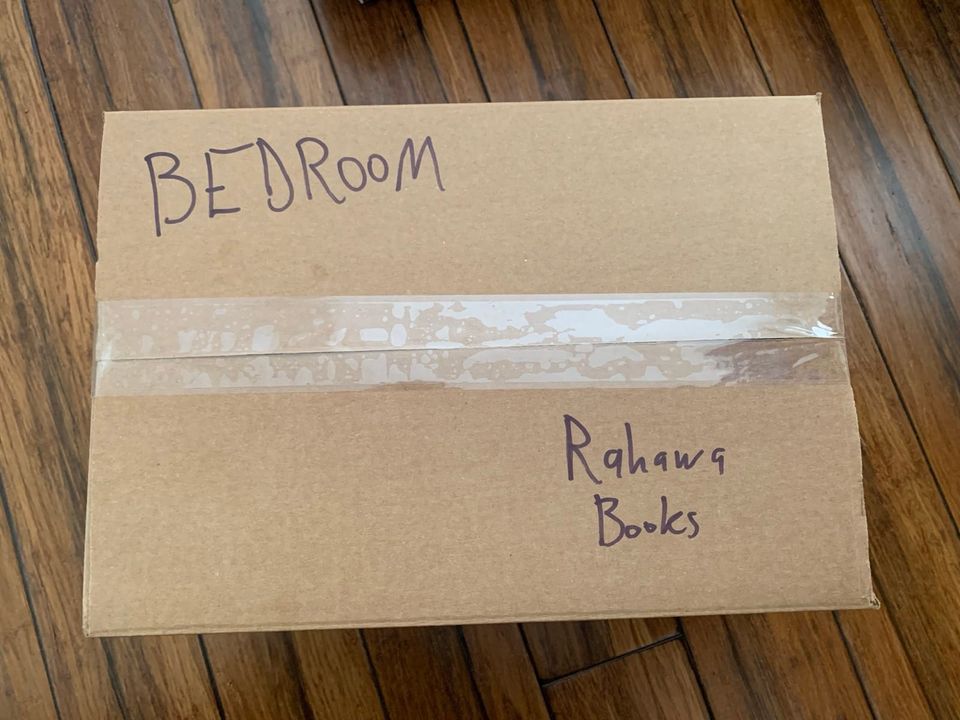
No one hates books more than someone who loves books too much and has to pack them for a move.

Welcome to week four of Summer Scratch!
This publication is all about shedding light on how writers are surviving the rapid declines of our industries, a rise in fascism and censorship, and the broader need for community and celebration. We’re proud of this work, but we’re taking the opportunity to loosen things up a little this summer.
The next month or so will feature a somewhat more playful (and possibly experimental!) Scratch in your inbox.
Today, we’re sharing Rahawa's essay about the emotions that come with excavating a decade's worth of literary ephemera.
— Manjula, Maggie, Latria, and Rahawa
I moved out of the apartment I'd lived in for a decade on July 15th, which means I spent the two months leading up to that date in a hectic state of planning, packing, cleaning, pleading, fuming, running—gerunds as far as the eye could see!—until finally we were out of the old apartment, and moved in, and surrounded on all sides by mountains of book boxes and plastic-wrapped shelving. At the time of this writing, I remain in that physical valley at home, dazed, and with all the paid work I put off for weeks now descending the slopes in droves.
For Scratch this week, I've decided to take a page from my friend Colin Dickey's essential, intellectually roving newsletter, Glacial Errata, and to focus on five things from the past few months of my life. I truly thought, for example, that I'd have time to choose which books came with me and which ones went, smelling their pages one last time like I was in some soft-lit drama about a writer with a trust fund, but no. I went about packing like an octopus on wheels, like someone who works four jobs, and is finishing a book that spans centuries, and found themself confronting, daily, dozens of past versions of the person they might have been. Two weeks ago I wrote that "moving has made me a monster at war with the past." Below are some glimpses from that battle.
One: In Open Country research shelf
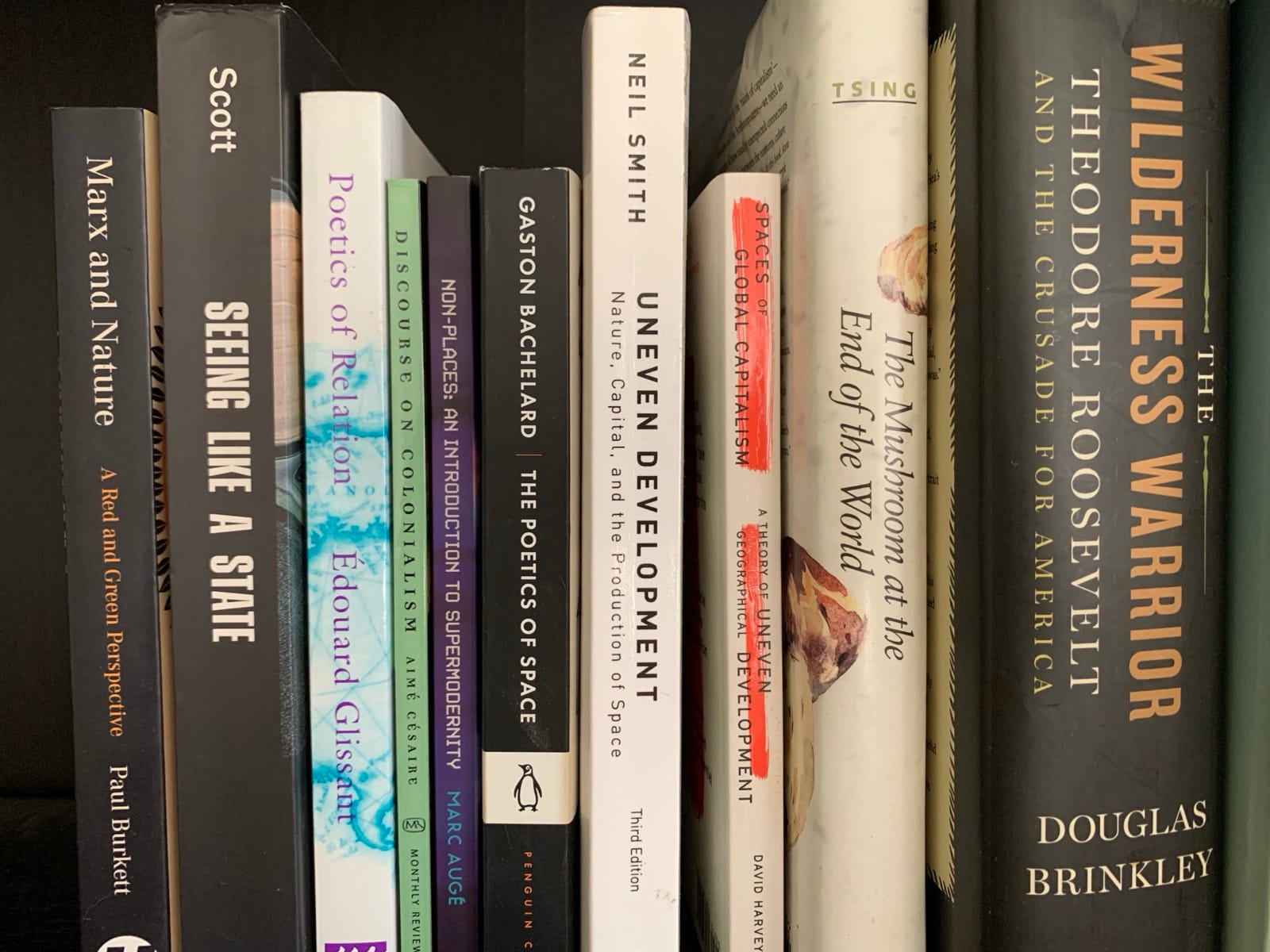
This is one-third of one shelf of the dozens carrying the books that made up the research for In Open Country, my forthcoming hybrid memoir with Little, Brown about the Appalachian Trail and freedom of movement in this country. I'm of the opinion that no writer should have to pack up their bibliography before their nonfiction book is published, but I did — a journey through so many former (and current) rabbit holes! I don't know how academics can stomach it. My back certainly couldn't. I am at present riddled with apologies to all my various parts.
Two: Not a book, per se, but a story all the same
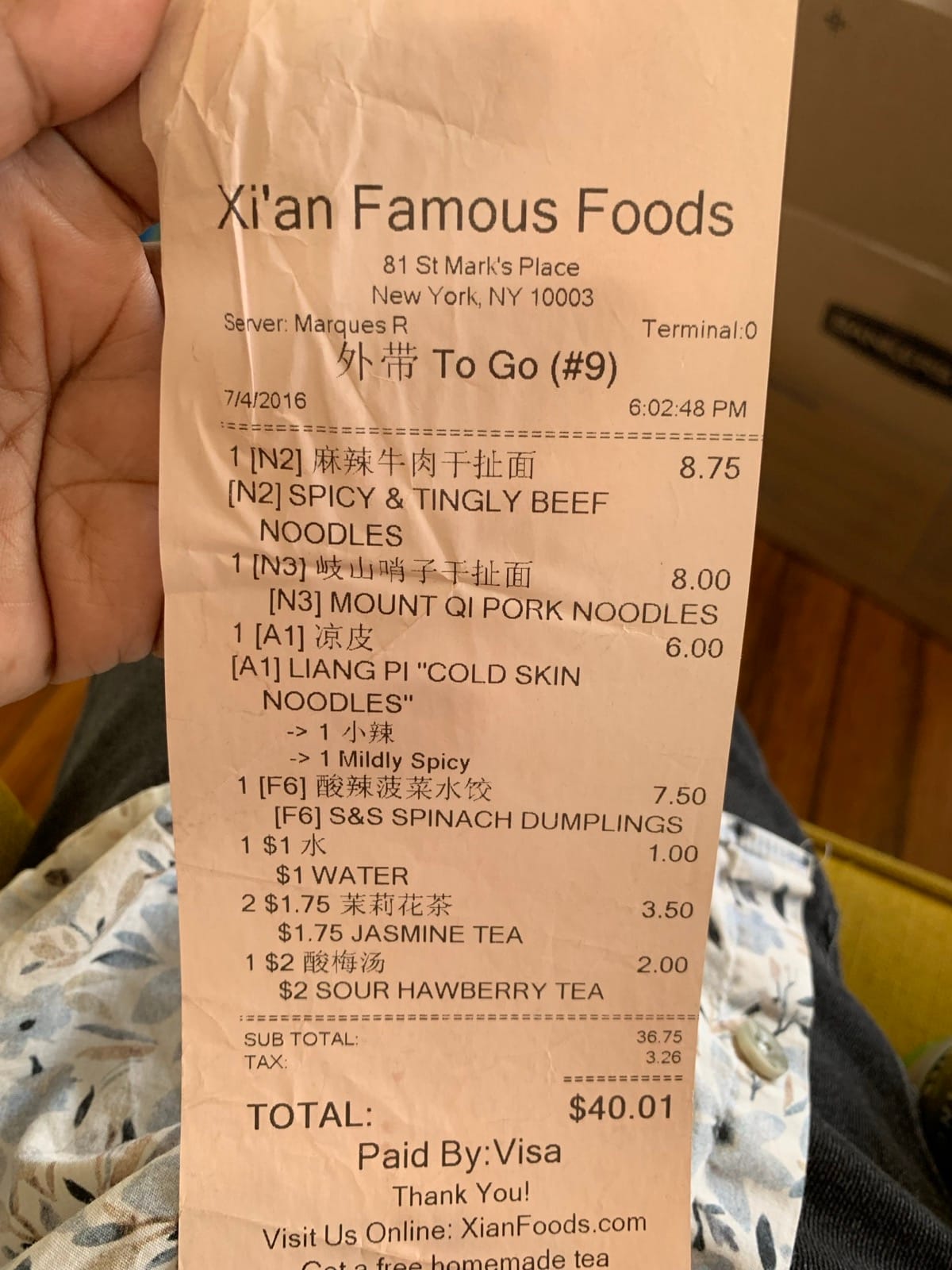
A receipt from NYC's Xi'an Famous Foods dated July 2016, when it was possible to buy a large meal for two, with drinks, for $40 before tip. Financially, it feels like a relic of an innocent Before Time, and while I know that inflation exists, I also know more is at play in this moment than inflation alone. I keep thinking about how I'll tell my three-year-old niece about this era of our lives in the future — putting aside The Many Horrors, of course — and all I can come up with is "We stopped being able to do some things easily, and then that list grew." I can speak only for myself here, though I've seen the unemployment numbers (that capture only a fraction of our reality), the demographics most affected, the concentration of wealth and its beneficiaries. I am told the economy is doing great while almost everyone I know is either looking for work or holding on for dear life. Anyway. This was a great meal.
Three: Not every moment of packing was a war
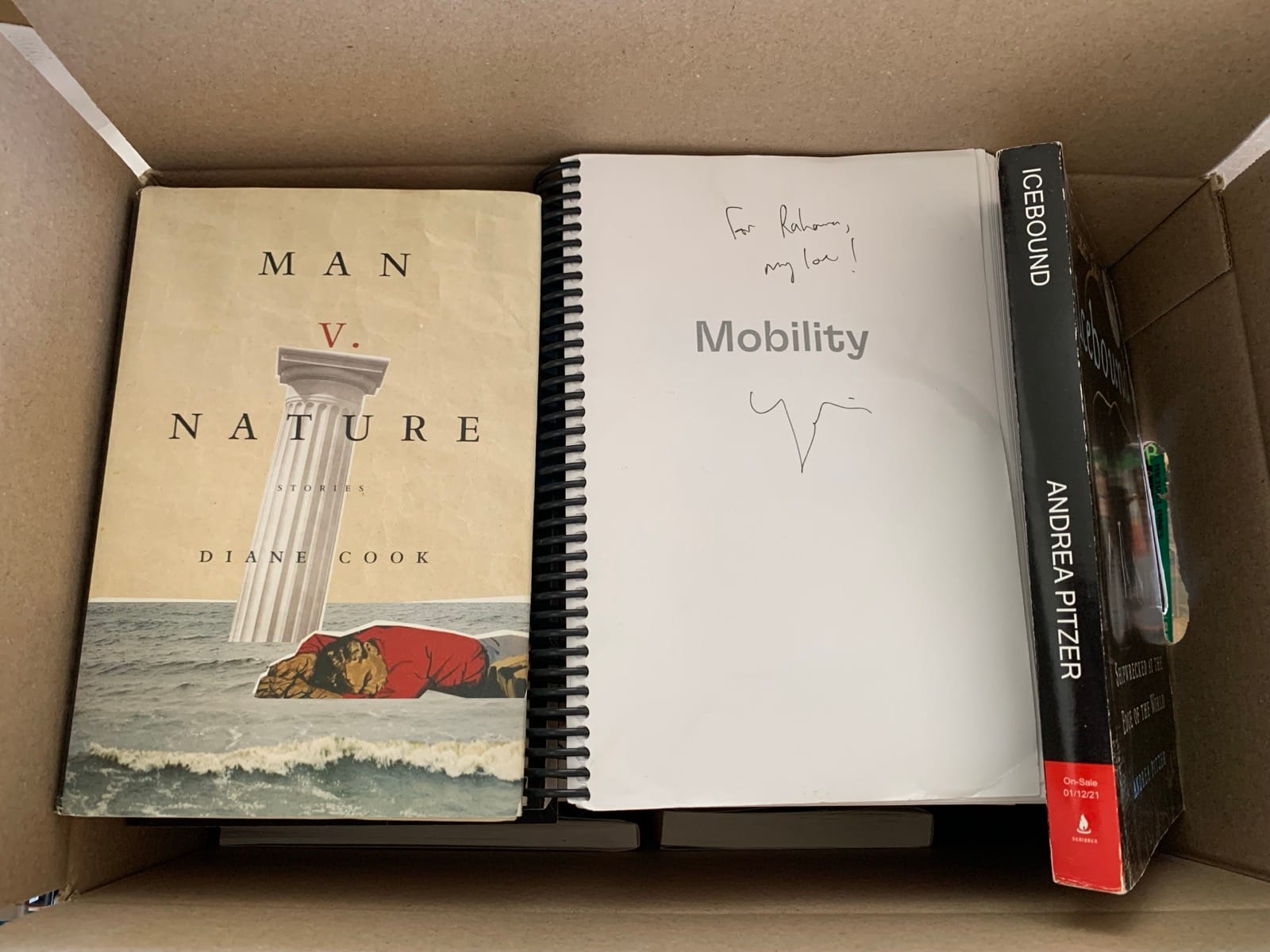
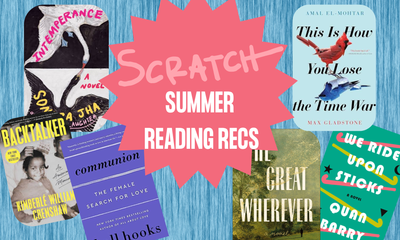
A reprieve amid the struggle. Three authors I love. (Also, coincidentally, three books about the environment in their own ways. Go figure.)
Enjoying Scratch? The best way to support our work is with a paid subscription!
Four: The part of In Open Country that is about Aretha Franklin
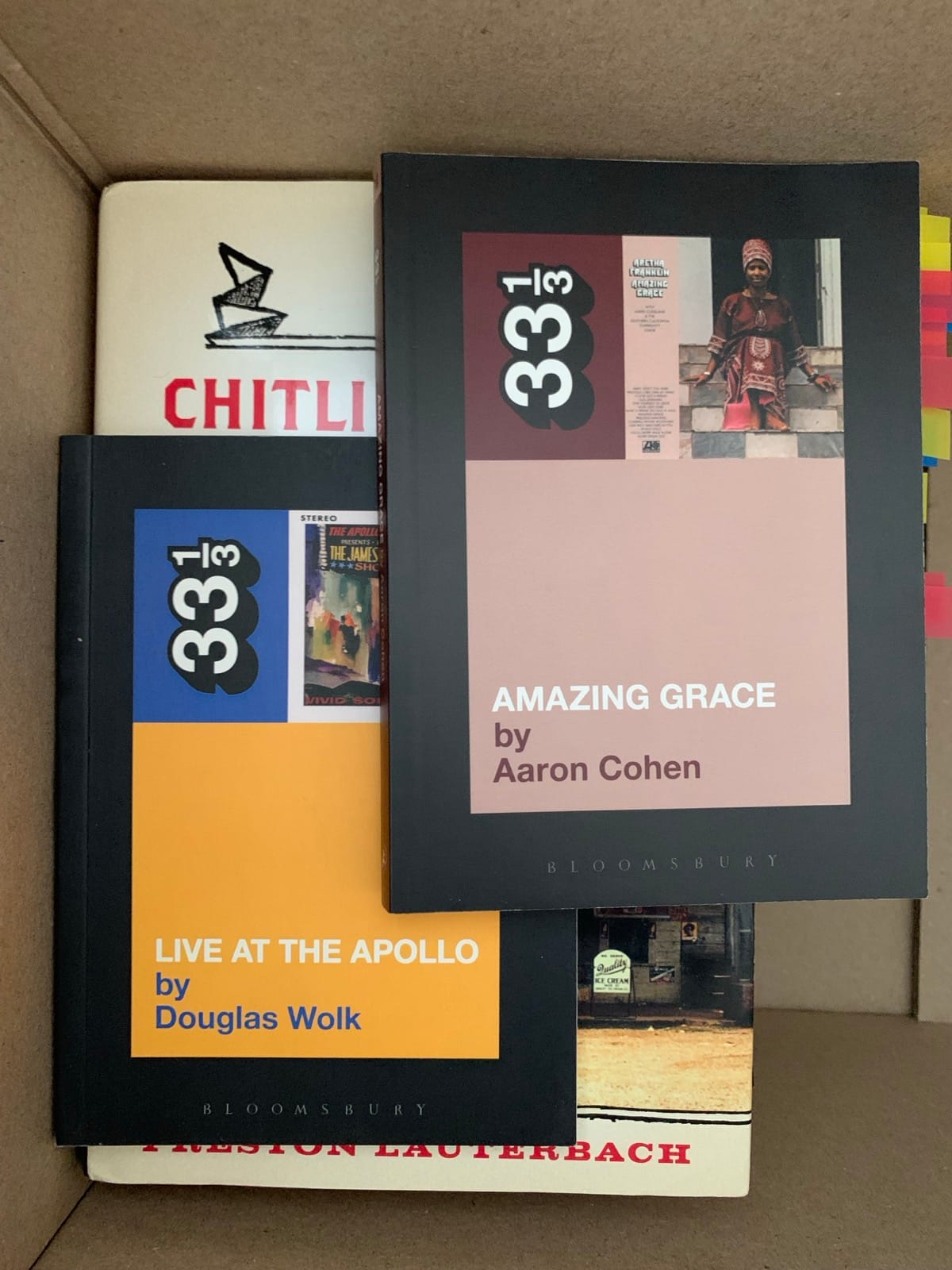
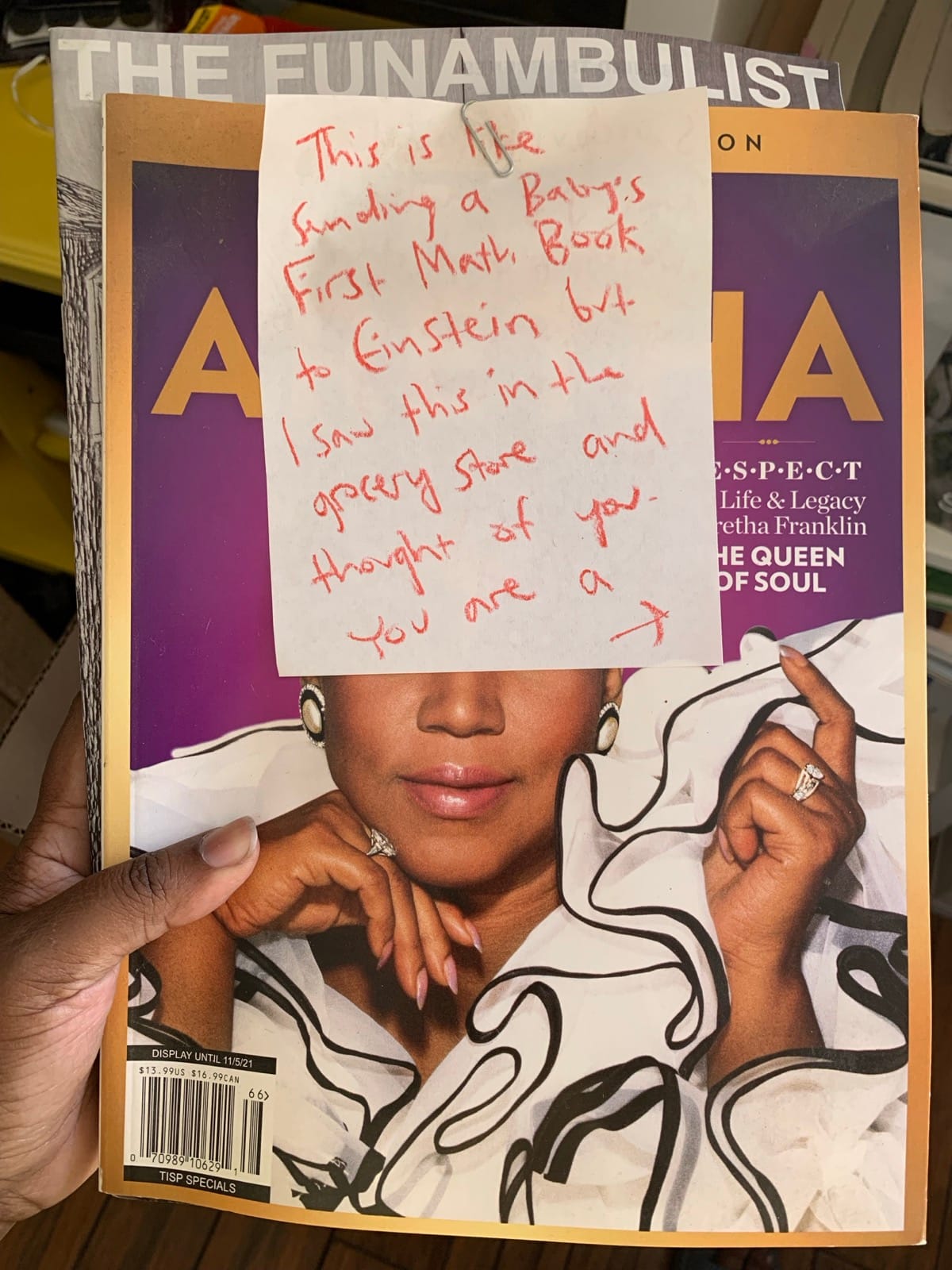
Left: A box of music journalism books, including the 33 1/3 series entries on Aretha Franklin's Amazing Grace and James Brown's Live at the Apollo. Right: A magazine a close friend mailed me on a whim about Aretha when I was going through a difficult time. (Photos courtesy of Rahawa Haile)
I know what you're thinking, and based on the row of geography books I showed you earlier, I don't blame you for thinking it. You should know, however, that if there's one part of my book I've demanded stay put, it's the section on Black music and Aretha Franklin. The epigraph to one of those chapters involves a gospel scholar asking what the role of sound is in the making of a nation. Well, suffice it to say I had some thoughts. Many, in fact.
Five: Scratch before Scratch
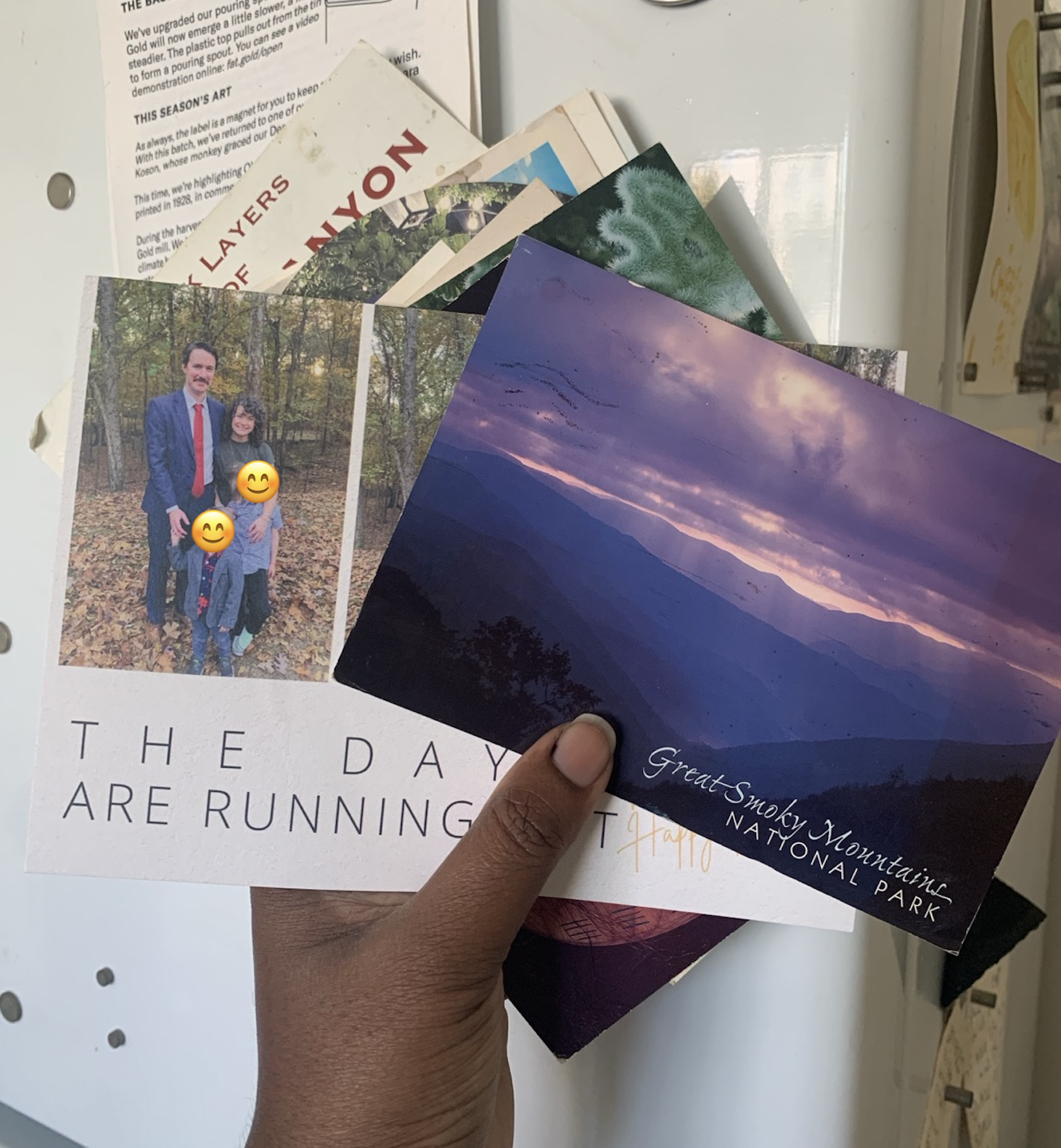
I always leave the fridge magnets and postcards for last when I move. I rarely possess the emotional bandwidth to handle them any earlier. This time I came across two postcards sent by Scratch's own Maggie Mertens and Latria Graham from well before we started this project. I would like to think the best parts of my life have been the result of tending to all these tiny seeds of friendship over the years. So much has bloomed amid the loss. Thank you for being a part of that.
This post was edited by Latria Graham.
Scratch is a weekly newsletter about how your favorite writers are surviving (or not). We are a four-person collective publishing essays, interviews with other writers, and topical inquiries into the publishing and media industries today. If you like what we’re doing here and want to support us, a paid subscription is the best way to do so.
Become a free subscriber to receive our weekly newsletter.


Member discussion