The Scratch Interview #5: Colette Shade on Y2K and the Limits of a Millennial Writing Career
“In order to have a society — frankly, a democracy — we have to have these areas that are protected from the market.”
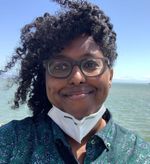
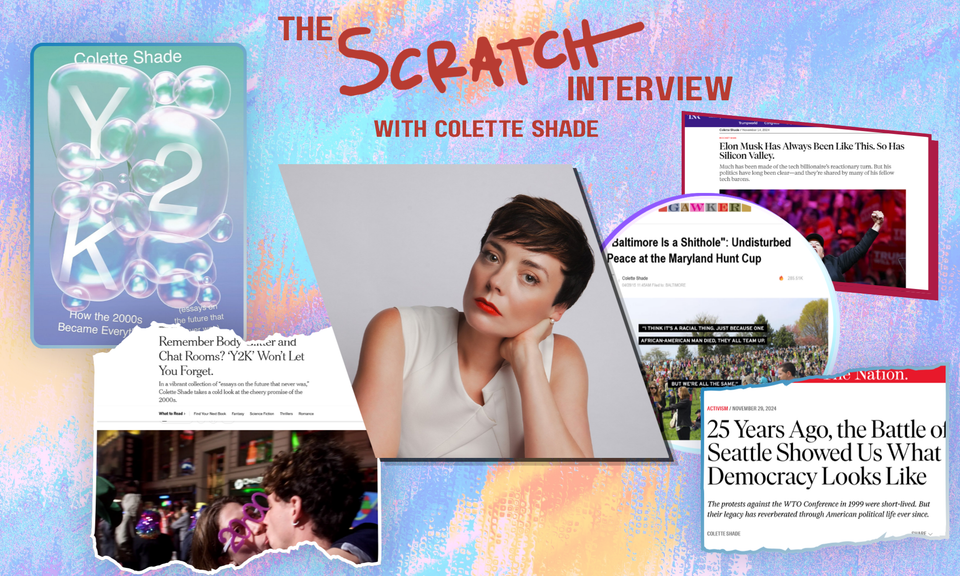
I could not tell you the last time an essay collection knocked the wind from my elder millennial lungs the way Colette Shade’s Y2K: How the 2000s Became Everything (Essays on the Future That Never Was) did in 2025. As a longtime fan of Shade’s criticism, I had some inkling of what to expect, and still I was underprepared. In COYOTE’s end-of-year books roundup last December, I wrote that Y2K possesses “. . . a nothing-left-to-lose candor that is bold and sharp and utterly devastating to a microgeneration for whom the words ‘economic stability’ might as well be Simlish. If anyone under 30 wants to know what the hell happened to us, well here’s your answer.”
On May 3rd, I had the chance to speak with Shade about working through creative stagnation, the financial realities of the publishing industry, and the tough decisions artists are having to make as the cost of living skyrockets.
This interview has been lightly edited for length and clarity.
Rahawa Haile: This is our first time actually talking, which is wild to me because I feel like I've followed you forever.
Colette Shade: A decade!
Right! Now that Twitter doesn't exist, I have no clue what anyone is doing, where they are, what’s new in their lives, if they've stopped writing, etc. On that note, I wanted to start by asking what is your relationship to social media right now? How has it changed? And how are you feeling about it as a writer?
So, I first made my name on Twitter while I was writing essays for places like Gawker back in 2015, when stuff could actually go viral. I remember getting thousands of new followers in one day! I had to turn off my email notifications for about three or four days, because I was getting hundreds of emails from people, most of whom loved the essay but some haters, too.
What was the essay about?
It was basically a creative nonfiction essay about the Baltimore uprising in 2015. I went to high school in Baltimore, and then to college in Vermont at UVM, and then I was in New York for a couple of years working for different media outlets. Then I moved back to Baltimore at the very end of 2014. I just happened to be there while there was this big, you know, outrage over police killing an unarmed [Black] man.
It was a pretty egregious incident of police brutality that kind of highlighted the extreme segregation in the city, because it is one of the more segregated cities in the U.S. Redlining was developed in Baltimore. There's been a lot of historical research on it as a kind of laboratory for racist policies that spread nationally.
The essay just really hit a nerve. I was pissed off about the national coverage because it was just like, oh, Baltimore is a poor Black city. And that's not the Baltimore I know: Baltimore is a rich white city that hates poor Black people. And I think I just wanted to, like, embarrass these people at a national level.
Enjoying Scratch? The best way to support our work is with a paid subscription!
And so you wrote this essay. It went viral. You got a billion emails. What happened after?
I was being courted by an editor at a Big Five publisher who wanted me to come write for them, and there was an agent at one of the big agencies who wanted me to sign with him.
And then . . . it just didn't kind of go anywhere? I think partially because I wasn't ready? I don't think I had something that could be a book yet, you know? I've just always wanted to write a book and to sort of explore certain themes, but it wasn't necessarily clear to me how to go about doing that.
And then, as I was sort of figuring stuff out over time, things were kind of deteriorating on Twitter. I was still very active there until around 2020.
That was also coincidentally around the time I met Erik Hane, who's my agent now. We connected on social media, where he’d followed me. He actually helped me write a book proposal for an idea I had in 2020. We took some meetings, but it didn't really work out. And then we were kind of talking and I realized I just didn't want to spend like two-plus years on this topic that I had picked.
What was the topic?
It was about mental health, and it just felt like kind of a downer. Also, I wasn't quite sure that it was a whole book. It was maybe an essay or something? I didn't feel like devoting two years of my life or more to that, so we put it to bed. By this point I was largely off Twitter and still on Instagram a bit.
Then in 2022 I came up with this book idea, and Erik and I just kind of talked it out. I’d been really, really interested, for many years, in Y2K nostalgia. Like, nostalgia for the pop culture of the late-‘90s and the early-2000s.
I was consuming all of this pop culture that I was really into when I was in elementary, middle, and high school, and into early college. And I was spending a lot of time thinking about it: What does this say about my life and the path it's taken? How did the path I thought I would take when I was 10 differ from where I am now? What were the inherent ideological messages in some of this media, and how were they connected to things that were happening in the broader scope of history?
So we came up with this idea, and it just flowed pretty naturally. I wrote the book proposal in a couple of weeks. It just felt like the book that I was meant to write.
Out of curiosity, how long was your book proposal?
I want to say it was about 30 to 40 pages double-spaced.
OK good because I’ve heard some absurd numbers thrown around, and I’ve just started to ask every writer their page count at this point.
No, no. It's good to ask! Because it's free labor, right? Like, I had to do it on the weekends because I was working. I went back to school in 2019, graduated in 2021, and now I work full time as a therapist.
So yeah, I wrote the book proposal on my weekends, in between work, and with much help from Erik. He happened to have a very good relationship with a high-level editor at Dey Street Books who was interested in very textural and artistic treatments of popular culture.
How so?
Well, not this sort of flat, “hey, remember when!” type stuff, but a kind of intellectual . . . what I would describe as Harper's writing. The kind of writing where you can have lots of digressions. You can use literary techniques, because that's the thing — my essays, at least the ones I like the most, use the techniques that you learn for fiction. I first was a fiction writer before I switched to nonfiction.
So a lot of figurative language, a lot of humor, a lot of allegory. I think there's this idea that nonfiction writing has to be very “just the facts.” And that's not at all what I write or like to write.
My editor was very into this idea of a braided memoir that talks about my coming of age between the years 1997 to 2008, how I engaged with the pop culture, how the politics and the economic systems that I wasn't even aware of were shaping both that pop culture and myself, and my own life trajectory. It's essentially a memoir told in essays, and each essay starts with a [relevant] topic, such as celebrity tabloids, Y2K fashion, 9/11 patriotism, pornography on the internet, things like that. I'm trying to bring people into a whole world, both my world and the world of popular culture at the time, and then give it political and historical context.

One of the reasons your book stood out to me when I read it is because authors aren’t really allowed to do this type of criticism anymore? Usually with recent essay collections, or braided memoirs, or whatever they’ve been heavy on the personal and much lighter on the rigorous critique. Unless it’s a biography, or deeply researched journalism around a specific event. And I don't think it's because of the writers; I think it's because of the editors and what the higher-ups in publishing think will sell.
So a lot of things lined up here. First the fact that this was allowed to be an essay collection, when any agent will tell you how hard those are to sell. The second thing being that you actually got to do this kind of contextualizing — historical, political, economical — and that it wasn't just rooted in nostalgia. I was very fascinated by this, because it’s not just . . . I mean, yes, of course, the writing is wonderful, but also as like a product? I was like, how did this book happen? And can this ever happen again?
Yeah, I mean, I think it fundamentally came down to personal relationships. I'm convinced that basically every single career break anyone gets, in any career, comes down to personal relationships, which is luck to a certain degree. I don't think I would have been allowed to write this if Erik and my editor, Stuart, were not friends.
<deep sigh> I mean, yeah, this is best case scenario, right? Like, you have an agent who knows which editors to reach out to, and who knows how to sell your work to their publisher and what you bring as an author. And it is all very clear to that editor, who then is like, yes, I am also deeply invested in this. And then you have a good working relationship, and they trust you to write the book that you said you would write. It just . . . it seems like such an outlier of an experience.
It was. It really was. The other lucky thing was that my editor stayed with me through the duration of the editorial process. Now, granted, it was relatively quick: I sold the book in October 2022, and I'd gone through all the editing, and like six rounds of revisions, legal review, copy editing, all the stuff by late summer of 2024. August or July, I think? And so it was really only about two years, I want to say. But even that! The chances these days, because there's such high turnover in the publishing industry due to the low pay and the kind of insane workloads . . . It's actually increasingly common for people to get at least two different editors, if not more in some cases.
It’s just a total clusterfuck, like logistically. It's a clusterfuck because different editors have different tastes and preferences. The workflow gets interrupted, because they don't know what's been done or not done. And it's just really a disservice for everyone involved, including the reader.
I couldn’t agree more. Is that editor still there?
No! He’s somewhere else. He actually left right as I was finishing. I think I was doing the last of the copy editing, but it was like, okay, [the book’s] basically out the door, so it's fine. He jumped over elsewhere, and I was like, wow, that was absolutely perfect timing.
During our initial exchange over email, you said that you were thinking a lot about lost worlds, the end of literary criticism, academia, and more. I want to start by asking you about the first two: the end of literary criticism and academia.
There are definitely people who can speak more deeply to this history, but my understanding is that from the mid-20th century through the end of the 20th century, you could be an academic in any field, and you could have a comfortable middle-to upper-middle class life. If you did the drudgery of getting your PhD, there was some kind of job. Maybe it wouldn't be at Harvard. Maybe it wouldn't be at like a flagship state school, but there was something for you.
And now that's just been completely erased. I don't know what the exact statistics are, but I think the vast majority of these jobs got cut and turned into gig work, essentially. This actually started to happen in the Y2K era. One of the things I talk about in the book is how the Y2K era had the seeds of our [current] casualized employment landscape and the gig economy.
This really sped up during the financial crisis. Schools were cutting departments left and right, especially after 2008. They were switching these jobs over from essentially lifetime employment that was modest but comfortable, to people who were sleeping in their cars because they weren’t being paid enough or regularly. I think it's really important to know that history, because I think a lot of people today are like, oh, haha, academia, there are no jobs. But it's like, no, actually there were jobs! Until very recently, this was a respectable and common form of employment that I can speak about in my own family.
In order to have a society — frankly, a democracy — we have to have these areas that are protected from the market. I was raised in a family that believes that education and inquiry is the purpose of living. And so when you take away fields such as academia, or such as journalism, which has its own particular explanations for why that no longer exists for most people as a viable field . . .
What remains?
Yes! I was also raised to see the arts as a high calling. And so to destroy the arts, or policy work, or academia as viable careers is terrible in so many ways. The most terrible thing I think for me is like . . . this is what I was raised to believe is the purpose of being alive — to do things like this. I was raised to have this very humanistic view, and now it feels like all of the things that I was made to see as noble, and good, and the way you connect with other people, it's like . . . I don't really know how to explain it.
This is honestly part of why Scratch exists, and why our giant notepad logo has academia, publishing, and media scratched out: It's very clear that a life that was possible is just no longer possible.
I think both of us, Colette, kind of had career breaks in the mid-2010s(ish), that opened up doors that seem to have shuttered pretty quickly. What was it like for you between this essay of yours going viral in 2015 and when you were like enough, I'm becoming a therapist five years later?
I thought I wouldn't even write a book, so I'm just grateful that I got to write a book. [By 2020], I think I was really burned out. I wasn't inspired anymore, and I was sort of looking for something else to do. I was doing a lot of informational interviewing to see what I could do that would allow me to support myself in a reasonably comfortable way.
I ended up applying to grad school at University of Maryland [to become a therapist], and I went, and it took two years, and then I immediately got a job afterwards. It’s great because I actually think I use a lot of the same skills as a therapist that I use as a writer: being curious, and observing, and sort of imagining what other people's experiences are, and not just being stuck in your own head and very rigid about things. Just working with people to help them find their own life story, and kind of narrativize their life to figure out what's important to them and what they want to do next. The two careers complement each other remarkably well. I've been doing therapy since 2021, although I took a few months off to write the book, because my advance was big enough.
Are you comfortable talking money?
I got a $50,000 advance paid out in two parts. I was able to take a few months off where I basically worked every day for 12 hours to put together the first draft of my book back in 2023. Then I was, you know, working full-time, and then I was sort of working part-time while doing the edits.
I had to quit my job in . . . I want to say it was the end of August 2024? I was starting to have to do all these interviews and all this stuff to promote my book, and I just couldn't do it with the job. So, yeah. I left and then I was on tour in January and February 2025.
By the way, they make you pay for all your own stuff. Like, [my publisher didn’t] cover any of this. They didn't cover my trip to the Los Angeles Times Festival of Books, so I just had to pay for it myself. I've basically broken even on the book, if not spent money on it. I had to pay a fact checker, which turned out to kind of . . . I had some issues with the person that I hired, and then that was a whole pain.
May I ask how much? I heard consistent numbers before the pandemic and now they’re all over the place.
I didn't pay enough. She was a Ph.D., and I originally hired her as a research assistant, and I want to say I paid her like $3,500? But here's the thing — I had never written a book like this before, and I wish I had sort of planned this out a little better and paid maybe like $8,000–10,000 to a person who had done factchecking as a job at the New Yorker. There were things that got missed. Two factual errors made it into the final printed book, which I found mortifying and I'm still mortified by. Although the book is coming out in paperback in 2027, and so I'm going to be able to fix those issues.
I'm so happy to hear that you're getting a paperback release.
I know! I didn’t think I would get one! And then they just let me know about a week ago, so I'm happy about that.
I didn't really get any international editions, though, and that's what I was really hoping for. I actually got invited to do some talks in the Netherlands at a few universities there, and I was really frustrated because all these students showed up, and they were really into my book, but like they couldn't buy it. Again, I had to pay for this all myself, but — and this is similar to what I did with the book tour — I basically stayed with family and friends in most of the places I visited.
I know you can technically expense all these costs, but it's still so much money.
It's so much money!
I don't think many readers understand how much it's up to authors to promote, to finance travel, etc.
I was very lucky. My promotion team was great, and they really put a lot of effort and time and money, even, into promoting my book, and running ads, and doing different promotional things. I really couldn't have asked for more from my publisher in that regard. But I had to front all this stuff by either putting it on my credit card or using money that I got when my grandfather died — and I was just lucky that I even had that opportunity to begin with!
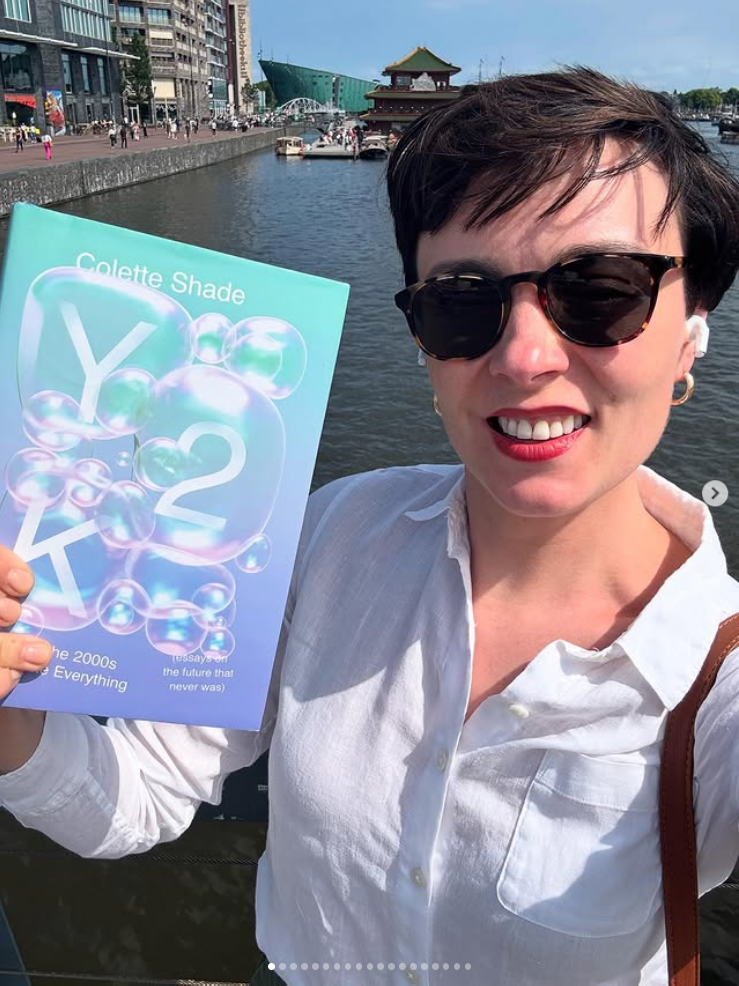
I hear you. And I know authors who are like, I want to spend more time writing this book, but I can't afford to. I need to get the second portion of that advance; I need to have my delivery and acceptance, delivered and accepted. It’s just so much.
Yes.
And now you’re applying for law school?
I'm trying to get a good score on the LSAT, and my explanation is this: I like being a therapist, but if I have to do a day job that's not writing, I want to make a lot more money. And I just want to be frank about that.
Thank you.
Like, I would have loved to have been a history professor. I would have loved to get big enough advances and speaking fees that I could just do that full-time. My husband’s going to get his MBA from Michigan in a year, and it might be possible in a few years for me to [write more], perhaps, or do therapy less.
But I'm sort of at a point where I don't want to take . . . oh, how should I put this? I'm afraid of something happening. And I've seen people make choices that seem good in the moment, especially women, and then God forbid something happens, you know? And then they're in a terrible position. I just . . . I never want to be in that position.
I’ve had many conversations with writers about how they’re getting by right now, and most don’t even know what success would look like for them anymore, as an author, because the numbers would have to be ridiculous in order to make a living.
It reminds me of that viral interview with the musician Halsey from last September, where she said her previous album sold 100,000 copies on its opening week, but that the goal posts had moved so much that the record company was underwhelmed. And she was like, well if what would have been phenomenal five years ago is no longer phenomenal, then the problem isn't with me. And if this is the case, then what's the point of me trying to do an impossible thing?
Right. You just don’t know. I don't want to put all my eggs in one basket, or I guess to really torture this metaphor, I want a bigger basket for myself.
Absolutely. And I know you've been thinking about whether you'll write another book — do you think you'll write another book?
I’m not sure. I have a really great idea for another book. I can say what it is, because no one can steal it, because it's written through my own lens. But yeah, so I want to write a history of the dot-com bubble, which I think has been kind of memory-holed, but explains why we are where we are. Just a very rich narrative history intertwined with my own life, because my uncle was in the dot-com bubble, and I have an essay about that. I’ve always kind of been fascinated with it ever since.
But again, even if I got a big advance . . . there's no ladder? And given the time it would take, and the amount I would get taxed as a contractor —
Plus the 15% to your literary agency.
Exactly. So even if I got, say, a $400,000 advance — which is big — I would still be making less than I currently make right now, which is $87,000/year. And then, you know, let’s say I finished the book — what’s the publishing world going to look like when it finally comes out? I’ve just given up major years of earning time. I'm kind of discerning if I want to do that or if I want to do something completely different.
Do you have health insurance through your group practice as a therapist?
That's a great question. I get health insurance through my husband through the University of Michigan. Then he's going to get a corporate job after, hopefully, and I can get it through him that way.
As writers who survived the Great Recession, and are now looking at inflation, and unemployment numbers, and frankly, the fact we aren’t in our 20s anymore, aren’t in New York, might not have the connections we once did, etc. what are you doing to keep the writing door a little open, if anything? I know you’re not on social media, but do you have a newsletter? Are you freelancing? Are you occasionally pitching features?
Not really. I mostly am not. The thing is, if I do that while working full-time, then I give up other things that also really matter to me. My physical health is important. I’m a runner. I do 5ks and I’m trying to do a half marathon this fall. Also studying for the LSAT takes a lot of time, so I’ve basically made the choice to not do writing [right now].
Periodically, I’ll do things. Like, I did this essay in January for Luke at Welcome to Hell World, because I was really pissed off about something and I wrote it in two days. I had a newsletter where I was very occasionally doing stuff, but I don’t think I’ve updated it in a long time. I went to the LA Times Festival this year. I really like public speaking — in some ways more than writing — so one thing I’m doing is if a writer comes to town I’ll pitch a panel for them to be on or be their interviewer. Or if I’m invited to speak somewhere, I’ll probably go. But day to day, I just don’t . . . this stuff takes time, and again, I don’t want to go back to feeling like money is tight, or I don’t have time to go to the gym, or I don’t have time to see friends or my husband. I consider that to fundamentally be more important at this point in my life than writing.
It is interesting to me, and I think also speaks to the moment, that you're like, yeah, I'm willing to write for this newsletter, because I know it'll take two days. It’s not like pitching a magazine, waiting weeks to hear back, going through however many revisions —
I actually don’t write for magazines anymore. I don’t even bother. I have other ways that I pay my bills.
The last question I’ll ask is what the vibe was like at the LA Times’ “bookchella.” I understand there are writers who are doing great, who have made a ton of money off of TV adaptations and the like, but I’m asking about the writers like . . . us? No offense intended.
No absolutely, and that is most writers. Even the writers that have a bestseller! I was talking to someone who had a very successful book, who was in his early 40s, and he doesn't think he necessarily wants to write another book because he can't justify that to his girlfriend. He’s like, well, then I'm just going to be super broke, and he was talking about what we just discussed regarding having to fund stuff yourself and promote things multiple times a day on social media to even have a hope of breaking through the algorithm.
He was saying he doesn't really want to do that again, especially because, you know, he's looking to maybe have a kid. I think that's mostly what I heard from people: the frustration. The festival was great, and it was an honor to be there, and everyone was excited. The crowd was super engaged. I think it's just [maddening] that there's no infrastructure to support the vast majority of working writers.
When I think back to the Great Recession, those were the years I spent honing my craft as much as I could, reading voraciously, and so forth. I hope a bunch of young writers are doing the same right now. In fact, I know they are, because I lurk on TikTok. In any case, thank you for speaking so openly with me.
Of course. Writing Y2K was a lifelong dream. I have no regrets about doing it, because it felt like it was the thing that I was put on Earth to do. I actually, in a way, had a bit of an existential crisis afterwards because it was like, oh my god, I've just fulfilled my deepest, longest-held dreams in the best possible way that I could have imagined. And it was so well-received, and written about in the New York Times. Just being on NPR, when I used to listen to it with my parents in the car! I have no regrets about doing that, but it's just a question of what I want next for my life. And I think it fundamentally comes out of me valuing myself and seeing myself as deserving of [more than] just sacrificing so much for not a lot.
This interview was edited by Maggie Mertens.
Scratch is a weekly newsletter about how your favorite writers are surviving (or not). We are a four-person collective publishing essays, interviews with other writers, and topical inquiries into the publishing and media industries today. If you like what we’re doing here and want to support us, a paid subscription is the best way to do so.
Become a free subscriber to receive our weekly newsletter.
Member discussion