The New Scratch
How is anyone who writes making any money right now?
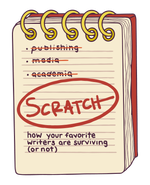
I’m excited to announce a new project: Scratch, a weekly newsletter about how your favorite writers are surviving. (Or not.) The first installment arrives March 10.
Each week, direct to your inbox, you’ll receive essays, interviews with authors and journalists, topical roundups, and other dispatches from the fight to stay afloat in the churn of our chaotic industries.
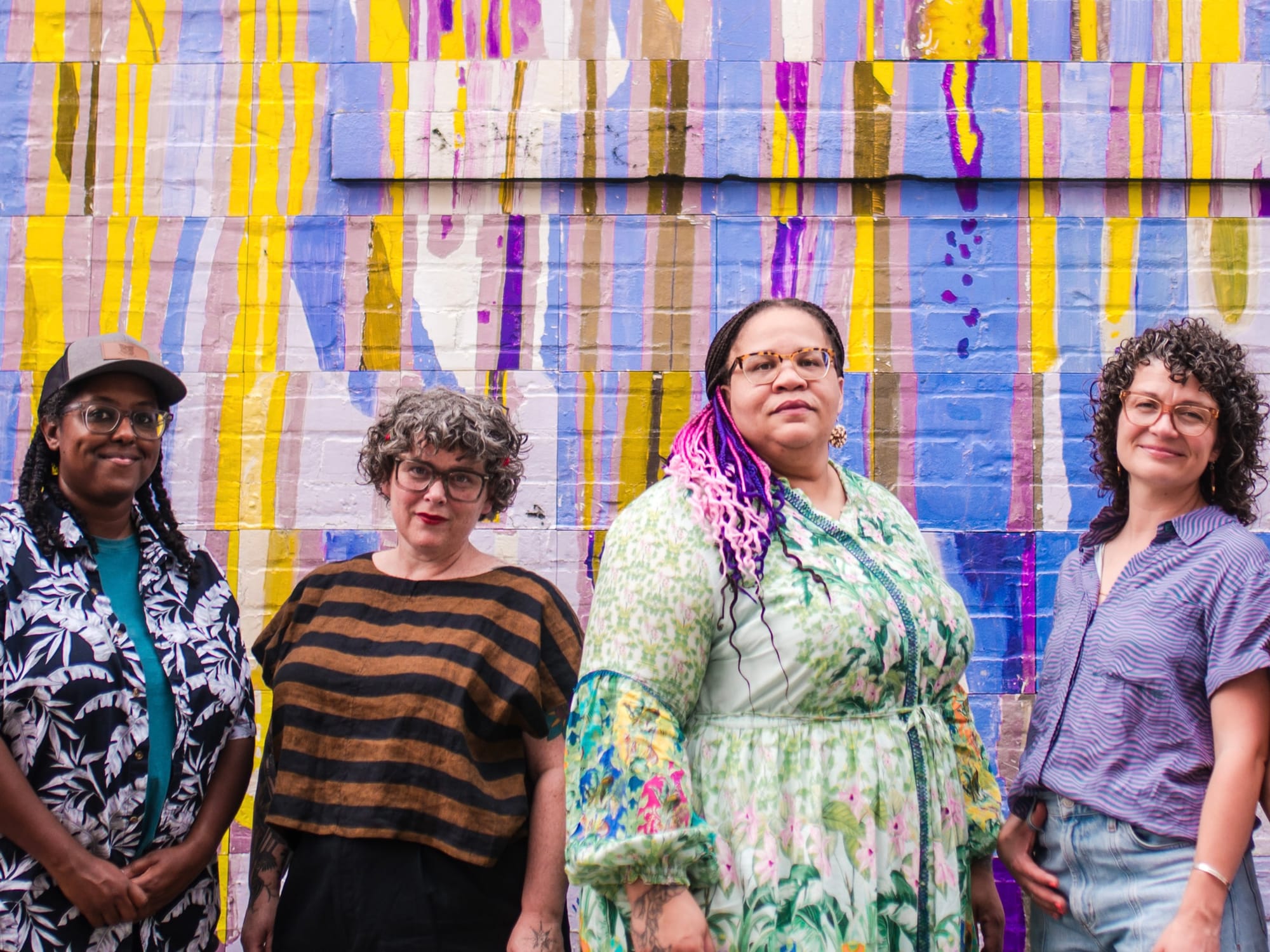
Scratch — as in cash, scrape, sketch, cat — is written by me (Manjula Martin), Latria Graham, Rahawa Haile, and Maggie Mertens — a dream team of writers in diverse geographic locales who've worked across genres in books, digital and print media, literary journals, academia, and probably a few other now-defunct formats we're forgetting. We each make our living primarily from writing. And we are each of us surviving. But we have a few questions.
Such as: What happened to journalism? What happened to the short story writer? What happened to the memoir market? Why aren’t authors getting paperback releases anymore? What happened to celebrity book clubs guaranteeing book sales? Why is the Newsletter Industry all we have left?
We’ve been talking in private about what it’s like to try and endure as writers — and people with bills to pay — in publishing/academia/media/the United States of America right now. We know y’all have been talking about it, too. So, we’re inviting you to join our chat.
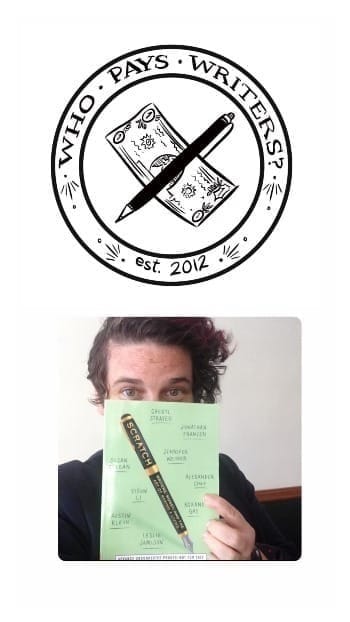
This project is new, but as many of you know, Scratch the brand (ye gods how I hate that word) isn’t. Way back in 2012, I started a Tumblr called Who Pays Writers?, where freelancers anonymously shared how much they’d been paid and by whom. Who Pays hit a nerve. It was soon joined by Scratch magazine, a literary journal that examined in greater depth the relationship between being a writer and making a living. Scratch mag eventually shuttered (spoiler: it wasn’t economically sustainable!), and I edited an anthology of essays and interviews called… Scratch. Ultimately, it was all too much unpaid work for me to juggle, and in 2018 I passed control of the Who Pays dataset to the Freelance Solidarity Project of the National Writers Union, who continue to fight the good fight.
In retrospect, Scratch v1 was an early ripple in an ongoing wave of writerly candor-core, a time-honored confessional genre given new urgency around the turn of the millennium by the advent of online media economies, aka The Internet.
Writers, no slouches when it comes to gossip, have kept on: We’ve disclosed how much Publishing Paid Me, what’s Past Due, and who’s Selling Out. We’ve bonded over The Mortifying Ordeal of Being Published and taken tea with xoxopublishinggg. We are all, still, always talking about this: How the money part works. How it seems impossible. How we get by anyway. We never stopped.
Now it’s time to get louder.
Since I started focusing on this topic, a lot has changed for working writers. And a lot hasn’t.
The journalism and publishing fields remain weirdly mysterious to the writers who labor in them. Industry systems and practices still make little sense — economically, artistically, and otherwise. The remaining few writers with staff jobs still never know who will be next on the layoff lists. Now there are blacklists and deportation lists, too. And the pay mostly still sucks.
At the same time, in the last couple years there has been a surge of new energy: Independent, cooperative, and otherwise non-traditional projects are countering the dire socioeconomic situation of the moment with big survival energy. And we’re not doing it alone — the future, whatever it holds, is collective, in solidarity, among friends.
The old Scratch was about “how writers make a living.” But for working writers in the current moment, the stakes are higher than a paycheck. (Although we definitely still need those, too.)
The blog-to-book era of Who Pays Writers is looking pretty small in the rearview mirror these days. We’ve already sped past abandoned content farms, bypassed shuttered rows of Fiverr shops, and crash-landed down in the slop mines. Such a trajectory may feel like a roller coaster, but for those of us paying attention it’s actually been a fairly direct course of greed and plunder.
We are living through a moment where the labor of writers is being exploited to create rapacious technologies that make everything stupider, exponentially hasten the demise of the planet’s ecosystems, and prop up fascists and dictators worldwide. The concept of a free press isn’t even really a concept anymore. Cartoonishly evil billionaires control mainstream media outlets, which produce content accordingly, and at the local level there’s hardly anything left. And let’s not even mention the book reviews. Or rather, let’s:
The increased stratification of race, class, and politics has extended to, and is fundamentally intertwined with, book publishing, in which there now seems to exist only two types of books: mega-bestsellers (mostly celebrity memoirs, political tell-alls that say nothing, too late, and books about dragon sex) and the rest, whose authors worry daily, with good cause, that we may never be able to sell another manuscript to the handful of corporations who control the purse strings. Meanwhile, the university system is no longer a viable day-job choice for a person of ideas or letters or, say, principles. Oh hey, and remember media jobs? Or, like, the nonprofit arts?
Yeah, it’s not going so well. And it’s not okay.
This isn’t a complaint. It’s an announcement.
But you can call it a blog if you want.
See you soon.
—Manjula, Latria, Rahawa, and Maggie
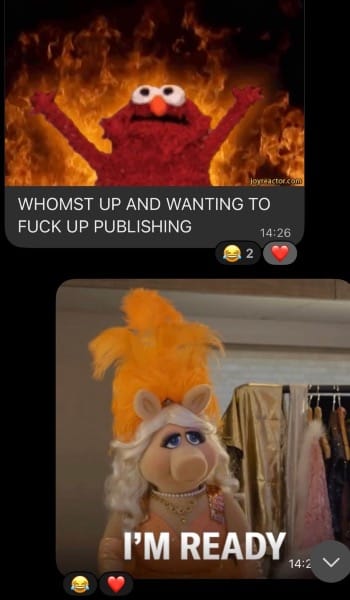
— How We Get By: What better way to get to know the Scratch collective than by reading our group chat on — you guessed it — how each of us is getting by? Yes, there will be numbers.
— Therapy Is Not a Write-off: Maggie interviews a novelist who works as a tax preparer (and could definitely get fired if we told you their name).
— A Little Treat: Manjula interviews Angela Garbes about buying $250 pants, shopping addiction, and surviving a memoir draft.
— The Job I Want Does Not Exist: Latria contemplates a career outside the Black Trauma Industrial Complex™
— The New Math of Living: Rahawa examines what the years since 2020, when the COVID-19 pandemic began, have cost us — writers and nonwriters alike.
Become a free subscriber to receive our weekly newsletter.
Member discussion