The Job I Want Doesn’t Exist Anymore
What is lost when arts criticism dies?
One of the first things I did when I got my first book deal was save my mama’s house. As a widow, she was on the hook for some of my dad’s old debts. When she ran out of money, the sheriff’s department, serving as a go-between for debt collectors, threatened to come into her house and take what little she had. (That same sheriff, Chuck Wright, just pled guilty to federal charges involving a public corruption scheme.) So while I was on the road, on assignment, I found the nearest Bank of America and mailed off a cashier’s check, which let my mama keep her dignity.
The second thing I did was buy art, an acrylic painting by Geneva Bowers, a Hugo Award–winning illustrator known for her stunning depictions of Black women in celestial Afrofuturism. In my painting, titled “Careful Steps,” a pecan-tan woman ascends into the heavens while brilliant white cottony clouds float just below her feet. I was attracted to her weightlessness.
Geneva’s painting is the first piece of original art I ever purchased for myself.
My experience with the art world, however, started when I was eleven, at the flea market outside of Gaffney, South Carolina. This outdoor gathering is where I learned to talk about art, because I had to sell it.
When I was little, my mother, a trained artist (she graduated from the Fashion Institute of Technology in New York City) would paint any object not moving: wood figurines, sunhats, coffee cans, children’s furniture, and jean jackets. If it had a matte finish, she’d cover it in acrylic and illustrate pastoral scenes in that cozy, rustic Americana aesthetic so popular in the mid-1990s.
By the time I entered middle school she had amassed a garage worth of her creations and we needed money, so the flea market it was.
My earliest lessons about creativity took place there, at the intersection of art and commerce, and as a pre-teen I learned how to read people in search of the connection point that might give them context and backstory for my mother’s work. I found informal ways to talk about an artist's perspective and painting techniques.
This is the way art moved where I was from. In rural settings like these, creativity wasn’t confined to traditional museums. As a child I witnessed women selling their canvases in hair salons and out of the trunks of their cars on the edge of grocery store parking lots. Art, as I saw it practiced in my life, wasn’t the realm of affluent, predominantly white men. It was ours.
In college I spent most of my study time in the library, at a table underneath José Clemente Orozco's “The Epic of American Civilization,” a large-scale mural about creation, annihilation, Western expansion, colonization, and notions of progress. Instead of starting the narrative with European colonization, Orozco begins with something older: Mesoamerican culture. White people do not get to be the heroes of this story. They aren't even at its center.
I didn’t learn the term “cultural criticism” until I was in graduate school in 2011. During a book review course with John Reed, then working at the Brooklyn Rail, it finally clicked: the feminist and postcolonial theories I studied in college had a purpose outside of assigned papers. I could use them to analyze how art interacts with and interprets power structures and society.
From the beginning, I’ve understood that engaging with art is not a passive act. My perception is shaped by social, political, and economic pressures pressing down on my body, shaping my present, and my past. Over the years of practicing this way of seeing, I’ve come to understand more profoundly the role that deep inquiry has in shaping public tastes.
Plus, the Brooklyn Rail was a paying market.
Art and commerce. I could tell that story. Make it move. I would be an arts critic.
The idea of perspective in any art form is not a neutral. While reading books like Gayl Jones’s Corregidora on the second floor of Arnhold Hall at The New School, Kara Walker’s “Event Horizon” stared back at me: a large-scale installation of black cut-paper silhouettes that spans two floors and an open staircase.
At the top of the vertical artwork a white man flicks back his whip and a Black woman tumbles head-first into a curved, intestine-styled tunnel. Farther down, somebody has been dismembered, and their hands hug one bend in the shaft. A single foot, cut off at the angle, lies in another corner. A woman and her baby tumble further down. A man has found his footing and seems to be climbing up. Some days I see the tunnel as an underworld, maybe a reprieve, or at least a space of multiple possibilities, with room for resistance and climbing. There was a little Black girl, toy in tow, trying to climb out. Some days I felt like her. On other days, I was sure that I, too, was falling headfirst.
During my junior year of undergrad, I had declared a theater minor. A theater critic, then senior editor of American Theatre, came to campus. Our instructor placed our student group in a semi-circle as we debated what makes a modern American classic. The critic told us that this is his job, to ponder questions like these. After class, I breathlessly told him I wanted to do this, too.
I’d spent the last two years in the rafters of the theater, learning about lighting design. I wanted to do something with my understanding of light and storytelling and how the craft choices of different artists (actors, directors, sound designers, etc.) rendered the same scene in different ways.
Light moves in layers, it sets the atmosphere. Good lighting enhances, adds depth and drama. The bright and the dark tell their own stories. This is how I came to understand that the relationship between what we see and what we know—the art of noticing— is a sophisticated act of interpretation, not just passive observation. I wanted to make my living doing the type of writing that articulated all of this–the kind of writing the critic did, too.
“By the time you get to New York, this won’t be a thing,” he hissed, and I withered. He wasn't wrong.
I graduated into the 2008 recession. The well-paying job that I, a new college grad and recent transplant to New York City, had contractually committed to, evaporated, a casualty of what would soon be known as the Great Recession. Suddenly there were no jobs—not just for me, but for anybody. Theaters shuttered, and when the theater kids gathered in Brooklyn we talked about that Craigslist dominatrix employment listing we’d all seen, contemplated, but decided against applying for. Times were lean and we were hungry but 7/11 still sold two hotdogs for $2 (with all toppings included) and there were spots where you could still nab a pizza slice for a dollar. We thought that if we could hold on, if we endured, we could make it. I applied for magazine jobs during the day and for night gigs at theaters.
Eventually, the exhaustion of scraping by forced me to put down my fondness for Suzan-Lori Parks and Pearl Cleage in order to pursue something else.
I found work on Manhattan’s Upper East Side as a library page, making minimum wage in one of the most expensive cities in the world. Between shelving books and filing magazines for well-heeled patrons of the library, I tried to fashion something like a future for myself out of my surroundings.
The Metropolitan Museum of Art happened to be just up the street, a block away from where I frequently stood behind a circulation desk with a painted-on smile, glancing at the proclivities of readers while I scanned books in and out of the library’s system. On my lunch break I’d walk across 5th avenue to the Met. Back then, they still had the pay-what-you-wish program, so I’d hand the docent at the entrance my typical subway fare: Two dollars, usually in the form of quarters. And I’d prepare myself for the 70 block walk back to my apartment after work.
I couldn’t afford to eat in this neighborhood, but I could do this. In 25-minute increments (bumped up to an hour after I was promoted to circulation assistant) I learned how to decipher the meanings and symbols in Chinese paintings from periods spanning the 8th to the 17th century, admired 500-year-old armor from China and Mongolia, and pondered the visual language expressed in the dynamic, intricate early-19th-century African textiles produced for trade. On a different day, I’d ponder vestiges of love and marriage crafted during the Italian Renaissance. World culture lectures in miniature, 30 minutes of quiet and focus on a specific aspect of one continent’s geography, 3D access to places on the planet I never imagined I would travel to.
Museums, when curated well, are magical places, conduits of discovery. They shorten the distance between us and places across the globe and have the power to bridge time—often hundreds, if not thousands, of years.
The Met did away with its pay-as-you-wish policy on March 1, 2018.
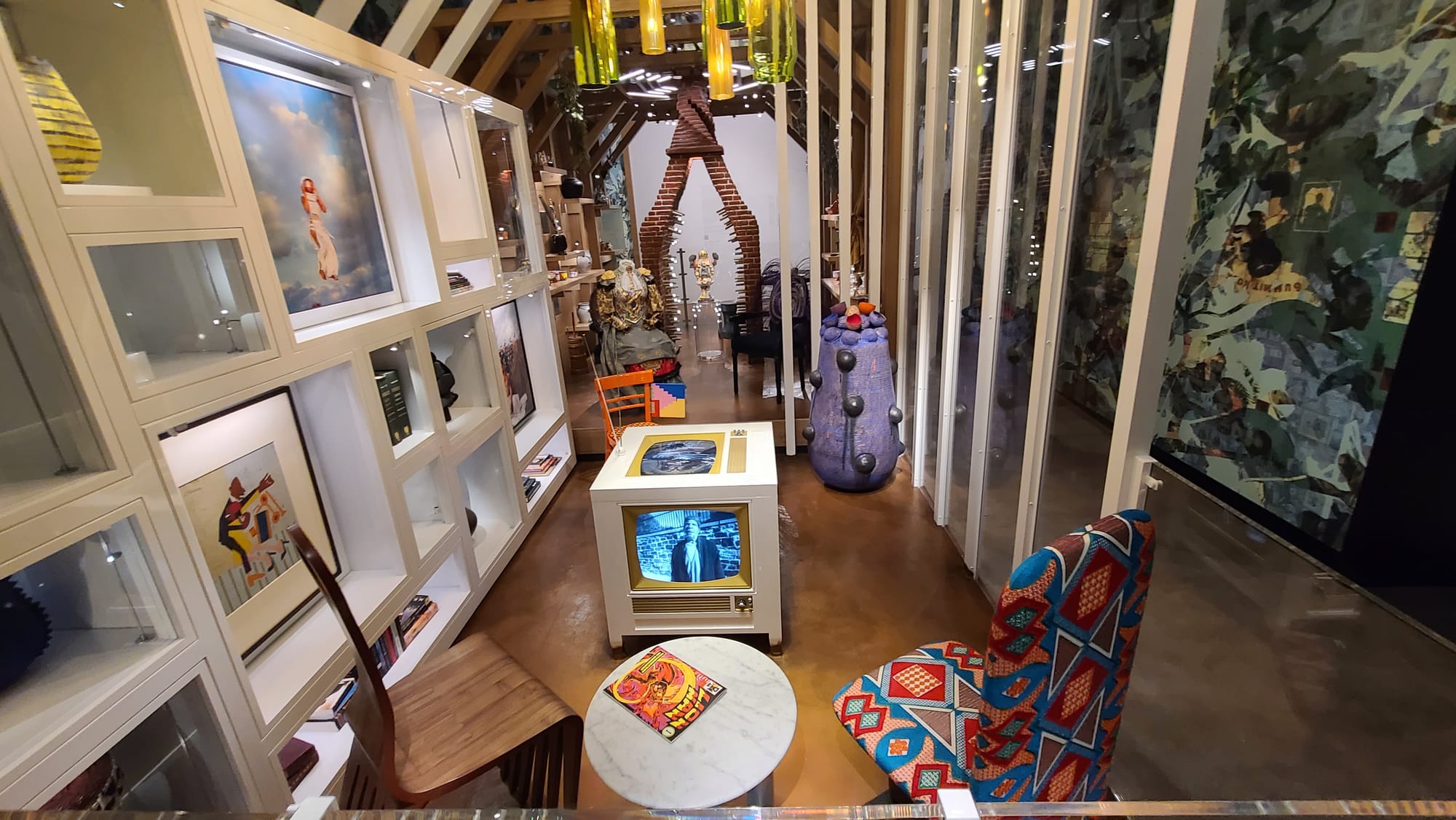
A previous version of my life, circa 2018, lives in a folder in Google Drive. For just a second I had it: a semi-regular writing role at an outfit called Elysian Magazine. I wrote two articles per issue. One of them would always be about art.
The magazine had its problems (its publisher, Karen Floyd, once chaired the South Carolina Republican Party), but during that 18-month stint, I wrote a retrospective on Toni Morrison and I venerated the architecture of Zaha Hadid. My editor pushed me to reconsider the work of feminist German-Argentinian surrealist photographer Grete Stern. I pitched a feature on one of my role models, the Mexican photographer and conservationist Cristina Mittenmeier.
I got to talk with other Black women about art, interviewing Stephanie Baptist about her living-room-turned-art-gallery that eventually became Medium Tings, a boutique nomadic gallery and the start of an alternative art space of her own creation. An interview with Xaviera Simmons helped me find a better way to talk about the visual language of resistance and survival inside a Black body. Black women were creating. We were building, and I got to capture that, at least for a little while.
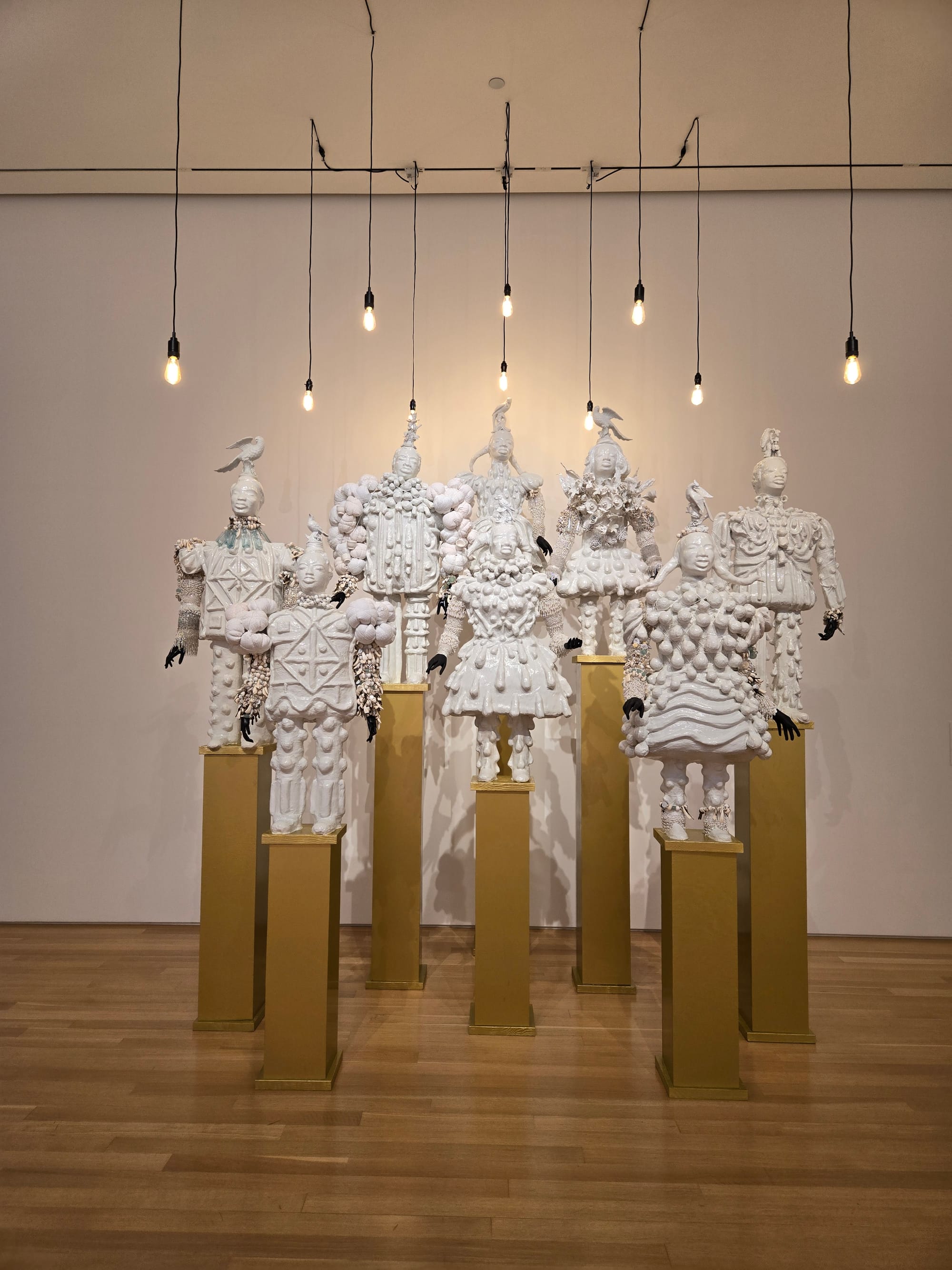
I got to see my work in the coveted display of a full-color, 11x17, large-format print magazine. I never knew exactly when I would get paid, but the check always came eventually. I made $500-$700 per article, and I thought this was just my beginning. Eight years later, I now understand that in some ways it was the peak of my art writing career. My editor left in 2020, and the magazine never called again.
I tried to pitch art stories to other publications, with minimal success. I could get a piece or two published but never seemed to gain a foothold. I was outside of the major art cities, and the number of places to pitch kept dwindling. The act of viewing art made me tingle with possibility, but there was nowhere for those words to go.
I spoke with André Leon Talley on a May morning in 2020, ahead of the release of his book The Chiffon Trenches: A Memoir.
I did that interview as a freelance book critic for the Atlanta Journal-Constitution, where I got paid $250 for a review, which was far better than the $50 often offered me by other outlets, but I already knew it wouldn’t be enough to live on.
In my fashion-centered household, André Leon Talley was Vogue. His arresting presence, unapologetic sophistication, and acknowledgement of his larger-than-average body made him seem confident in his role as a queer icon and a pioneering Black editorial director in the historically white elitist fashion world. He turned his deep knowledge of art history into high fashion.
Talley was my art elder: a Black man from the South, who grew up three hours away from me, who knew what it meant to breathe rarified air but also understood the toll of being the token, of being held back by career-limiting stereotypes while our peers sailed by, or even soared. He knew that even an Ivy League education (I went to Dartmouth, Talley graduated from Brown) wasn't enough.
He confirmed what I had already started to suspect: A byline indicates visibility but does not equate power.
We talked about what it meant to struggle to escape the structural and psychological traps that the magazine world had set for us.
At the time, I was just beginning to understand the internal pressure of representation, all the personal choices I made that would be misrepresented as standard-bearing for the Black race.
Two days after my interview with Talley, the New York Times released a video investigation that reconstructed the final 12 minutes of Ahmaud Arbery’s life. Media appetite shifted. Paying markets opened to me, provided I use my traumas as subjects, and I accepted the proposal. Those stories of systemic exclusion, Black land loss, and anti-Black racism needed to be told. Publications finally had space for the urgent truths I needed to say. But it wasn’t about art.
So I let outlets use my face as bait, because sometimes that check clears (but sometimes it doesn’t...Outside you still owe me $300 from a 2023 essay reprint).
When Talley died in 2022, Diane von Furstenberg paid his debts.
Fat, Black, and queer, I had a choice to make. Was an artistic life worth it, if it meant this was my end?
Before the Washington Post layoffs that closed Book World, and the Associated Press’s move to pull general book coverage, and the general mass contraction of the arts journalism industry, I already knew it: The job I wanted no longer exists. Writing about the arts cannot pay my bills.
But I cannot help myself. Sometimes my penchant for art and narrative leaks out anyway.
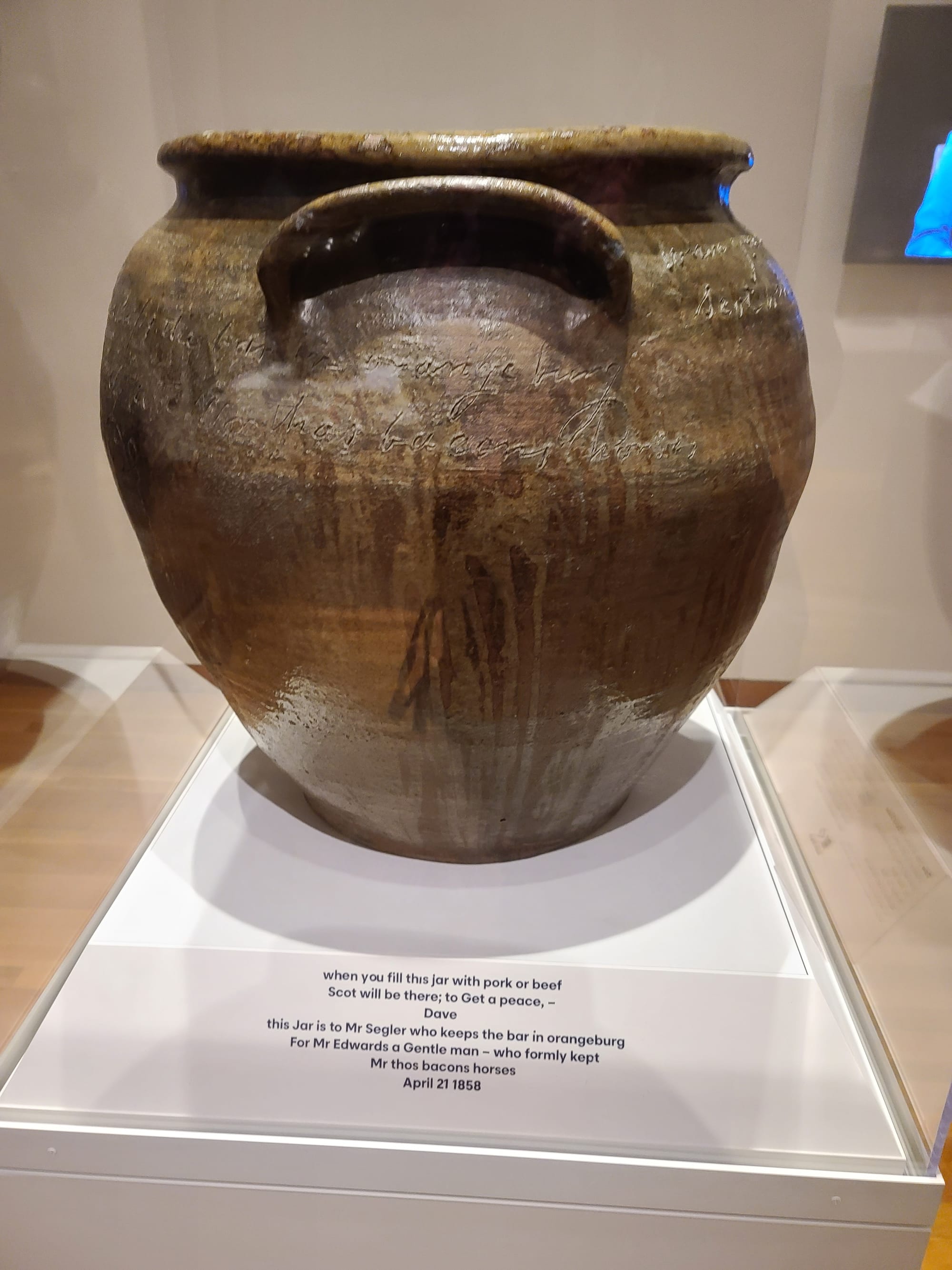
It shows up in the poetry lecture I give to my Intro to Creative Writing students on Keats and his “Ode on A Grecian Urn.”
As Keats asks questions about the transient nature of topics like art, craft, beauty, truth, and mortality, he is grappling with his need to articulate his thoughts on eternity and how an object has managed to stay whole and visible for a thousand years. Keats’s father died when he was eight, his mother when he was fourteen. His brother Tom died in 1818. So many in his family line (before and after him) died penniless and wracked by tuberculosis. Two years later, at 25, Keats was dead, too.
The poem was panned when it came out. Two hundred years later, we still teach it.
Life is brief.
Art, and by extension, its stories, lasts. What we have to say about it changes over time, but it's important to document those thoughts.
Harriet Powers, a Georgia Black woman, sewed stories into her fabric. Her depiction of the Leonid meteor shower of 1833, in “The Night the Stars Fell," is so vivid that the nuclei of the meteors still shimmer, though she quilted it 130 years ago. This event was so dramatic—with thousands of meteors per hour—that people believed at the time that it was the end of the world. Many decades later, many elderly formerly enslaved people used this dramatic event as a marker of their own age, in lieu of a birth certificate.
In 1833, Harriet Powers wasn’t even born yet. But the celestial phenomenon’s existence was passed down, so she could document its power. What does it mean to stitch a memory or a prayer into a piece of fabric, hoping somebody in the future can understand it? What does it say about faith? What does it tell us—creators and viewers all—about the legacy of art?
Good criticism is more than a simple evaluation, it also has to examine the erasures, absences, and silences.
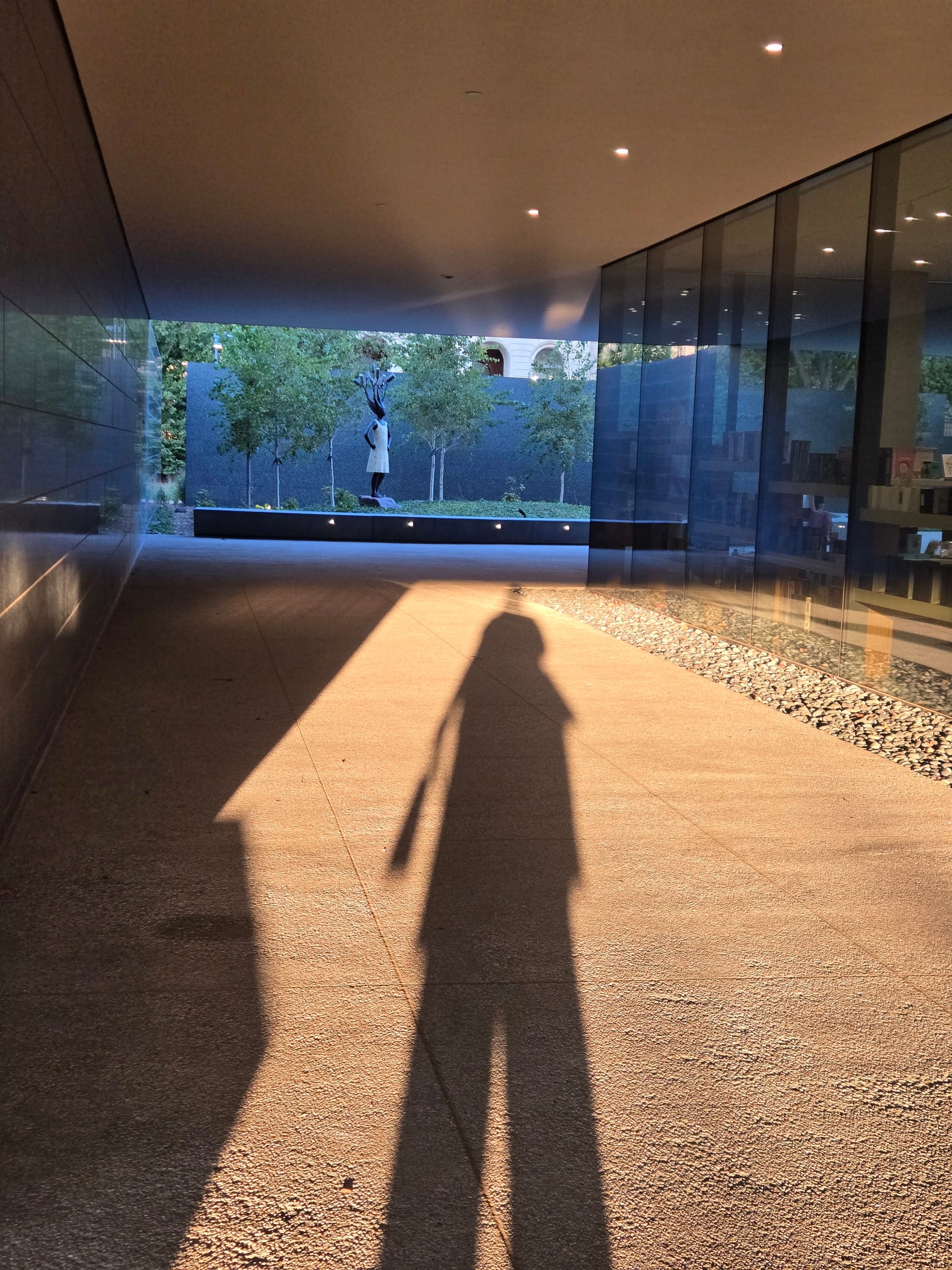
At some point in recent years (maybe we can blame it on Instagram), we started viewing art as an object instead of art as connection. And the role of the critic died.
Direct-to-consumer enterprises marketed by critic-proof institutions mean there is no need for the context of aesthetics or the theory of beauty. Place and memory become victims of algorithmic flattening.
Many mainstream publications have decided the effort of scavenging for the language to describe limits on our understanding are no longer worth paying for.
Recently I saw the pay rate for an art magazine: 4,000 words for $300.00. No expenses for travel.
This essay was edited by Maggie Mertens.
Scratch is a weekly newsletter about how your favorite writers are surviving (or not). We are a four-person collective publishing essays, interviews with other writers, and topical inquiries into the publishing and media industries today. If you like what we’re doing here and want to support us, a paid subscription is the best way to do so.
Become a free subscriber to receive our weekly newsletter.
Member discussion