Smartphones, Dumbphones, and Delusions of Platform-Building
“I don’t actually need my smartphone to write, but do I need it in order to be seen as a writer?”
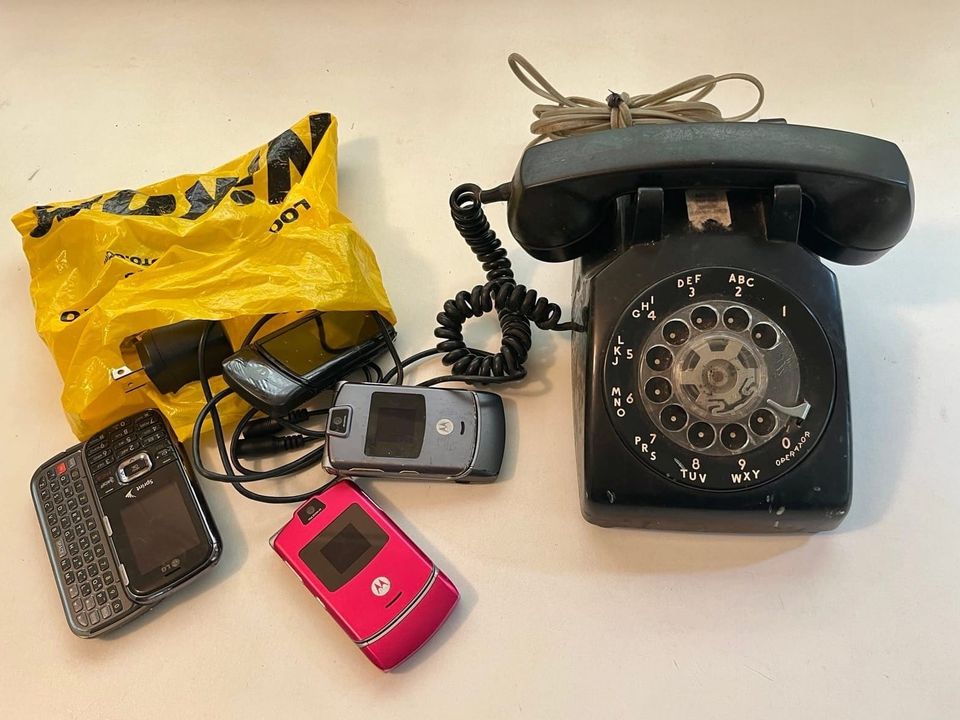
Around six months ago, my 7-year-old iPhone X started to go on the fritz. It’s old. It’s full. It’s tired. But I just couldn’t bring myself to buy another smartphone. You know why. More money to our corporate technological overlords. More investment in my own declining mental health. Also, I don’t have $1,000 laying around, actually. Someone who saw my sad phone asked if I was “trying to singlehandedly save the children of the DRC”? It was a cheeky comment, but actually, yes. That’s part of it, too. Ethical consumption, etc.
I considered my options: Could I be one of those cool people who got a dumbphone? Who opted out of all of *this*? My immediate reaction was: no. I am a writer. I have projects to promote. Articles I want people to read. Books I want to sell. But after sitting with those excuses for a moment I began to see the absurdity in my logic.
I remember vividly the first time my bubble of delusion about smartphones and “being a writer” burst. I was sitting on my couch, folding laundry, and listening to a podcast in August 2020, an activity that I sometimes count as “relaxing.” Zadie Smith was on Call Your Girlfriend, which piqued my interest because I’d already been discussing with my writing life partner Latria how in the world Smith had come out with a book about the pandemic when we were only five months into lockdown.
In my headphones, co-host Aminatou Sow revealed that Smith was a luddite who only had a flip phone and largely communicated with her friends through email. So, she asked, maybe that skill was coming in handy during our current isolation? My hands stopped their automatic folding, sorting, piling. A flip phone? Writers can do that? I texted Latria what I’d learned as though it were actually shocking information I had never before considered.
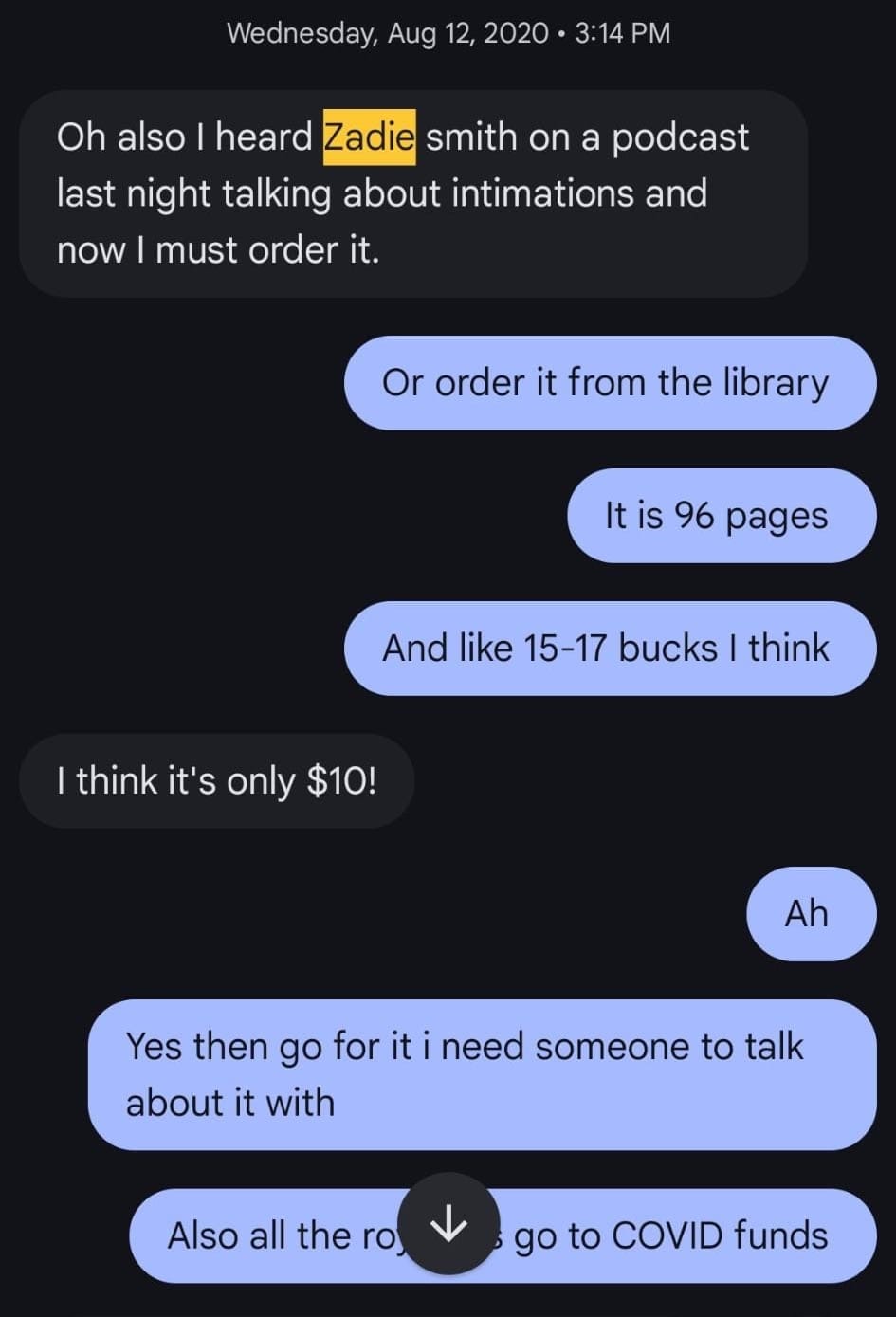
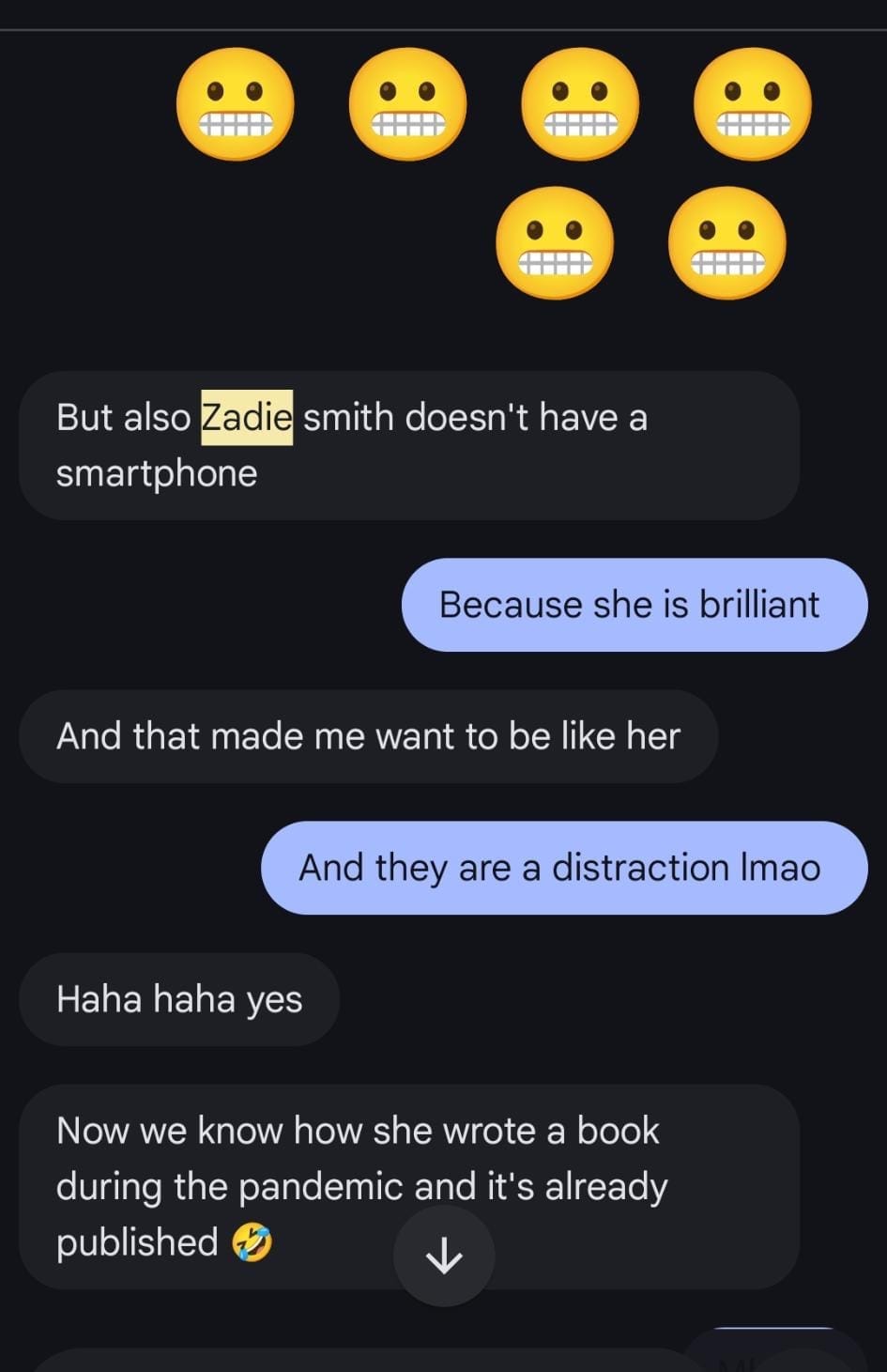
An awed text message exchange between Maggie and Latria in 2020 about Zadie Smith owning a flip phone. (Photos courtesy Latria Graham)
Currently, I am 39 years old — an elder millennial. I got my first cell phone as a high school junior, a classic Nokia, which my mom only allowed me to have once I started driving. T9 typing was a pain so texts were brief. The real appeal of the cell phone at 16 was being able to call friends without having to talk with their parents first. After all, we still had online chatting then: AIM, or MSN Messenger, or, later, MySpace and Facebook for constant written communication with friends. The separation of computer interaction with people and phone interaction with people was still distinct — and all of it was still, relatively, private communication.
When I landed my first (and in retrospect, only) real job in 2010 I ordered a Palm Pre —my first actual smartphone. The iPhone was still financially out of my reach and seemed bougie in a way I wasn’t interested in. I worked in DC at a stuffy media company full of old white men, where I was also issued a work Blackberry that made me feel some kind of important even though I pretty much never needed it.
My Palm Pre was a pretty, screen-filled egg that connected to the internet. I really only bought it because getting on my personal email during the work day was seen as a no-no, and my job was boring, so I needed access to other stimulation. In the end, I usually just logged onto Gmail and Gchat from my desktop anyway. Work rules be damned.
Two years later, I’d finally join the bougie class when the iPhone 4 dropped to a mere $99.99. Social media then was a strange, clunky new world where I actually could experiment creatively. I had a Tumblr, maybe even a few of them, and created multiple weird anonymous Twitter accounts that gained some followers.
I lived in Brooklyn then, working my boring journalism job remotely during the day, and getting my MFA at night. Creativity oozed out of me, and this version of the Internet still had multiple places where it could land. As I remember it though, I did almost all of this work on my laptop. Instagram was an app I opened for a few minutes each day, scrolled to the end of my 15 friends’ highly filtered, Hipstamatic updates, and then closed. The scourge of the smartphone in that era was having access to your work email while you were out at the bar with your friends, and had to decide whether to respond to your boss when you were three drinks into happy hour.
Was it 2015, then, when my phone became something else entirely? I’d moved to Seattle, quitting my full-time magazine assistant job that was actually a contract gig, to try to at least write if I wasn’t going to get benefits anyway. Going freelance at the time was a choice that felt viable in a way. The journalism industry was contracting, yes, but new pathways of participating were opening, too. Twitter was in peak form. Ann Friedman’s newsletter was a revelatory new medium. And the word “influencer” was still mostly a joke. In other words, social media offered a blueprint for a person like me, who wanted desperately to be a real journalist and write nonfiction books but couldn’t find a staff job in a rapidly shrinking industry. There was a simple formula, it seemed: build your platform on social media, pitch bigger publications, and voila you’d be handed an agent and a book deal.
Enjoying Scratch? The best way to support our work is with a paid subscription!
What’s wild is that I actually was successful as a freelancer for a while. I was writing for multiple magazines at the time, with semi-regular gigs that paid enough for me to cover my bills. I didn’t have to answer to a boss, or go to an office, and eventually, I even got an agent, and (much, much later) a book deal.
What does all of this have to do with Zadie Smith and her flip phone? Well, at some point my smartphone became a constant reminder of all I wasn’t. Even though I was making it work as a freelancer, every time I’d open my phone to fire off a pithy tweet, or post an article I’d written, or check my email while out with friends — expecting to feel better, find validation, or further curate my online image into successful writer — I instead started to hear a constant drumbeat in the back of my head: Failure. Failure. Failure. Failure.
Around the time I heard the Smith interview, which coincided with the horror show of 2020 and the deep depression it spurred in me, I cut way back on phone time. Probably not coincidentally, this is also the time I finally did finish my book proposal and sold my book. Perhaps I’d successfully separated writing from being a person on the Internet.
But then, in 2024, the book was coming out, and I knew I needed to crawl out of my little cave and sell it. I wanted my marketing team to be happy, and I was proud of my work so I did all of the things my publicist and editor and agent suggested. Because even though no one had ever hired me to be a staff writer, and I would probably never have a salary or benefits, I could maybe, just maybe, be a real writer if I could make this book a bestseller. Everyone knows what sells books today: a platform (jk, no one knows what sells books today). The little device in my pocket with all of the apps just waiting for me and my pithy takes, and enraging videos, and naturally, news of my genius book.
Reader: My book never went viral.
I went on national television. But never went viral.
I published related pieces in The Atlantic, The Wall Street Journal, and NPR. But never went viral.
I made TikToks, and Instagram Reels about Caitlin Clark and Kathrine Switzer, and went on approximately 80,000 podcasts, including “You’re Wrong About” and “Today Explained.” But I never went viral.
My book made one bestseller list for one week, and not the “real one.” Sales of my book have been fine, maybe even good if you take into account that nonfiction sales are dire at the moment. But I honestly don’t think anything I did on social media had anything to do with those sales. What my intense use of social media over the past two years did have an impact on, however, was my brain.
Hence, two years later, this desire for a dumbphone.
Volume up! I've played this video of Manjula sliding her phone open about 100 times in the past two days for the satisfying "click." (Video courtesy Manjula Martin)
Last December, when I mentioned my phone dilemma to my friend Georgia Cloepfil (the author of a gorgeous, lyrical memoir I love very much called The Striker and The Clock about her years as a professional soccer player), she told me she’d actually already tried to make the switch, but the flip phone didn’t work for her. She missed out on group messages from friends, and texts from her child care provider, and she couldn’t figure out a workaround for two-factor authentication that functioned quite right on the road. “The world,” she told me sadly, “isn’t set up for people without smartphones.” Ultimately, Cloepfil went back to a pared down version of her iPhone.
But Cloepfil is also not me. She currently has work as a visiting writer-in-residence, and she coaches soccer at a small university in Portland, Oregon. Needless to say, her relationship to her work and identity is unlike (and perhaps more healthy than?) my own. When I first exchanged emails with Cloepfil, because I wanted to connect with this person who had also written a book about women’s sports coming out the same summer my book was publishing, I recognized quickly how differently she was approaching her book launch. When I congratulated her for making a list in the Los Angeles Times highlighting summer books, she expressed gratitude but admitted the lists stressed her out. “I think it's time for me to get off the internet,” she wrote. “I just want to write my weird little books and not have to think about the rest.”
At the time, I thought, “Wow. We have different goals.” But now I’m not so sure. Was my goal to make every list? Or was that goal dictated for me by the device in my pocket that held a social media machine that made me think that constantly being part of the zeitgeist is what a writer should aim for?
When I pressed her, revealing my own secret fear that letting my phone go would mean any hope of building my “platform” to sell another book, she said something I have been thinking about ever since. “I don’t have a platform, and I never will, and I don’t want one because I feel like platforms sort of pigeonhole you into one kind of writer or subject or audience that may never again be relevant.”
She pauses for a moment, probably thinking about that formula we’ve all been sold about platforms and pre-orders. “That’s not the ticket to riches, I can definitely tell you that,” she laughs. “But that’s not why I write.”
Is that why I write? I think. To be rich and famous and have a platform?
Honestly, no. But I think I’ve been trained to think that’s why I write, and I don’t think this is rare.
Like many writers, by the time my book came out, I’d already made all the money I’d likely make on it, ever, through my advance. Somehow I’d grown convinced that I could earn even more money on my book if I only cracked the online platform code correctly, but I also knew plenty of writers who had made “the real list” and still hadn’t struck it rich.
Perhaps, I began to think, I feel attached to my phone and my platform, because I am too stubborn to get a day job, to give up the ghost that I can make a living the old fashioned way (circa 2015).
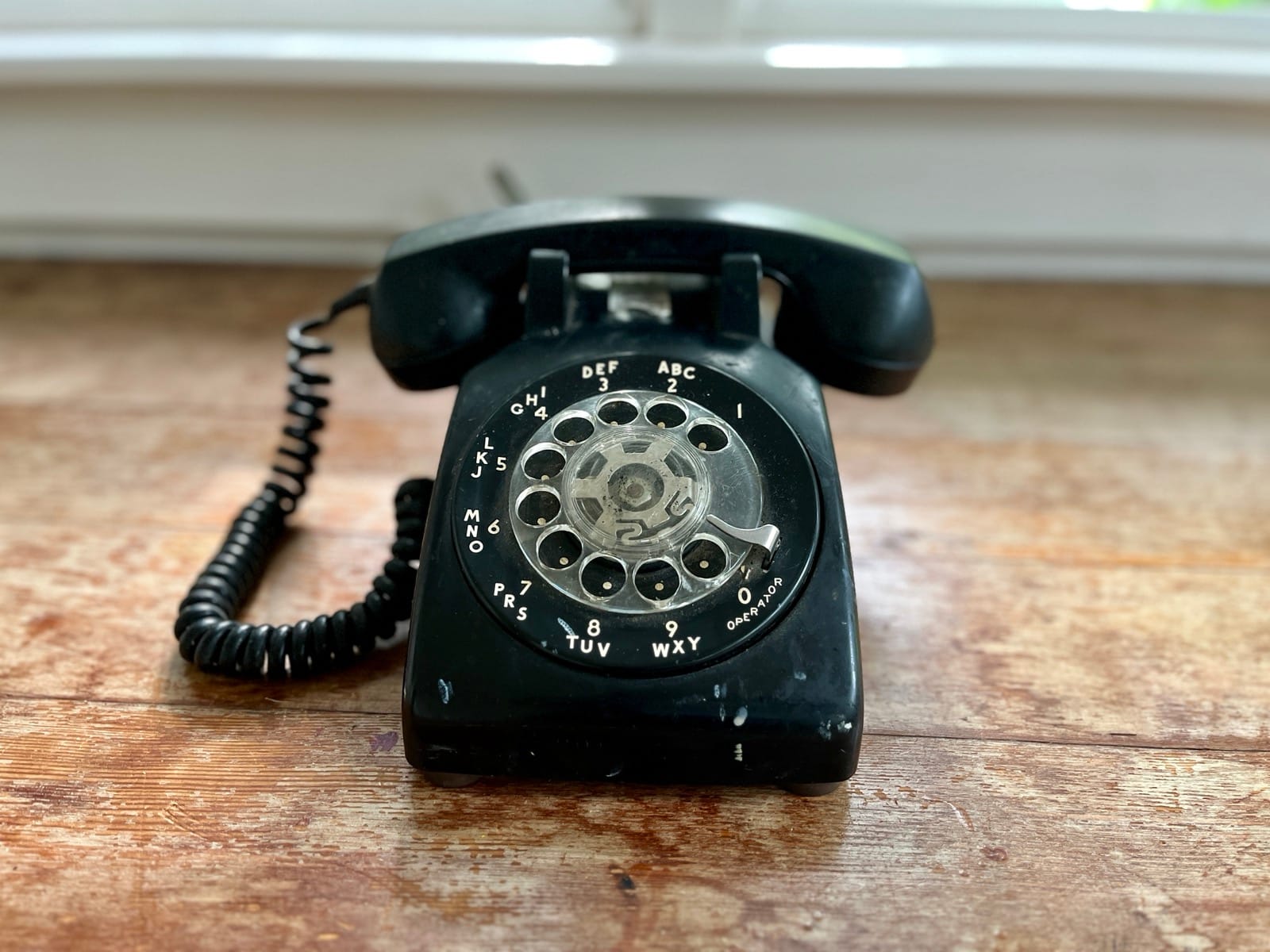
When I called another writer I knew who’d given up their smartphone, we spoke for quite some time before she brought up her writing at all. Two years ago, Carmella de Los Angeles Guiol switched to a Light Phone, a fancy and expensive stripped down phone that can allow group messaging, texts, calls, even a podcast app and GPS, but has no app store, no camera, no internet browser, and no image capability. She happily told me about how it has changed her relationship to her small children (she’s more present), her own brain (she feels more patient about obtaining information), and her use of her time (she reads more books instead of scrolling). When I pressed her on her writing, however, and on that formula that platform equals writing success, she demurred.
“I’m not trying to make a living as a writer. I have sort of come to the conclusion at this point that I don’t really know what my writing future is going to look like,” she said.
Later, Guiol added that actually she is reworking a novel, and is part of three different writing groups, and how it’s hard to even remember that fact because she’s not putting that work into the public eye via social media. But that’s just it — the writing part always happens out of the public eye, but capitalizing on it can’t, and while marketing and publicity used to happen through mainstream media and book reviews, through events and marketing campaigns, now it depends more and more on us, the writers.
The fact remains that I am not and never will be Zadie Smith. That Smith, and Jonathan Franzen, and all the other writer deities who never had to get a Twitter account to boost their pre-order numbers, are a privileged type of dying breed: writers who truly became famous for their art, not their online personas. They will never have to experience the strangeness of confusing a personal tech device for a path to a storied career or financial stability.
When I heard that a friend of a friend who is a writer/musician/scholar had never had a smartphone, I knew I needed to speak with her. Maia Brown is a Seattle-based artist, musician, and teacher who cobbles a living together via “very part-time teaching, tutoring, babysitting, teaching Yiddish dance, gigging with my band, some illustration commissions, some grants, [and] some medical studies.” Her projects are all what you might call niche: an anti-fascist Yiddish folk-punk band, Brivele, an open source Jewish prayer translation project, and studying and teaching about historic and artistic methods of mourning, to name a few. Brown is the type of person whose work has deep personal meaning, and who refused to even get a cell phone in high school and college because she didn’t see the point.
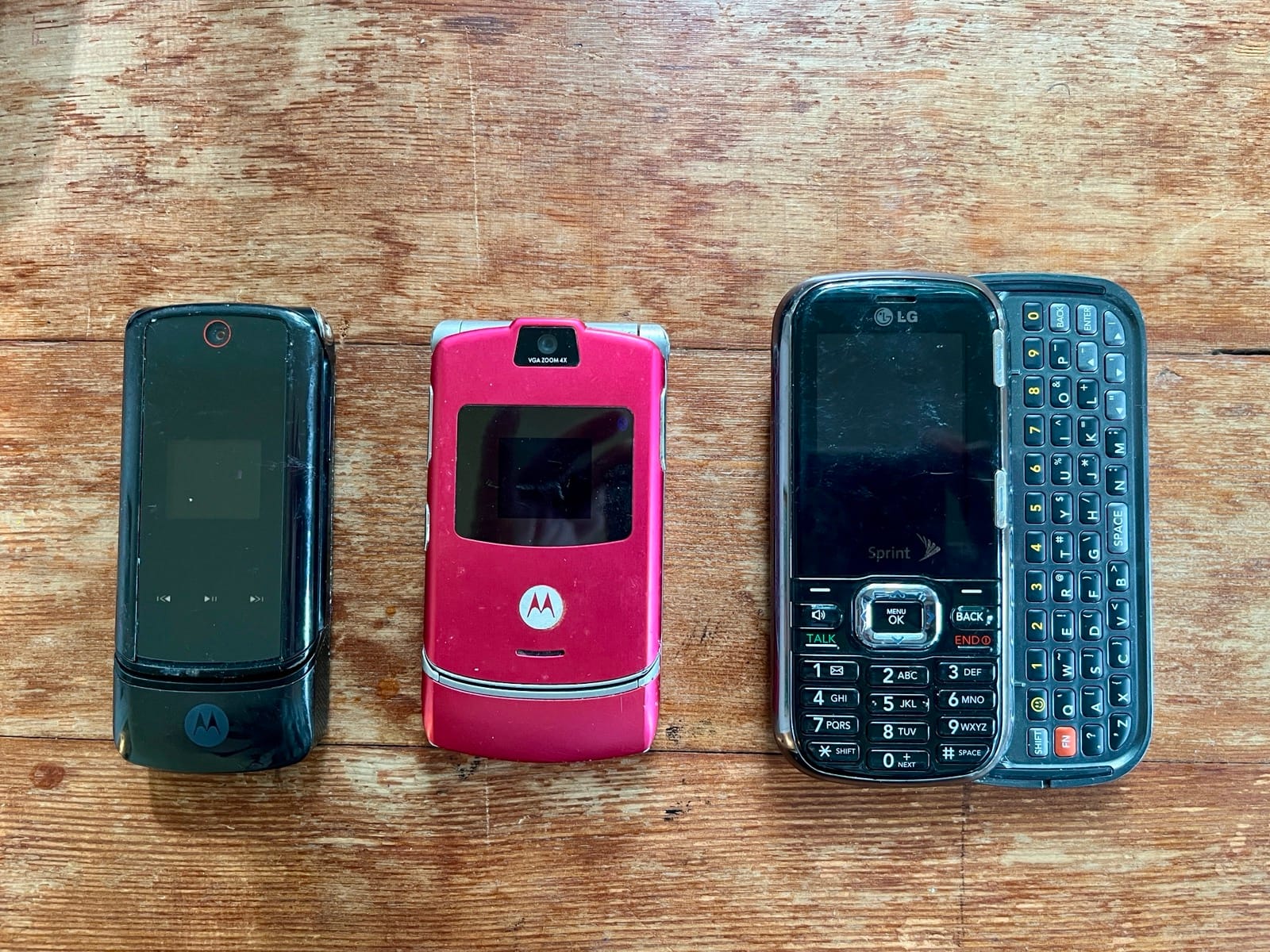
She tells me she would rather ask a stranger for directions than her phone, or call the bank to tell them she’s traveling rather than fill out a form online. At this point in the conversation, I wonder when I stopped loving calling friends on our little flip phones and instead started having heart palpitations about human interactions. And while this feels maybe outside of the realm of this essay, I don’t think it is…
“I actually don’t want more than the level of attention that I can handle or that is necessary in order to keep doing work, and I don’t need everyone in the whole world to know what work I’m doing,” said Brown. “I’m deeply unconvinced that I actually would be more successful in making ends meet if I were better known in particular ways that would also be sort of emotionally painful to me.”
“The level of attention that I can handle” is probably never a concept I have ever considered, but suddenly it makes me think how similar in meaning attention is to exposure.
“Exposure” was an integral part of that old how-to-be-a-writer formula. This is why we all needed platforms (social media followings), and why we needed to publish for free, or very, very little pay. In 2013, $30 is what I got for my first ever published essay in The Billfold.
“People die of exposure,” was the line the freelancers were often taught to use to push back on alarmingly low rates.
I’d argue that writing for free wasn’t the only kind of exposure that’s been deadly to writers. Often, when a writer has transformed a witty online persona into a book deal that rocketed straight from Publisher’s Marketplace to the NYT Bestseller list to a Netflix series — the kind of career arc we’ve been taught to covet — the next step has often been: Become a social pariah. Or: Write a lackluster second book. Or: Never publish again because who has the time to think about writing when there’s a social media algorithm to feed?
I haven’t bought a dumbphone. But I recently bought a little piece of plastic that works with an app on your phone to block all of the apps you want until you physically turn them back on; it was advertised to me on Instagram and I hate myself for this fact. When I ordered it, I thought it was a potential guardrail to ease my addiction to my smartphone. But I don’t really think it’s my phone I’m trying to wean myself off of, anymore. It’s the idea that I’m not really a writer at all.
This post was edited by Rahawa Haile.
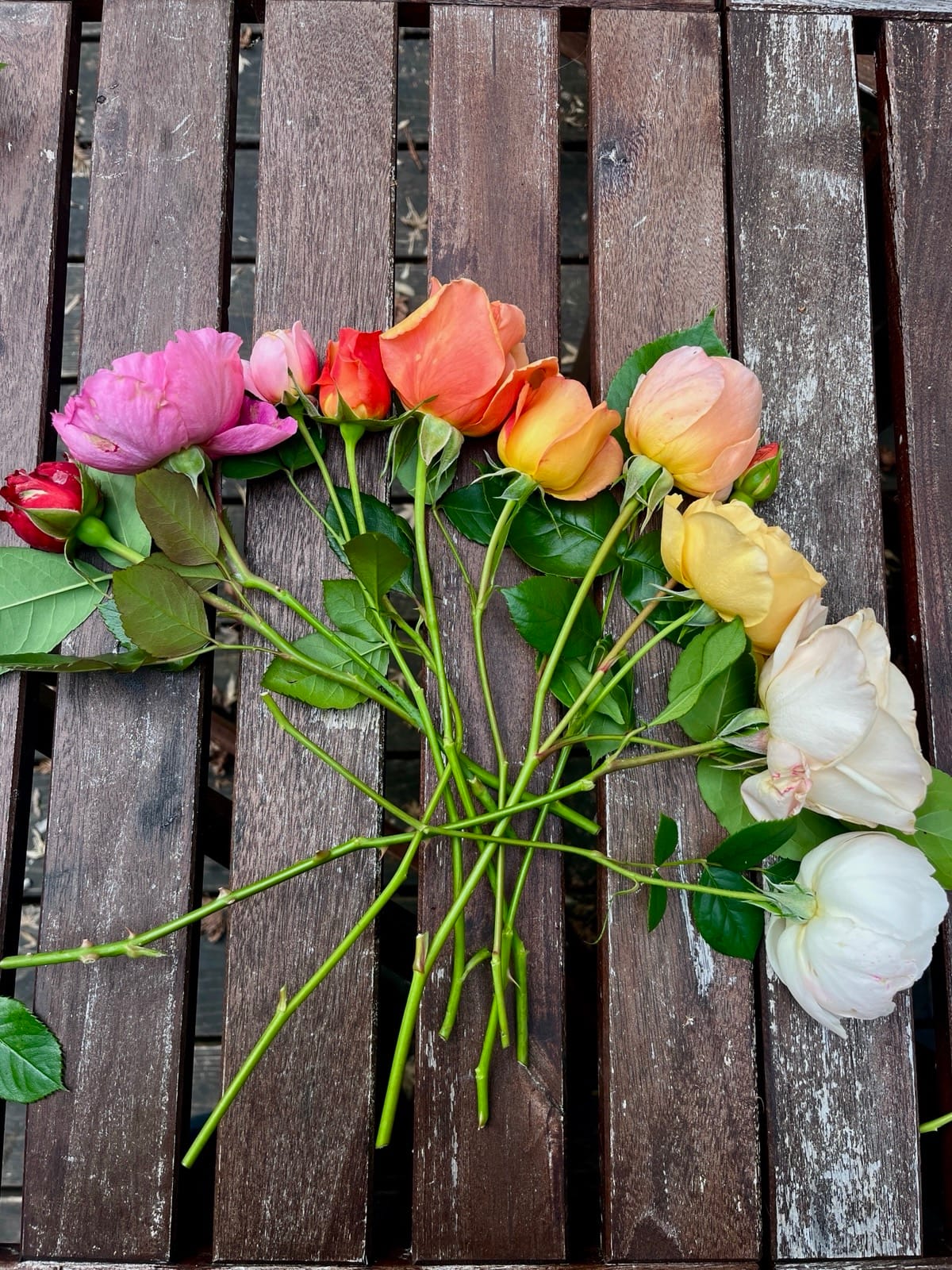
Post-Credits Scene From the Garden
Something beautiful for the week ahead. Thanks for reading Scratch.
Scratch is a weekly newsletter about how your favorite writers are surviving (or not). We are a four-person collective publishing essays, interviews with other writers, and topical inquiries into the publishing and media industries today. If you like what we’re doing here and want to support us, a paid subscription is the best way to do so.
Become a free subscriber to receive our weekly newsletter.


Member discussion