
Should We All Be Working Retail?
And could we even get hired?
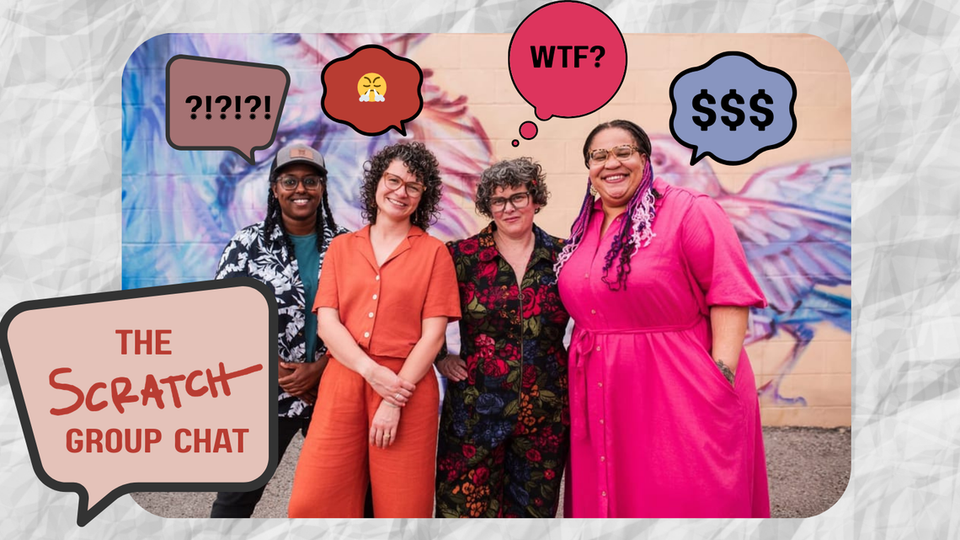
Welcome to THE GROUP CHAT, a recurring feature in which the Scratch collective invites you into our real-life text thread. Last time, the chat disclosed how much money we make from writing books and our other income streams, including journalism, editing, and teaching. This week, we’re looking toward the retail sector.
Many authors harbor a secret fantasy of working at an indie bookstore, although those of us who’ve actually done it know it’s not always so dreamy. But in a precarious publishing economy, it bears asking: Should we be looking to pick up shifts in retail? How about a day job as a mail carrier, truck driver, office drone, or rural femme butcher? Join the Scratch chat as we debate the toll such jobs take on the body, bad-customer trauma, art for art’s sake, identity-vs.-career, and other hazards of navigating the narrows between art and commerce.
This transcript has been lightly edited and condensed.
Rahawa: I’ll start, since I’m the only Scratch member with a current part-time service industry job.
Maggie: What's your hourly at the bakery, Rahawa?
Rahawa: I usually net around $24/hour with tips. I’m there three days a week for 15 hours total, give or take an hour.
Maggie: That's not shabby, though!
Rahawa: I know, right? And the work is fine for the most part, but I am so tired!
Manjula: I think about this a lot. I had retail jobs most of my life until my thirties, I guess? First as a literal child — my grandma owned a home goods shop. Then in my teens my first (legal) job was at a used bookstore. In my twenties, I supported myself with jobs at bookstores, record stores, video stores, cafes. Oh, and being the "box office girl" at an alternative music venue in NYC, which . . . I have stories. After that, I had more office jobs, but I worked part-time at bookstores on top of my desk jobs for a while. I think the last retail job I had was in 2007? So, it's been a minute! Lately I have been wondering if I should go back to shop work. But also, my body, it is older now!
Rahawa: It is different mopping floors in your forties vs. your twenties, both mentally and physically. What I’ve found is that once you are injured it's very hard not to stay injured. I could, if I wanted, work twice a week for eight hours, but I can’t because of my foot injury. And my foot won't heal because I am squatting, and shoulder pressing, and deadlifting dough, and generally running around behind the counter three times a week.
Different types of retail are obviously harder on the body. I’m not closing a massive restaurant each night. I’m not a bookseller who isn't allowed to sit for eight hours straight. It still really fucking sucks.
Manjula: I was just talking about this with a friend who is a musician. Our retirement fantasies are to get a job at the grocery store (quelle fantasy lol), except . . . I can’t work in the fridge section because of my bad lungs, but I also can’t lift a lot because of chronic pelvic pain, but also also also . . .
Rahawa: Right! And now every time I see an even older person working a shit job on their feet I just want to run up to them and ask if they're ok, would they like a seat, etc.
Manjula: I saw an old friend this week who is a record store guy, and he is thinking of opening a new shop in the Bay, and I was like DO YOU NEED A BOOKS SECTION 👀
Which is my dream, right?
But also it is so damn precarious to work in arts-related retail!
I find it wild that the fallback for the intellectual class is wage service jobs. It just is, though. Bakeries or books or grocery stores. But in the current moment of ALL retail really suffering, and physical goods sales also being precarious (thx Amazon, tariffs, economy, etc), it’s ~interesting~ that I feel working in a bookstore is more stable than *writing* books.
Rahawa: A notable thing to me is how normal this is for the other arts? Nearly every interview with a touring musician, regardless of their age, is like, “Oh yeah of course I sell records at ___ when I’m not touring. Of course I serve lattes at ___.”
Huge, formerly employed swaths of the film and TV industries in LA turned to retail or ride-share apps or whatever during the COVID-19 pandemic and people didn't bat an eye, whereas I think there's no way in hell that could have happened in our creative industry. My feeling is there's a certain stigma associated with wage work for writers because of classist expectations around academia and intellectualism that don't exist in the same way for the aforementioned arts.
Enjoying Scratch? The best way to support our work is with a paid subscription!
Maggie: I really feel like part of it for me is I don't see more stability anywhere else right now!!
The other part is I have a lot of retail baggage from growing up and in my twenties, and I don't think I could do it again. Namely: My mom worked retail my whole life, and I worked for her as a kid, and then had different retail jobs in summers in college and beyond when I couldn't get paid for journalism work. I worked at Starbucks while interning at Seattle Weekly and worked at Whole Foods while interning at NPR after graduation during the Great Recession.
For me, so much of getting a job in journalism was also about leaving behind working retail, because I wanted more than my mom had, essentially. She didn't go to college, and she had five kids, and that was her work life, and it was hard and precarious, and I got to go to a fancy college, and there was a lot of weird pressure in the sense that I needed to make it worthwhile by having a fancy career. Or at least a salaried, office one.
I dunno. I don’t wanna go back. Also, I didn't love the sexual harassment that always seemed to come with customer service jobs!!!! (Starbucks was THE WORST.) Like, I would rather go become a teacher or social worker now.
Manjula: There was a time — IN MY ADULT LIFETIME — when one could work part-time at a wage job and pay the rent, so you still had time to do your art thing.
Maggie: Yeah! When young people ask me for career advice now, I say get a boring but stable and easy office job, and take the paycheck, and write on the weekends and evenings.
Rahawa: Yes. The other doors are closed. You'll rip your nails out trying to pry them open.
Manjula: I have always been a fan of the day job. (Says the person with no day job right now.)
Maggie: I kinda wish I would've just stayed in a boring day job, but alas I did not. And now I feel that has kinda passed me by.
Manjula: OK but counterpoint — day jobs are stressful and they text you on The Weeknd's and shit.
omg not the BAND, autocorrect, the ACTUAL WEEKEND!
Rahawa: I’ve only ever had one day job, and it paid me $32,000 in NYC, but I got to leave it at the office, so I mentally added another 10k. I read and wrote short stories, and went to lit readings, and made friends with other writers, and was broke and depressed but not stressed like you describe, Manjula.
Something I think about a lot is how, if I hadn't started this bakery job in March of 2025, I would never land it now. So many people are out of work! Like, there is no winning.
Manjula: Yeah, I mean, we are talking about these job choices as though they are choices. But ultimately one gets by however one can.
Rahawa: I know I’ve said this to you all before, but I used to get techies who were previously at FANG companies like Google or Apple asking if we were hiring at the bakery every other week.
Manjula: SIGH.
I'm sorry, I’m just so mad at them still.
Like, you took everything. Now you want a regular job, too?!?!
Maggie: I have friends who have gone through getting master’s degrees and teaching certs and still not landed jobs as elementary school teachers. It's so bad right now.
Rahawa: I mean this entire convo is why we’re doing Scratch, right? “How we get by” is by betting on each other.
Manjula: I will publish your next book as a fucking zine if I have to. I have a typewriter. We can do this.
Maggie: Yes we can!!!
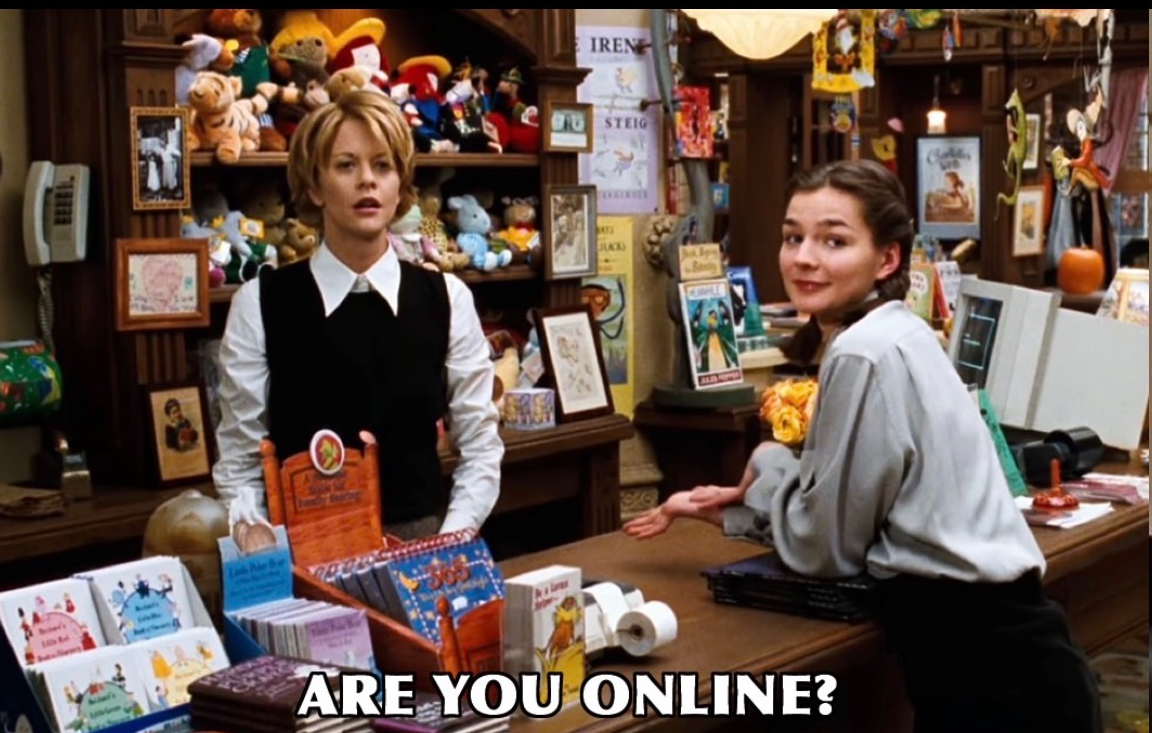
Manjula: I do wonder how much of my desire to work in a bookstore is nostalgia. For my youth, pre-Amazon retail, the '90s, whatever. But also that nostalgia is warranted, In These Times!
So I’m trying to learn from it. To relearn what I want to take from those values and systems that I miss.
Maggie: 1,000%
Rahawa: I think the desire to work in a bookstore in the '90s isn’t just nostalgia, though! Who doesn't want community? Who doesn't want what a dollar could get you back then?!
Maggie: And just to be surrounded by people who read?!
[Latria has entered the chat]
Latria: Question about bookstore nostalgia/jobs like that:
Does it seem like those would be . . . less lonely? Is it an internal/external thing? The fact that folks can trauma bond around ridiculous patrons? The fact that it tickles a certain part of the brain to swap book recommendations?
Rahawa: I secretly love chatting with people, telling them what’s good, and then taking their money. I wish I worked at a bookshop (with a healthy foot!).
Manjula: I also love that! The bad customer trauma bond is real, for sure.
Latria: Nothing like having older white women with Kennedy money accost you on your lunch break because you haven't gotten that latest graphic murder novel they're pining for, even though you ordered it from the UK so you could get it six weeks before it's released in the US.
Manjula: 😭
Confession: As a person who has held several “unicorn” literary jobs, I sometimes miss having a job I can just, like, not love that much, and also not think about that much? Like, I can complain about it but also it doesn’t MEAN that much to me. Unlike, say, being an editor at one of five lit mags left on earth...
I have realized I may be a person who will always end up hating my job at some point, so maybe it makes sense to have a less meaningful job? Idk if this is true, but it’s definitely something I’ve thought before!
I can say these things because I have had <checks receipts> 4,734 jobs.
Latria: "What I’ve found is that once you are injured it's very hard not to stay injured." Rahawa, this. I keep thinking I can go back to farm work if this whole writing/academia thing doesn't pan out, and my body reminds me DAILY that I cannot fall off of any more box trucks, and I have probably picked the last of any industrial agricultural crops I could cultivate. So the family enterprise of farming and running a produce stand, which I did in some shape or form from the ages of 10-23, can’t happen. I also figured I could just be a second-generation postal worker, but my body is telling me that is out, too.
What I do know is I would attempt to do those jobs before I ever worked forward-facing retail again. People used to touch my hair and give me diet advice or comment on my body. And for the most part, you just . . . have to take it. Most of my jobs have been in the arena of "the customer/patron/donor is always right," and that minimization of my voice destroys me every time.
I will live in a tent and work myself down to the white meat stocking shelves for a grocery store before I deal with the American public, even in a bookstore. I like that concept of community but I used to work the front desk at the New York Society Library, and hoo boy howdy . . . I'm good!
I also like the idea of physical but "invisible" jobs where people get to be nosy and see facets of people's lives without routinely interacting with people. A lot of my fiction ideas revolve around folks that are butchers, vending machine stockists, trashmen, dry cleaners, motel clerks, etc.
Manjula: omg Latria I looked into being a mail carrier in the rural area where I live, and it is a TERRIBLE job? They subcontract out a lot of mail stuff now, so it’s not a good USPS job like in the past. It’s like working for Amazon. You get $17 an hour (which is basically minimum wage where I live), and only a few hours a day, and you have to use your own car with no reimbursements, I think? Anyway, I was like, no.
Please write a butcher novel, though.
Latria: So many places are outsourcing so many things. My mom is always nice to the rural carriers because of the pay discrepancy. There are folks who are a tier below rural, CCAs (City Carrier Assistants) who haven’t made "regular," and she always makes sure they get solid Christmas gifts.
Fascinating little tidbit: Butchers make really good lovers if they aren't selfish, because they can read flesh well and they’re really strong! I am very annoyed because in that story the butcher is a man, and I am not sure I want the character to be. 😭
Manjula: Um, hello, the world awaits your femme butcher erotica. Please get right on this.
Latria: Listen, I have a whole interconnected short story series about queer life in rural towns. [Editor’s note: redacted secret book plot details!]
But that book comes after the series of short stories set in a motel during [redacted secret pitch details!]
Which comes after the full-length novel about the concept of ownership of a book made from [redacted! Latria is full of ideas!]
There are levels to this. I live for the day my brain gets to be unchained from fact checking in a meaningful way.
Manjula: OK, all these fictions sound great. Please finish your memoir and write them forthwith. HOWEVER, I would like to formally register my vote for RURAL QUEER SEXY FICTION first!
You may, just maaaaybe, find that it is fun and healing to write something fun and healing after the (important! necessary! but) deep-soul pain of self-excavation that is the process of writing a memoir about Blackness and selfhood and land, and especially this land called the USA. Just saying. 🏳️🌈🛻🖤
Latria: I can write those stories to heal myself, but it feels like selling them is a totally different deal. And I can't afford to eat off of that "nice" deal that these stories might garner IF someone was willing to bet on them.
As someone who really thought they wanted to write books for a living and occasionally do longform, I lose sleep over these things. I sit my ass at my desk every day and DO THE THING, but I keep hitting the same ceiling when it comes to freelancing/longform, and from what I understand it's even worse in fiction.
Manjula: BUDDY, ONE BIRD AT A TIME.
I mean, this is also a transcript of my own inner monologue, definitely.
But also: questions for a future day.
Writing and publishing = two different things. First one, then the other. I really think that is true for fiction, though not always for other things obvs.
Latria: But what I am saying for myself (and this is a nonfiction problem) is that my writing doesn't mean anything if it doesn't already have a commissioned home.
Manjula: Then you should not write fiction! 😭
Latria: EYE KNOW 😭
Latria: Like, I straight up do not know how to believe in my ideas if I don't know that they will be packaged and sold.
Manjula: OK, NOW we are talking some Scratch shit.
Latria: That is what I'm saying. I don't have the courage, and I know it.
But it's also because the market is <looks around> like this right now.
Manjula: I know. I know. I hate myself for what I am about to type
but
this is when you just have to be a fucking artist.
Latria: Welp. Looks like my career as a long-distance truck driver awaits.
Manjula: Which doesn’t mean you can’t publish! But in my experience, I cannot write fiction if I am fixated on selling it. At least not in its early stages. Like, where I’m at today with the book I’m starting — I can see a glimmer of how this thing could be super sellable, but I am physically holding my brain back from going there.
Latria: That's the thing. Outside of graduate school, I have never written a thing just for it to exist. I don't even know what that kind of freedom might look like. When I say I am a literary assassin for hire, I mean that shit. *smokes cig* It's all I know.
Like, I've had stories get killed or not work out, and I get to follow my curiosity down some interesting roads, but creating for the sake of creating? Without prompting or deadline? Idk fam!
Manjula: Yes. Because we live in the times we live in, and art is fucking necessary to survival.
I actually believe that. Money or no.
Latria: A question I've been thinking about lately is whether job = identity for you/anybody else in this group? I am trying to uncouple what I do/who I am/ how productive I am from self-worth but like . . . my therapist is getting a WORKOUT.
Rahawa: My job has never been my identity and never will be. Perhaps, however, this is why I am working at a bakery right now instead of somewhere else.
Manjula: My work (not always “job”) is totally my identity, and you know what? It’s fine! Whatever!
Latria: It's in some ways always been my identity. I go super hard into whatever I'm doing at the moment, and it kinda becomes all-encompassing . . . but there's some trauma and survival tactic stuff to that. It's like "Oh, I'm good at this/can do this/have to live like this" — MUST FIGURE OUT HOW TO SURVIVE WITH IT. It was that way with music at my high school/boarding school, with farming (somehow my brother evaded this), with writing, and now kind of with teaching/storytelling? I have tried to figure out the language for what I am at the moment but I definitely know I AM THAT THING, you know? And in some ways I am like . . . what would it be like to lower the stakes?
Rahawa: Wait, sorry, can we define job?
#millennial
Latria: 💀
Maggie: I think again this comes down to the idea of artist versus career. When I first became a parent I had to really disentangle this, because I needed to get back to writing and working on my book or I didn't feel like me.
And then I thought, shit, am I just being a capitalist drone?
But when it's your art that is calling you, that makes you feel like you. I mean, that's the definition of an artist. I'm not doing it because I want like career-ladder success . . . I'm doing it because I enjoy it and feel called to it.
(Thanks to much therapy for this realization.)
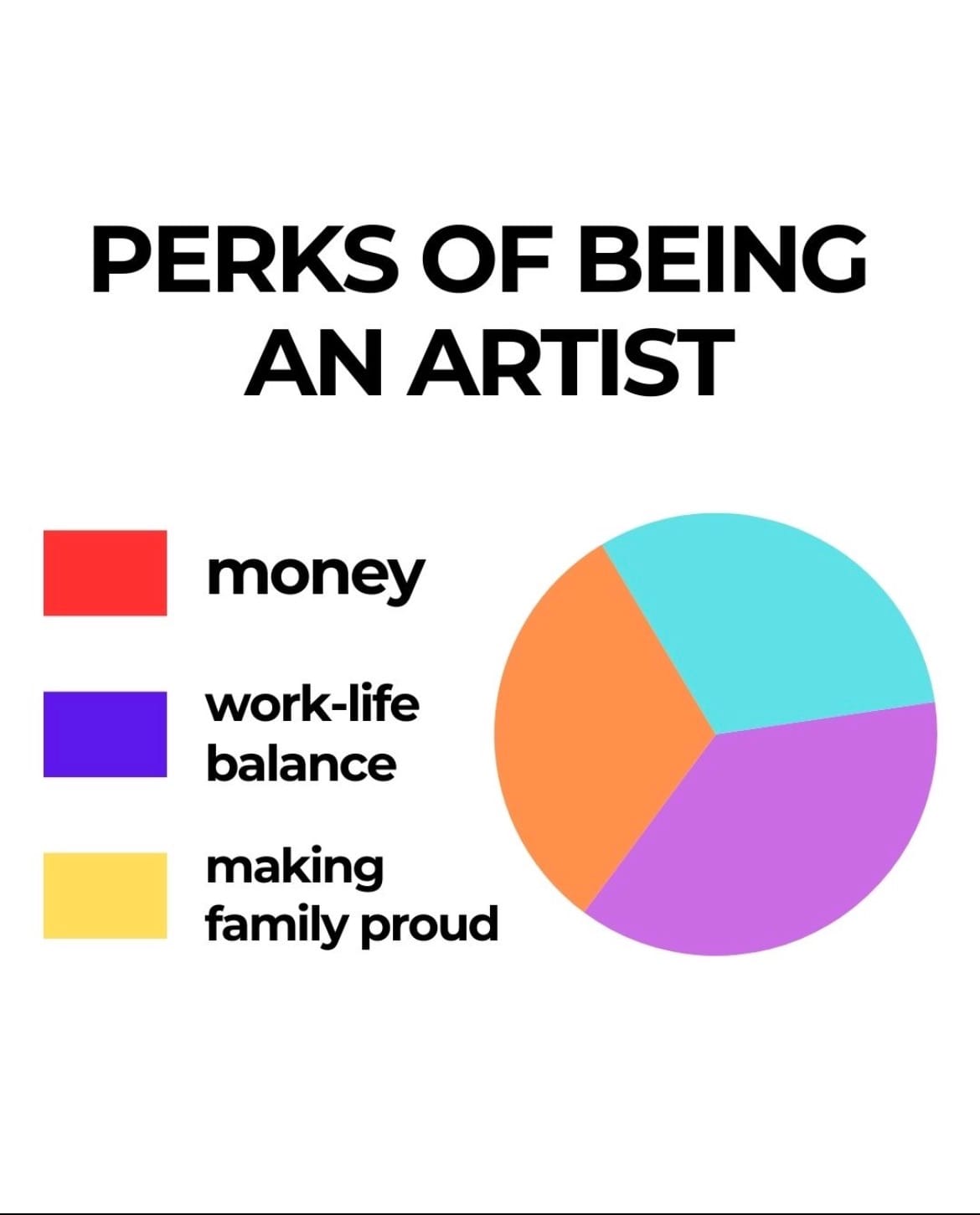
Rahawa: Yeah, I mean career success would be nice too, but . . . I know those odds. The way I see it, my identity is writer. My job is whatever pays the bills, which is too often nothing, and only sometimes writer. My identity is everything to me, which is why authenticity and integrity around writing mean everything to me. Does that make sense?
Maggie: I feel that too, Rahawa.
Latria: Oh that is interesting, and it helps to see it spread out this way.
Manjula: +1, Rahawa. My work (capital W, said in like a fancy, old-timey, Martha Graham voice) is writing. My job is whatever I get paid to do. Lately they are the same. But not always! And never for long.
Editing is often my job. I love it, but I would not do the same editing for free. I mean, I would and do edit for free — I am a zine girl for life — but I am not editing some else’s lit mag for free. Gotta pay me for that, even if it’s a good one!
Latria: I think my identity is artist, but my job is writer/teacher. I say that because no matter what I've done, I've created. I learn the backstory and also figure out how to move that topic forward.
As a farmer, I was into the history and legacy of heirloom seeds. As a recipe developer, I was/am interested in taking traditional uses for things and mixing old recipes with contemporary ones.
Writing is just the skill set folks pay the most for right now, maybe?
Manjula: I like this framing, Latria. Also very interesting considering what you were just saying about never having had the luxury of making art for art’s sake (or at least without selling it in mind).
Latria: I try to bring art to what I have to do, even if it's a job I have to do (like family farming). Idk — I need to think about it some more, but seeing y'all articulate how you feel about it helps.
Also Rahawa's thoughts around authenticity and integrity also make sense, and I'm thinking through them?
I have had to do a lot of work around that (I think), because I'm from a "comply don't die" family. In that mindset, or the way I think of it anyway, everything is negotiable as long as you survive to talk about it. It is a major departure from the way I was raised to think about the fact that there are things I will not compromise/hills I am willing to die on but the familial (and maybe societal/regional) programming is STRONG.
Rahawa: The words “death before compliance” are virtually etched on the Eritrean flag.
Maggie: Rahawa, I feel like this explains a lot about you.
Rahawa: THANK YOU! I mean, of course I’m not rigid in all ways, but it might explain why I exist at 110% when it comes to the things and people I love and believe in.
You can read all about my Eritrean emos in my book someday 😂
Maggie: Can't wait!!!!! (Truly.)
This post was edited by Rahawa Haile and Manjula Martin.
Scratch is a weekly newsletter about how your favorite writers are surviving (or not). We are a four-person collective publishing essays, interviews with other writers, and topical inquiries into the publishing and media industries today. If you like what we’re doing here and want to support us, a paid subscription is the best way to do so.
Become a free subscriber to receive our weekly newsletter.
Member discussion