
Angela Garbes on Money, Memoir, and Elastic-Waist Pants: The Scratch Interview
“Anything that I spend my money on is better than cocaine.”
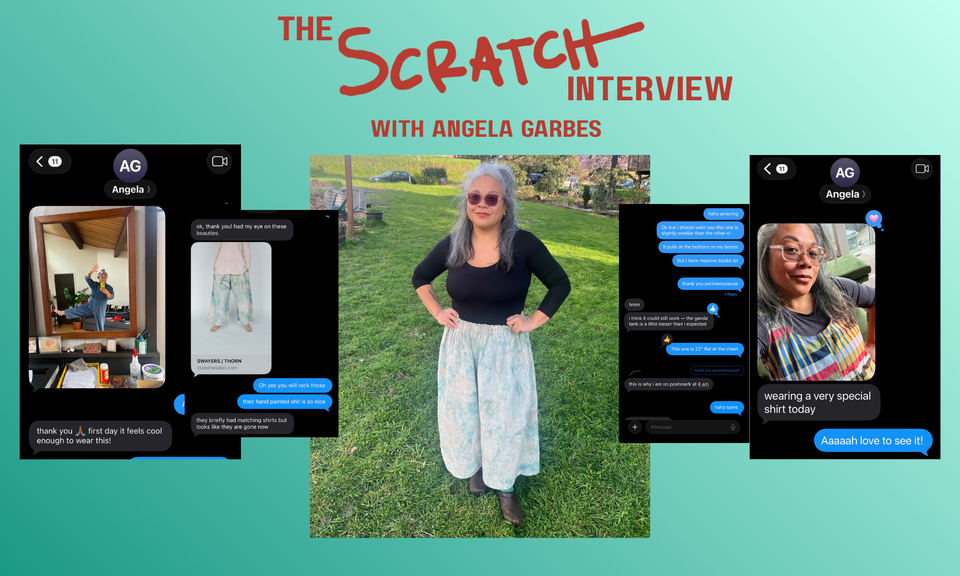
Some authors talk to each other about their artistic processes. Some text about pre-publication nerves or bad art friends. But when I message Angela Garbes, author of the transformative (and bestselling) books Essential Labor: Motherhood as Social Change and Like A Mother: A Feminist Journey Through the Science and Culture of Pregnancy, it’s usually about clothes. We first met IRL in 2024 during my book tour, and our secret fashion affair started shortly thereafter when Angela realized the used Ilana Kohn item she’d been stalking on an online clothing resale site was being sold by me. Soon, we were sending each other clothes made by small, independent designers and swapping recs for tank tops that fit our perimenopausal bodies. When Angela recently texted me that she was buying a pair of $240 pants as a reward for turning in her book manuscript, I knew it was time to have a longer conversation about fashion, money, and writers.
If you’ve read Garbes, you already know she’s one of the most conceptually expansive, no-bullshit, and empathetic writers around. We caught up recently on a video call — she at her home in Seattle and me at mine in California — to discuss our new favorite pants, her evolving financial circumstances, and her risky decision to write a memoir despite a proven track record with more straightforward nonfiction narratives. Also discussed: the legendary 80s/90s ESPRIT outlet; career advice from Emily Gould and Dan Savage; addiction.
This interview has been lightly edited for clarity and length.
Manjula Martin: So, what are you wearing?
Angela Garbes: It’s funny, I was like, should I put on Ilana Kohn for my conversation with Manjula? But then I just decided to keep it real. I'm wearing like a vintage LL Bean flannel chamois. And these purple fleece pants, which are my winter home-pants. They're Melody Ehsani.
I don't even know who that is!
She is Iranian American, and she does streetwear. She's married to Flea from the Red Hot Chili Peppers. I have a few of her things.
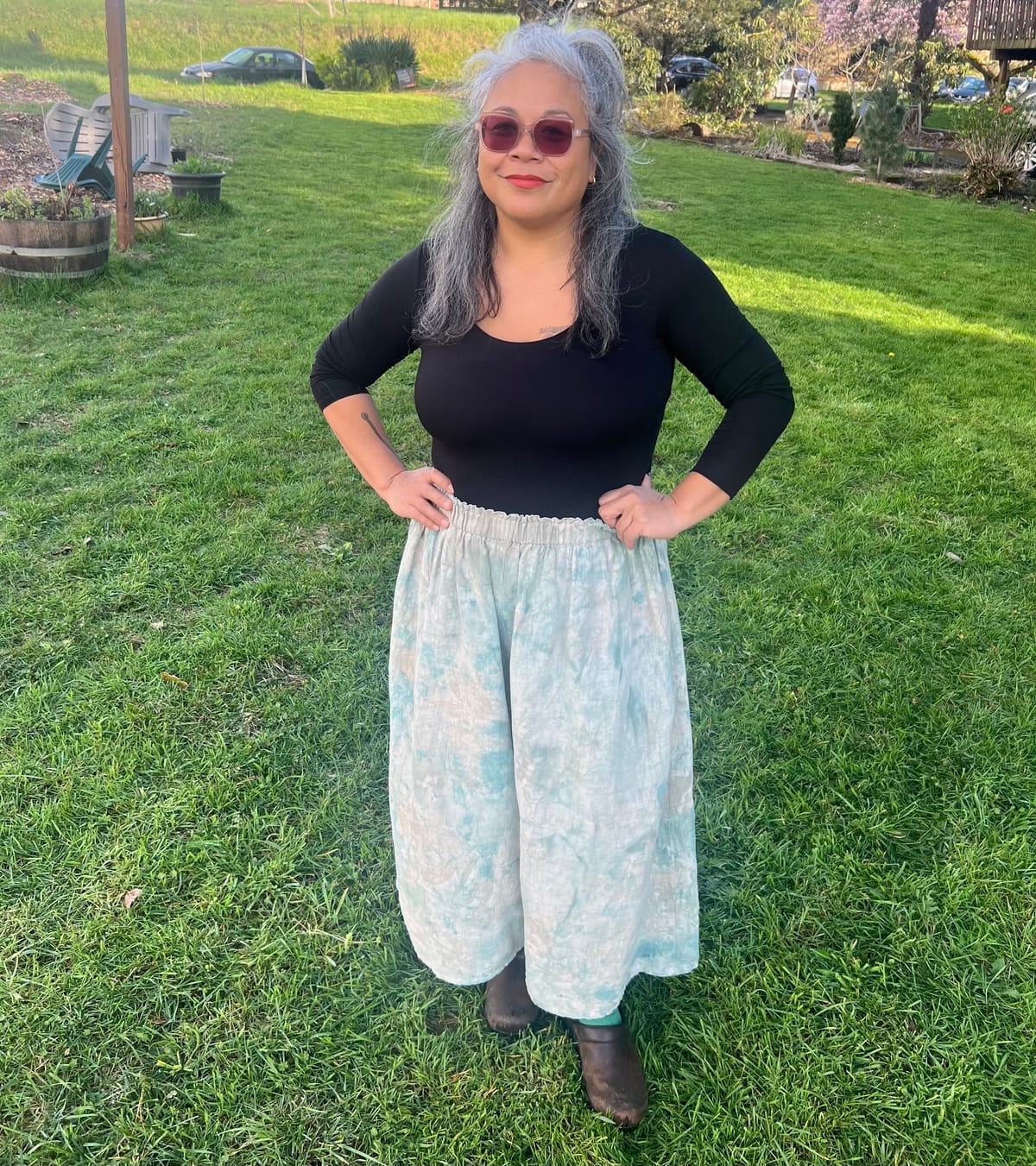
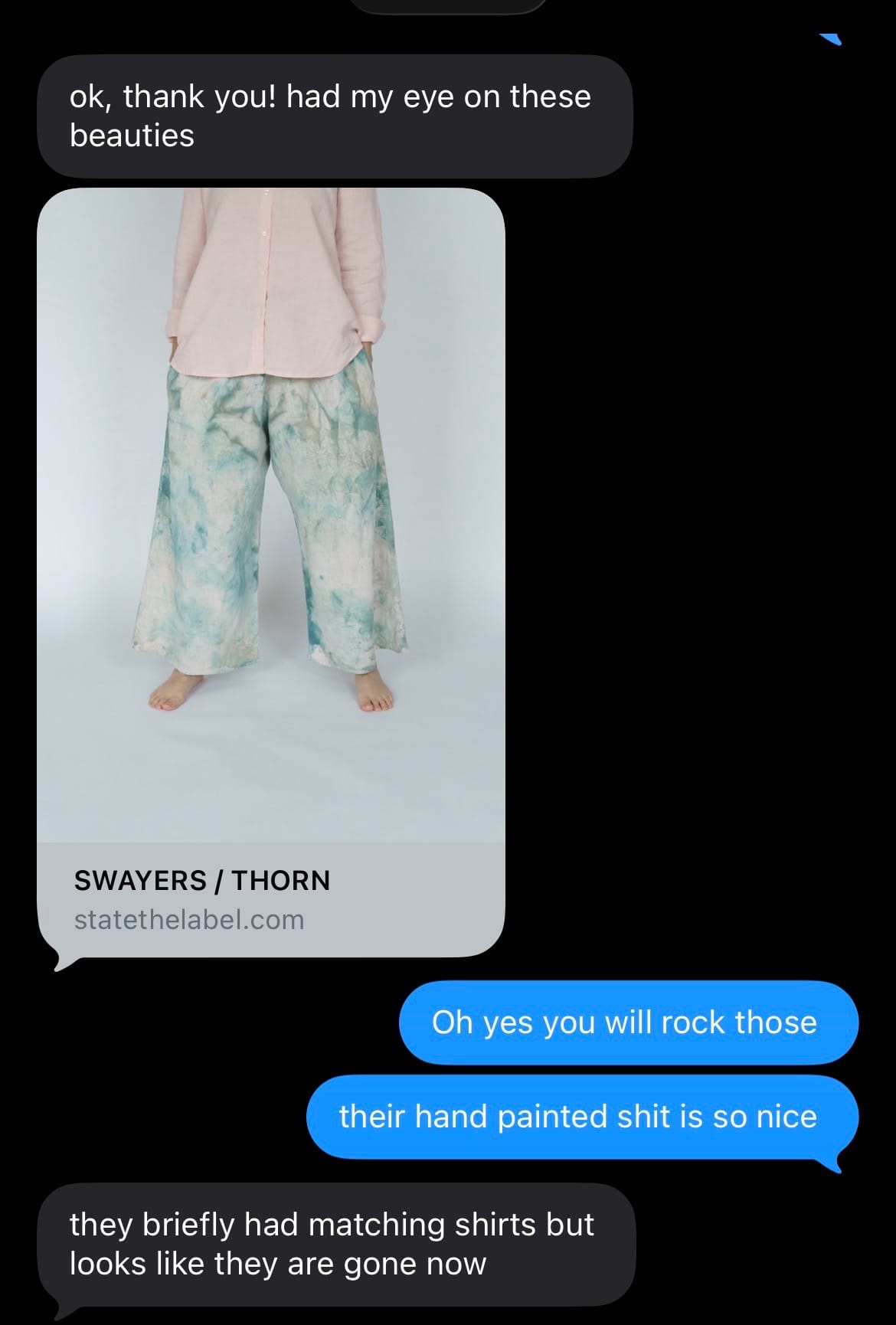
It's good, I like it. So, you texted me a few weeks ago and you were like, I just finished my memoir manuscript, I'm gonna buy some Swayers. [The signature wide-legged pants made by Atlanta-based STATE the Label that cost two hundred and forty U.S. dollars, plus tax.]
Which you turned me onto, because I’ve always been a little bit afraid of them.
I am sorry.
No, why are you apologizing? I’ve been warming up to the Swayers idea for like a year. It is a tradition that I've established for myself that I'll buy something nice when I turn in the manuscript. Because I deserve!
When I finished my first book, Like A Mother, I bought a pair of Beklina clogs, except they run very small, and then my feet got bigger after my second pregnancy.
We’re gonna get into the fashion thing, but tell me more about this manuscript. Angela, you wrote a fucking memoir!
I wrote a memoir! The first two books I've published relied very heavily on research. In 2022, when Essential Labor came out, it was very successful, but there are no royalties coming in yet. I have not earned out, which is — that's a measure, if you're thinking about how writers survive. That’s a thing I'd like to do. I get a little bit of income every year from Like A Mother.
You earned out your advance on Like A Mother?
Yes. I get like $10,000 a year [in royalties].
Oh, that's good!
Yeah, that's significant, right? And it adds a level of comfort. My ability to save money is really helped [by that income]. I’m just going to be really transparent about numbers.
Please do. And do you still have a day job?
Noooo. I'm never going back to an office.
But you have a partner who has a day job.
Yeah. [At the end of the year] I get like 45,000 W-9s and he gets one W-2. But this is something that I'm trying to think about: What does my life look like going forward? Because of the success of Essential Labor, from 2023 to 2025 I was traveling a lot to do speaking engagements about care work. Which was an unexpected revenue stream for me, and a welcome one, because you get paid a lot more. I have a speaking agent, and it’s about $10,000 per speaking engagement, which is great. A good number pay less, especially if it's [an organization that’s] values aligned — nonprofits, local organizations — and if I don't have to travel. But that was a really nice chunk of income that I was getting. I was coming in and speaking in corporate places for worker affinity groups and employee resource groups, ERGs.
I didn’t even know that was a thing. An urgh?
E-R-G. That was definitely the corporatization of DEI. Companies were like, learning and valuing Black Lives and cares infrastructure, right? And now . . . I'm not directly affected in the same way [as impacted communities], but my speaking engagements have sort of shriveled up. It’s great work and I hope to always be able to do it, it’s just slowed down. So now I'm in a new cycle: What is my income gonna be? I'm waiting for the “my manuscript has been accepted” payment, because they're gonna give me $40K.
What was your deal on the memoir like and where are you at, contract-wise, with that?
It sold in early 2023. And it's with the same editor who edited my first two books, except she moved to a new publisher. I was actually trying to get a two-book deal done, because I was like, if I can know my guaranteed book income over the next five to eight years? You know what that number is, then.
I feel this way, too — I would like some income security! — but my agent doesn't like two-book deals.
Coincidentally, I had just signed with a new agent, because I didn't feel like they were doing enough for me. You know, when more than one person on your publishing team are like, Have you thought about another agent? Because we think you could do better, you're like, Oh, God! Okay.
Okay, then.
This is my third book, and I think only now am I really understanding how to apply the business aspects of things that I learned before. The first time around, I was like, I'm just fucking happy to be here. I’ll put up with anything. I just thought, that's the way it is.
So I sign with this agent and I tell her, I'm having this success. I don't know exactly what that translates to. I'd like to capitalize on money, first and foremost, and figure out my path forward. And because my editor had moved to a new publishing house, I was like, why not try [for a two-book deal]?
I had written a full proposal for a book that I thought I was gonna write, that I've been thinking about for a couple of years, and it was basically my book on female midlife.
The last time I spoke with you, you had made the decision not to sell that book, which I found to be incredibly brave.
It’s scary. We sent in the proposal first. My editor was like, great.
I didn't totally know what the second book [of this two-book deal] was gonna be when we were making those moves, and my agent was like, let's not tell her we're trying to do a two-book deal just yet. Also your old press has [first] right of refusal. And they were actually interested in it, and so it was this negotiation where my agent was like, just chill for a minute and think about what the second book is gonna be. Because when I first told her I wanted to do that, I didn’t know. But I kind of knew. I had a sense inside of me, there’s this memoir that is taking shape. Then my editor was interested and wanted to buy the [midlife] book, and my agent said “If you want me to come to her with a two-book proposition, you gotta give me something.” And at that time, I was a couple months into recovery.
Whoa.
I went into recovery in January of 2023. And I had known for the last year that I had a substance abuse problem. And I was researching addiction [laughs].
No reason. Just as a journalist.
Oh, yeah, I was just, like, no action is required on my part, I’m just putting on my research cap. As a journalist.
Anyway, so I wrote — I just vomited out like seven pages. And we sent it, and my editor was like, Okay, here's the deal, I'm actually not in a position to do a two-book deal. So, for what it's worth, I'd like to continue working with you for as long as I can. And we can do this midlife book, it’s very expected from you, which works to your advantage in some ways, but also, I gotta tell you, my boss and I read this seven-page [memoir] document and we think you should do this, because there's so much more energy. We both cried while reading it. There's juice there, it’s alive. But it's totally up to you, whatever you want to do.
And I was like, oof. I thought about it long and hard. Going into recovery is like saying, I'm willing to go through some kind of transformation. And midlife to me is that also.
And those things are happening at the same time for you.
Yeah, and so I said, “I want as much time as you can give me and as much money as you can give me. That's all I'm looking for here.” And then she came back with three years. And considering I wrote Essential Labor in seven months, I was like, cool!
Seven months!? Damn.
I would have liked longer [for this book], but then I also was like, can I really work on something for four years? I'm not the kind of person who wants to. You know what I mean?
Not a memoir, I wouldn't recommend it.
No, and thank God because I really needed to just get on with my life. I'm so happy to have it in process now. I got three years and $225,000. My first book was $100,000. My second book was $140,000. So, it's a big leap for me.
So, I keep hearing that the memoir market is dead. Have you heard this rumor?
I don't know anything about that.
As we both know, book-deal math is wild. A six-figure advance, minus agent fee and taxes, broken down into three or four payments over some years . . . so you're not a millionaire, actually?
Not even close. The book doesn't come out until 2027. So that's when the third payment will happen, and then the fourth will be one year later or when the paperback is published, whichever comes first. . . .
So, how can you afford $250 pants?
You know, I'll tell you, I wouldn't have this writing career if I wasn't partnered with someone who has a very steady income, who has a union job. I fucking love unions.
You're a Teamster wife, right?
I'm a Teamster wife.
I, too, am a Teamster wife! We need jackets or something.
I met [your partner] at your book event, and I was like, “Oh, okay, there's values alignment here.” And that's why it's also very important to me that you like to excessively spend and treat yourself in these ways.
Haha, does your man-of-the-people union husband know that you spend $250 on pants?
I mean, he does, but...
Because mine doesn't quite know. I mean, it's not a secret...
You know, my family is, like, Oh, another package arrived for you, mommy!
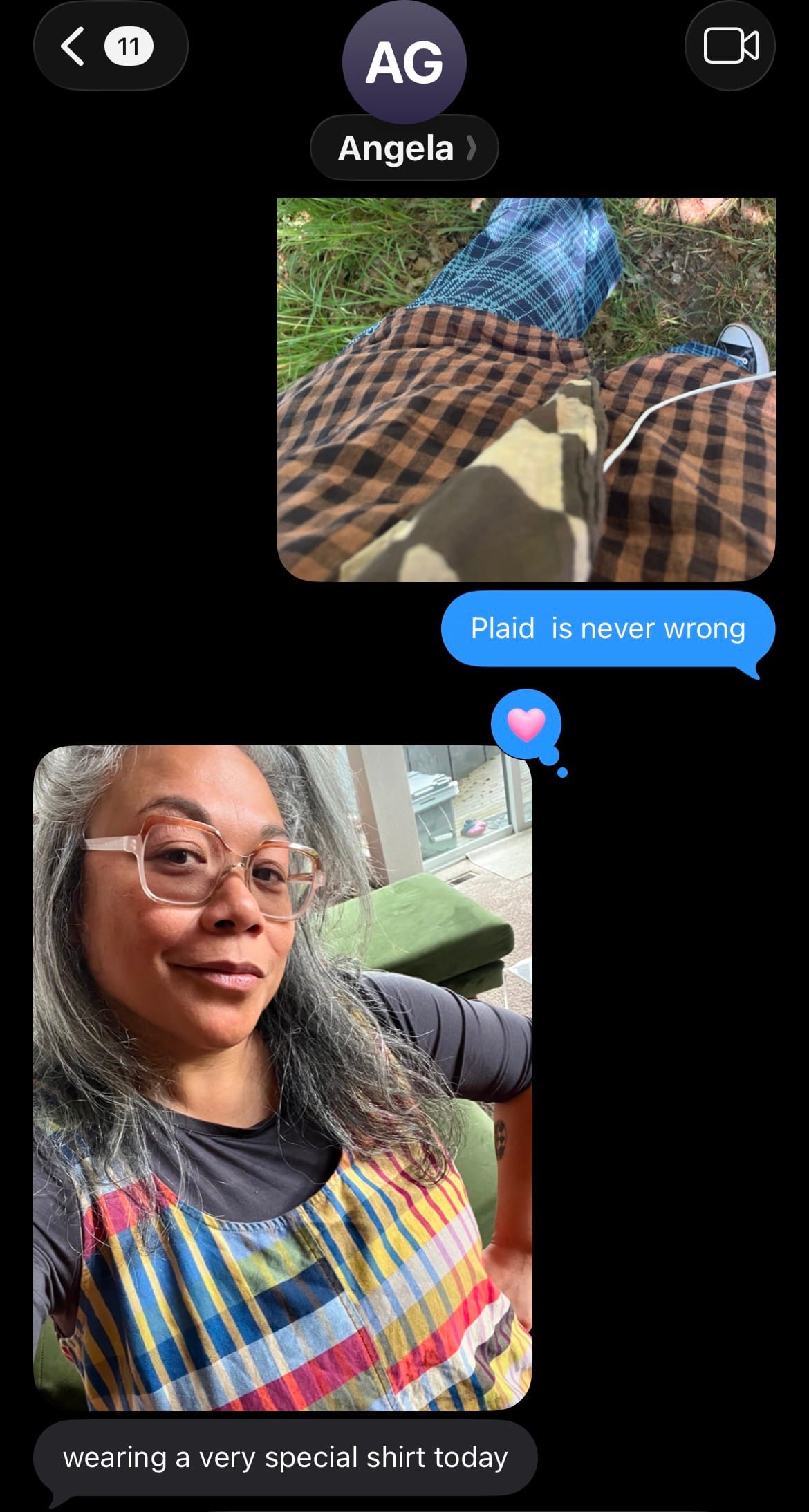
I think that people who don't spend a lot of money on clothes or aren’t interested in fashion just have no concept of how much money can be spent on clothes.
Well, I have separate finances. We still file taxes jointly, but I have an LLC. I was finally making enough money that it makes sense for me to have a business account, to make it easier to write off my life, because my life is material. So even if I don't end up writing them off, things can come out of my business account, which is like my money. And then I put money into our joint account.
But okay, the $250 pants thing: One of the reasons why I do that is because it's a really crazy way to be paid, to just get a large lump sum of money every, say, couple of years.
Most of the money that I make, we put directly into retirement. And so it's like the money I make doesn't exist. We basically live off of Will's salary, and I contribute to our joint account when I have the money to do that.
We have a similar setup, except at the beginning every month I take some of my book advance money and put it into the house account, as though I was getting a regular paycheck.
Okay, well, that's smart.
But then I secretly spend too much out of my book advance money on shit like clothes.
Yes. For me, it’s like, I don't even get to spend my money. My money just goes away. I'm talking about big lump sums, like $20,000, it goes away as soon as we have it. It goes to IRAs, or we pay off a debt, or we did a big house renovation last year. So yes, I'm getting a pair of fucking linen pants, because I want to show that I did work and get a nice thing for that.
So it's like material proof of your labor, in a weird way.
Yes. This is all maybe an elaborate justification, but … I work really hard and I often don't feel like I contribute to our household in the same way — which is bullshit that I'm trying to unlearn. And, you know, I wrote a whole book about this, and it's still deeply ingrained. So that's part of why I buy clothes.
And also, I think it’s important to celebrate every small thing. Writing a book is a series of false summits. Finished a draft!
Again!
And friends are like, “You’re done!” and it’s like, no, well, it comes out in 2027. It’s an insane business model. I don’t even think they make money off my books. They make money off, like, J.K. Rowling, who’s bankrolling my books.
As well she fucking should.
Well, yeah, fuck J.K. Rowling. But that's the other thing — no one sat me down and explained what this was gonna be like.
Before I started writing books, I worked at an alt weekly called The Stranger. And Dan Savage was still part of everyday operations when I worked there. When I was trying to take a leave of absence to write Like A Mother, I talked with him, and he was like, “You’re not asking, but I'd love to give you a little bit of advice.” And he said, “Don't for one second break down your advance into an hourly wage, that's just a fucked way of thinking about it.” And: “Writing a book is not a great way to make money. It is potentially a way to get speaking gigs, and I think you would be good at that, so just consider that.”
It was all so true, and this was, like, ten years ago. I didn’t know anything!
And I give this advice, now — it’s something Emily Gould told me in 2018, when Like A Mother came out. She's been so supportive of me and my work from the beginning. I didn't know her at all. My publisher was like, we're not gonna do an event in New York for you unless you can convince someone with a much bigger following than you to do the event with you, and you'll have to pay your own airfare. And Emily was like, “I'll do anything to support this book.”
She said, “I think your book’s going to sell well and it's going to do great. But the truth is, you won't know anything for two to three years. You will not know if it was all worth it.” And I was like, “What the fuck?”
But I'm so grateful that those two people shared that very little bit of knowledge. It took years to understand the significance of what they said. Now I'm saying the same thing to people as much as I can.
I remember reading an essay Emily wrote a long time ago about all the expensive clothes she bought with her book advance money! I hadn’t met her then and at the time I remember thinking, “That's fucking bonkers, how could she do that?” Super judgy, punk-rock, never-wrote-a-book lil’ me.
I would love to talk about that — retail therapy. It’s real. I do remember Emily wrote a piece about becoming a yoga instructor that was very frank about money.
I later met Emily, and she was hugely supportive of Scratch the magazine. She was in the anthology, too. She’s always been super honest about money stuff. But yes, that was where I was going with that — there is an emotional component to the shopping. I also got really into buying a lot of clothes related to my memoir coming out. For me it was anticipatory — a lot of it happened between turning in the book and the release date, and a lot of it was like, “Oh, I'm gonna need this for my book tour.” Of course, I did not need it for my book tour, nor did I wear it on my book tour, nor did I really go on a very large book tour. Also, it was winter and raining. But that began for me what I would classify as a period of shopping addiction, which I’m coming out of lately. And a lot of it, I think, had to do with emotions — with the sense of identity that writing a memoir is so deeply intertwined with, with doing that deep introspection and forcing yourself to muck around in your own shit for so long (for lack of a better analogy!).
I was so naive about how much excavation and how emotional, and transformative [writing a memoir would be], in ways that I have not yet figured out. That’s one of my things for 2026, is to passively get to know myself.
I like it.
I have put in so much fucking active labor toward understanding and healing and all of that. But, yeah, fashion, shopping — it’s further expression, right? I think there are people for whom clothes aren’t really a way to express themselves. One of my closest friends buys her jeans at Costco. It’s not bad. But I've always been interested in clothes and style. I'm so hard on myself, and it's easy for me to be like, “Everything you're doing is elaborate justification and rationalization for your addiction.” Meanwhile, as someone in recovery, I'm like, “Anything that I spend my money on is better than cocaine.”
That is literally what my therapist told me when I told her I spend too much money on clothing.
I can justify the hell out of anything now that I'm no longer spending, like, thousands of dollars each month on drugs and alcohol. Alcohol was not my main problem, but it still adds up, right? And so there is an element of, “Have I substituted my phone and shopping for my drug addiction?” Maybe. But it's not gonna kill me.
Right. And also now you have great pants.
The other element that I think about is, I'm an independent artist, right? That's who I am. I depend on people buying my books. And books are not cheap. So the idea that someone is out there making wearable art, their creative outlet — someone who I feel a kinship with in some way — that’s who I like to spend my money with. I have stopped spending money on fast fashion. Or if I do buy that stuff, it's at Goodwill or resale.
I think a lot of folks who are not weird fashion nerds don't understand that one of the reasons why certain clothes are expensive is because they're sustainably made.
They are using natural materials. Someone sews them by hand — on a machine, but there's an actual person who they're trying to pay a living wage. When you see how much clothing gets produced cheaply abroad, where people are paid akin to nothing — it's not supporting workers.
The truth is, clothing production at a mass scale is not economically sustainable. There's a reason why, back when most clothing was handmade, most people only had three outfits.
Just one of the things that I loved about Hamnet the film was that everyone's just wearing dirty clothes, and they're all wearing the same thing. As the movie goes on, Paul Mescal’s pants look more and more like a wet diaper. Because people only have a certain number of clothes.
I've gone through this with food, too. We do Costco shopping because we are a family. And we go to the discount produce store in our neighborhood. We shop there year-round. But [recently], I was like, “It's January. I'm gonna go to the fucking fancy organic co-op and get myself some citrus, because that's what I want. And I can give money directly to a Filipina farmer.” And it does cost more, but also, I don't know . . . There's no ethical consumption in the United States. We're all implicated. My husband and I have been having a lot of conversations around divesting, and we cannot. But I can divest from large multinational corporations. And I can still do better about it. But I can do that where I can. And it makes me happy to buy clothing from someone like, say, Ilana Kohn.
How did you end up being a model for her blog?
There’s another emotional aspect to this. When Essential Labor came out, my publicist reached out to Ilana Kohn and was like, Do you want to feature her? And she was like, Yeah, I'd love to. Before that, I vaguely knew about Ilana Kohn. Then she did a campaign with Samin Nosrat. And here is a beautiful brown person who is not stereotypically gorgeous, she's not thin, she has a real body. I saw that and I was like, I can wear clothes like this. And I loved the clothes. And when I got my first Ilana Kohn jumpsuit — which I still have, it’s black twill, I forget what the name of it is — I was like, Oh, this is the clothing that I really feel like myself in.
And so there was an element of moving into my body. And this was around the time that I became a mother, which made me a deeply embodied person and furthered me on that path.
I think it's because of Ilana Kohn that I don't wear things that don't have an elastic waist.
After I had my hysterectomy I was like, I'm done. Only stretchy waists from now on.
Those [emotional] things are all part of it. And I can deploy any of these as a justification for shopping. But they are all true and they are all part of the decisions I make, when I'm in control of my faculties and shopping. And sometimes I’m not.
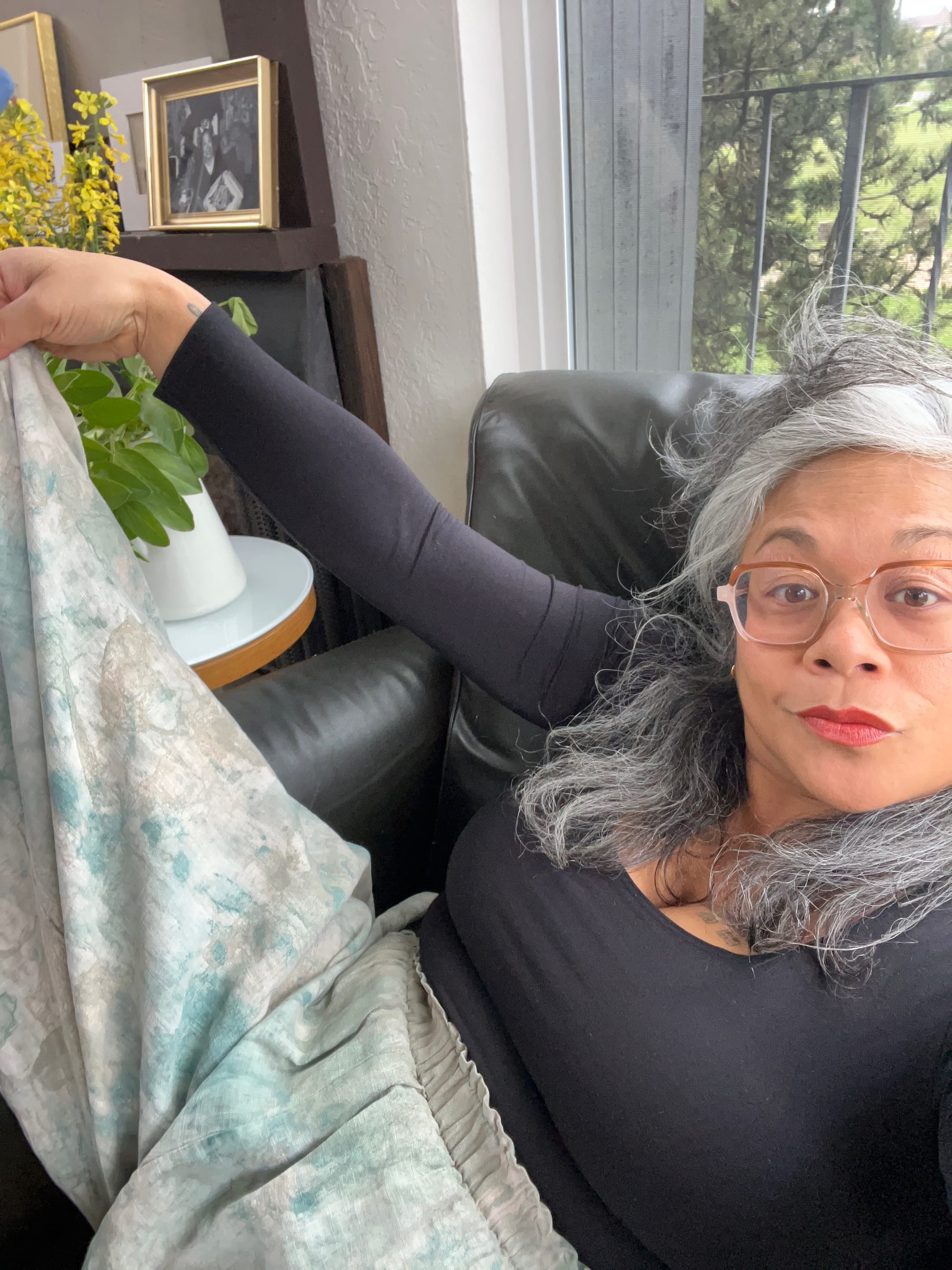
In the beginning of our conversation you said something about buying Swayers, which was simply, “I deserve.” First: yes. But do you want to say a little more about the idea that writers (or women, or women with bellies! not to mention women of color, moms, etc. etc.) also deserve nice things? A little treat. Or, like, what even is this idea of "deserving" something? Must luxury always be earned?
One of the ways my particular brain, which I now understand was shaped by trauma at a young age, works is that it is very good at telling me that I do not deserve to feel good because I am actually a terrible person. My rational brain knows that isn't true but she's up against a powerful inner voice that is supported by a culture that also tells me as a woman in a thicker brown body, a mother, I definitely don't deserve ease or happiness. So it's easy for me to justify rewarding myself with "a little treat" like Swayers because they make me feel good, bring me a bit of peace. And compared to the many substances I have used throughout my life to feel good or numb out or quiet the negative voice in my head, linen pants are eminently justifiable.
As you were saying, beautiful clothes aren’t just comfy, they are a form of creative expression. I actually feel strongly that fashion is art. And I have found that at times when I am unable to write, I become more interested in clothing. I also sew — I don't create garments from scratch, but I'm really good at altering and making things out of other things.
This is something I’m working on. I bought a sewing machine, and I've made tote bags in the past. I'm getting back [into it] this year. And I'm working on these decorative fabric scrolls for my kids with Sashiko mending. Because these are skills I want to have. Doing that with my hands is when I understand the labor of sewing and design and art, like you're saying.
Yeah, and I find that it is a thing I can do when I can't do other forms of creativity. Then of course, as with other creative work, it's always laced in with money and with capitalist systems of labor. To be clear, sewing is more expensive than buying clothing. And a lot more work. Even without the labor it’s more expensive, because quality fabric is expensive.
There’s a history of fashion that’s really good —
Sofie Tenhauser's book, Worn? I love that book.
Yes, that's the one.
To tie it back to writing, I do think the relationship between money and clothing for me is very interlaced with the process of how I think about being perceived. And identity, as you were speaking about, and with body stuff. I was shopping a lot around the time my memoir came out in part because I knew I was going to be having my picture taken sometimes, and I was not going to be in control of that environment.
You can’t control ultimately how people perceive or think about you, but you are in control of the image you want to project. And also, you want to feel confident. Like, I want to wear things that make me feel good and feel like myself. And when you think about showing up to be in connection, to be in community with people, or having your photo taken . . . I can't be uncomfortable anymore.
I also think there is an element of reclamation. I had a whole look in the early oughts that was, like, low waist jeans, cleavage, I did a whole sexy librarian thing for a while. A-line skirts, that kind of shit. I was also thinner than I ever was because all I did was smoke cigarettes and eat Thai food.
Honestly I still miss cigarettes. Not the jeans, though.
That was all working towards finding my style, but the idea was still very much male gaze. And so now I'm like, fuck all of that. I don't do any of that anymore. I do feel like I dress for myself, and that's been a journey of finding clothing that I really like.
And that costs money.
Yeah. And it’s a good feeling, to feel like there’s a designer who’s making clothing just for you.
I feel like I need to forewarn you that I had a second break in identity after my memoir came out. So we should maybe follow up in 2028! Or, like, just call me.
Say more.
Well, there’s the initial struggle to render yourself in the book, right? And it’s like, that is me, I’m in there. And by the time you finally finish the book, it has been a process of deep discovery and just . . . wallowing around inside yourself for years. And that can be very difficult and also very wonderful and all the things it is. And you put it on the page. Then the book that contains you becomes a physical object that exists outside of you. Of course it’s not all of you, it's an aspect of you, you have crafted it — it’s Book You. But after going through that whole arc — thinking about myself obsessively, trying to understand myself as a character, then calling bullshit on myself as a character, and then rendering it all in language, and letting it go to places where I can’t control it — there was another break where I was like, okay, Book Me is done. Because of it, I’m not that me anymore. Wait, now who am I?
That's exactly what it was like. At New Year’s we do a sort of what would you like more of? thing and I was like, I just need to get to know myself more, but in a way that does not require me talking. It’s partly why I'm doing my fucking meditative stitching. Right now I’m still in that emotional letdown from finishing a project, separate from the contents of it. So I need something to keep my hands busy and my mind occupied, but where I'm not thinking, right? But I don’t yet know all the ways I’ve been changed by [the process] yet. So yeah, a second reclamation, I hadn't thought about it.
I'm not trying to scare you! I'm just saying.
I think the whole fucking point is change and understanding yourself deeper.
That’s the whole point of writing.
A lot of the work I've been doing in the last few years is reassuring baby Angela that she is safe and not abandoned. And bringing younger me to be with me. Then midlife does this thing where I'm like, “Who am I gonna be?” So I have this project of bringing younger me to be with me. And now my project increasingly feels like being in touch with the future “me”s who have something to say to me now about decisions I'm making. And the best kinds of moments are when I feel like I'm sort of vibing with future, present, and past me, but actually it's just a circle, because time isn't linear, and neither is healing, which … I mean, this is where I’m at. This is why I need large, linen pants that are hand-painted and have a sort of spiritual vibe!
Because you need to flow, man.
I need to flow. I need to sway.
Was baby Angela into shopping and clothes? Did baby Angela do dress-up?
I was scary into clothes, and so this is interesting.
How did baby Angela's family think about spending money on clothes?
We were middle class, upper middle class. And so there was money for me to be able to — you know, I would ask for specific things, like, I got a Benetton merino sweater. And we would shop at the ESPRIT outlet in San Francisco.
Oh, ESPRIT outlet was goals!
I have this picture here on my desk. It’s covered up by my insurance forms, but this is me in my ESPRIT sweatshirt in, like, fourth grade. I loved ESPRIT and Benetton because they had these abstract, graphic things that looked very hand-drawn to me.
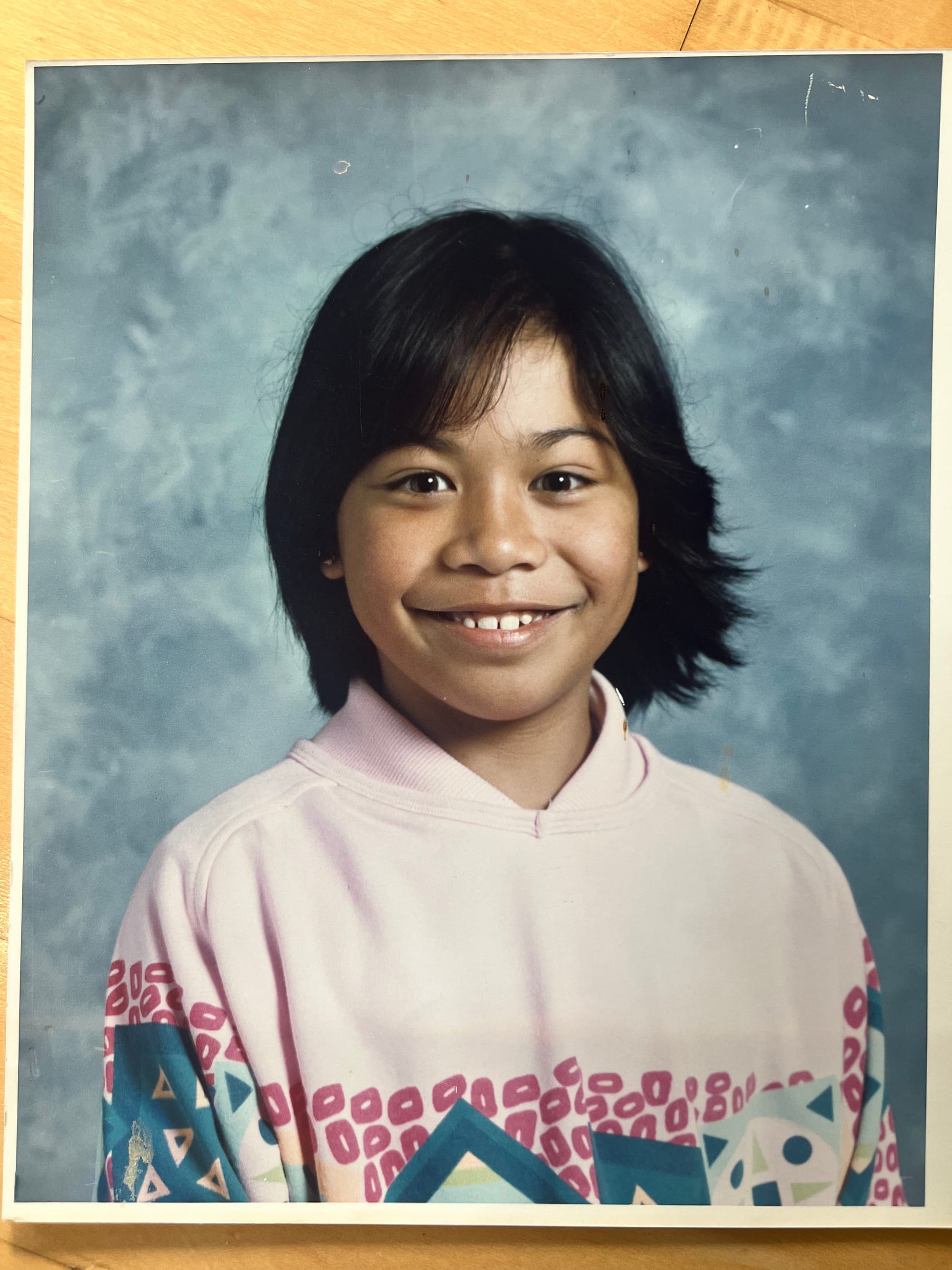
And they weren't super gendered, in retrospect.
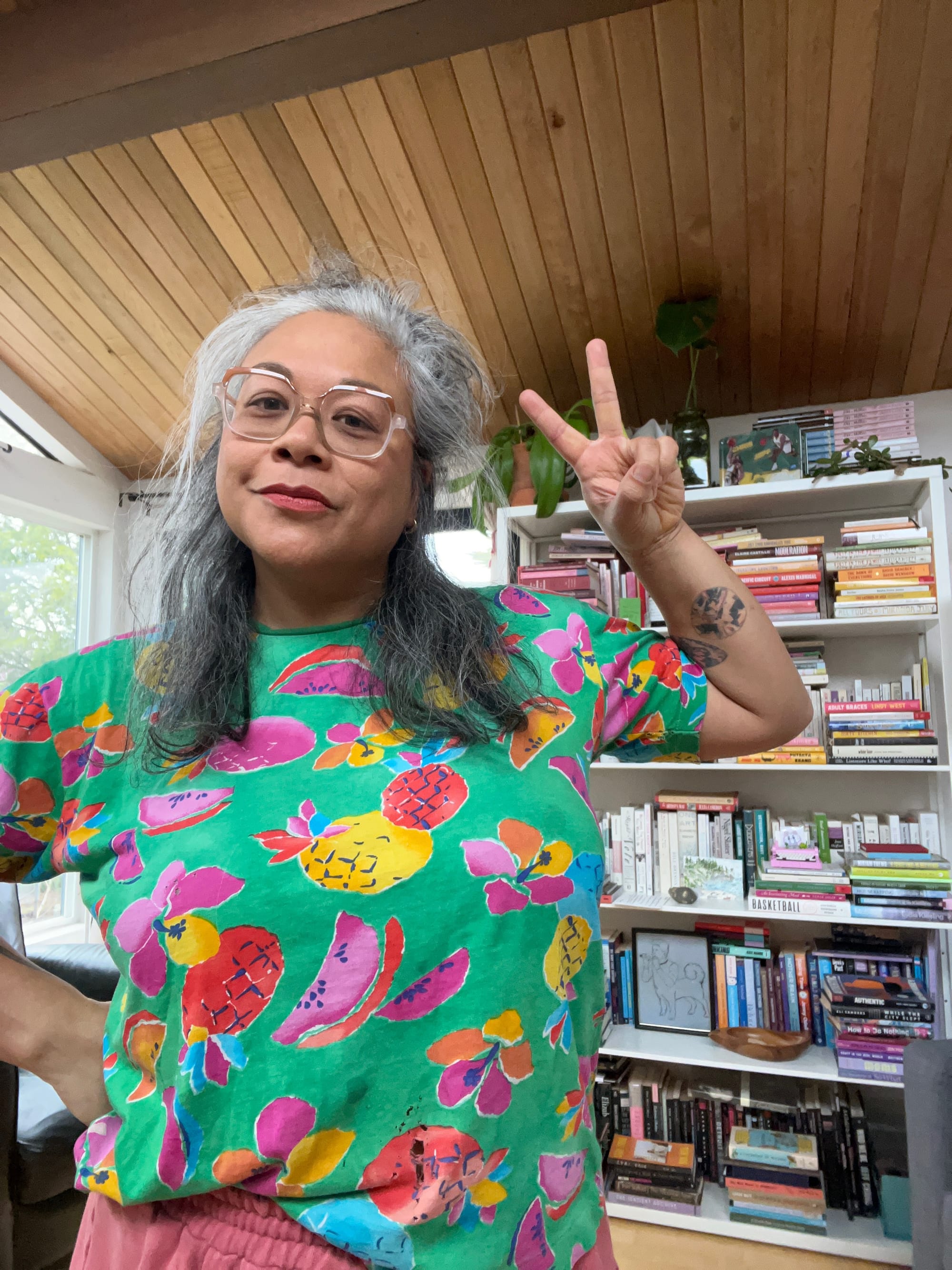
Yeah, they were just fun. I mean, it was the Tibor Kalman [and Oliviero Toscani] era of Benetton, and it was amazing, right? And so I loved all of that stuff. But it wasn't like I had all the clothing I ever wanted. I was lucky enough to be able to have some of those things, and they became a touchstone. And actually this is what started me on Poshmark, I just searched, “vintage Benetton.” And I got two T-shirts that are so soft. One is these watercolored fruits, it’s like a bright green t-shirt, and the other one is a blue paisley.
How much were they?
They were like $25. I mean, they have holes in them. And there's one where I offered $25 on a t-shirt that was listed as $90, and the guy basically laughed at me. I actually wore those while I was writing, and they were a great comfort to me because I felt like it helped me get in touch with who I was. And I got this ESPRIT button-down shirt. And I mean, I was spending like $25, $30. I wasn't going to pay more than that. But they really supported me in my process.
That's powerful, that sensory aspect of the work.
I know people who have lost parents who still have shirts of theirs, because they have their smell. That bodily sensation is something that is required, I think, for me to write memoir — or to write it at the level that I wanted to. There are just so many things I can't access beyond my brain. Like you were saying — if I can't write, I can sew. I can do these things that connect me, that are meditative, that pick up an echo, right?
That are expressive.
Yeah. That clothing was actually a part of the process of writing for me was not something I expected. I washed that t-shirt and put it on and it felt so soft and cool – like the cool side of the pillowcase as a little kid. And I was like, “Oh shit. I feel like I’m able to access these memories or these feelings.” I don’t totally trust my memories. I thought I didn’t have memories, it turns out I just suppressed them as a way of survival. But the feeling of that t-shirt really started to unlock something. Best $25 I ever spent. Plus $6.89 for shipping.
This interview was edited by Maggie Mertens.
Scratch is a weekly newsletter about how your favorite writers are surviving (or not). We are a four-person collective publishing essays, interviews with other writers, and topical inquiries into the publishing and media industries today. If you like what we’re doing here and want to support us, a paid subscription is the best way to do so.
Become a free subscriber to receive our weekly newsletter.

Member discussion